

• Home
  • About
  • Discover
    • History
    • Culture
    • Nature
    • Food
    • Living in Japan
    • Destinations
    • Language
    • Tips
  • Interview
  • Recommended Books
Exploring the Wonders of Rural Japan
Culture Food

Children’s Day in Japan—Carp Streamers, Samurai, and Sweets

The national holiday celebrating children and families
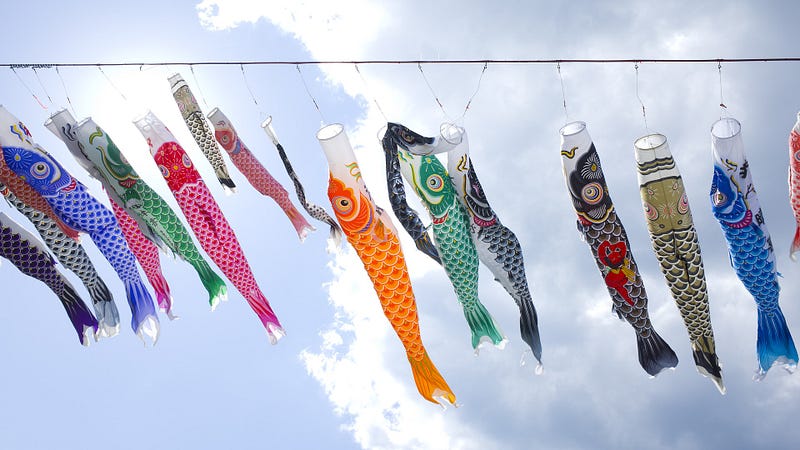
Carp streamers against a blue sky are decorations for Children's Day in Japan.
Carp streamers. (Ogawa T. Pixabay. No attribution required.)

May 5th is Children’s Day in Japan, a national holiday with a long and amazing history.

The Five Festivals

Children’s Day is one of the five seasonal festivals, or go-sekku, brought to Japan from China in the 8th century. These five festivals marked the change of seasons and were days set aside to prepare for the coming months through purification, prayers, and banishment of misfortune. Still celebrated in Japan, they occur on odd-numbered days:

  • 1/1 was eclipsed by New Year’s celebrations, so the seasonal holiday was moved to 1/7. It is called Jin-jitsu, Human Day, or Nanakusa-no-sekku, Seven Herbs Day, and is when a purifying rice gruel is eaten. 
  • 3/3 Hina Matsuri, Girls’ Day
  • 5/5 Tango-no-sekku, formerly Boys’ Day, now Children’s Day
  • 7/7 Tanabata, The Star Festival
  • 9/9 Kiku-no-sekku, The Chrysanthemum Festival

Precursors of Children’s Day
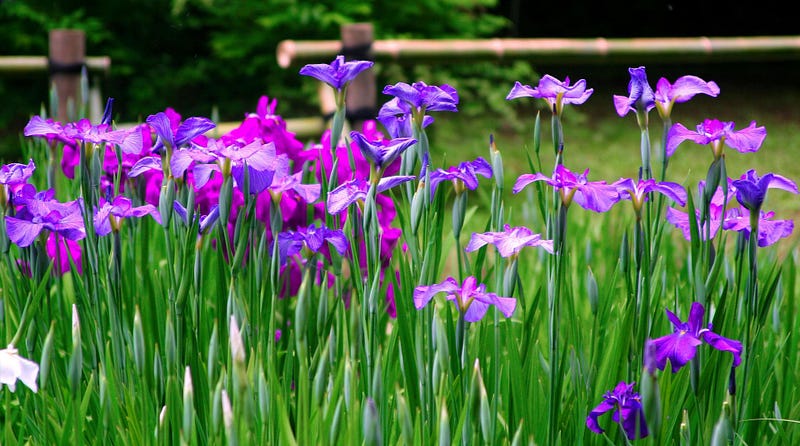
Irises bloom in May and have long been associated with Children's Day.
Japanese irises. (auntmasako, Pixabay. No attribution required.)

Children’s Day finds its antecedent in the Iris Festival, Shōbu-no-sekku, also called Tango-no-sekku.

In ancient China, the fifth lunar month was considered unlucky, especially the 5th day, which was called “Double Fifth.” On that day, people hung iris plants, mugwort, and garlic above the entranceways to their houses, believing that these plants would ward off natural disasters, illnesses, and evil spirits.

Centuries later, this custom was carried to Japan and came to include prayers for the upcoming rice planting season. Like the Chinese, the Japanese decorated their eaves with irises and mugwort to ward off misfortune.

As the years passed, new customs were added. People put iris leaves under their pillows to drive away evil and added finely chopped iris leaves to their sake.

Young girls would bathe in water with iris petals for purification. These girls, known as sa-otome, were central to Ta no Kami, or rice field god, festivals held on the day when the rice seedlings were transplanted into the flooded paddies.

These varied forms of purification are still practiced in some households today. Many onsens, or hot springs, across the country offer special Shōbu-no-yu baths with iris leaves on May 5th.
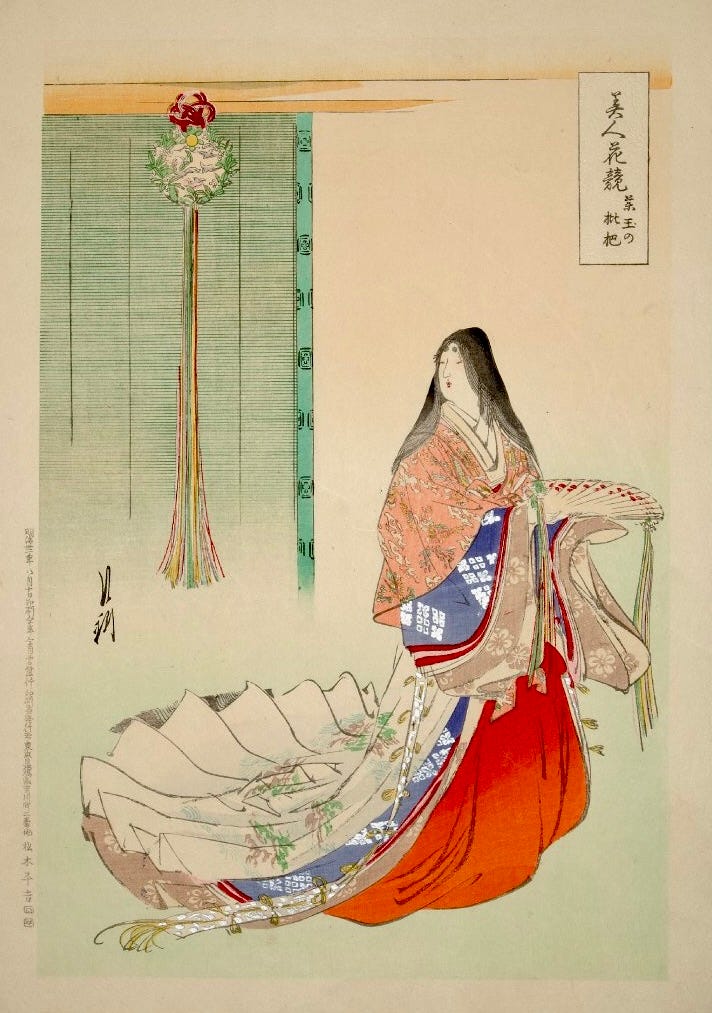
Heian era woman with kusudama.
Kusadama no biwa, woodblock print by Ogata Gekko. (Public domain)

At the ancient imperial court in Nara, aristocratic women wore iris hair ornaments to a grand ceremony in the palace where the emperor would bestow a fragrant kusu-dama upon his vassals. This was an ornamental ball filled with medicinal herbs that opened in half when a string was pulled, dropping its contents. The herbs were for purification and to cast out evil spirits.

Samurai culture gives birth to Boys’ Day

Under the samurai rulers of the Kamakura era (1185–1333), the Iris Festival became Boys’ Day. Samurai focused on raising strong boys to become courageous warriors who would continue their family lines.

The word for iris, shōbu 菖蒲 is pronounced the same as shōbu 尚武, meaning valiant or warlike. That, and the fact that the hanging iris leaves resemble swords, is thought to have played a part in the change. 
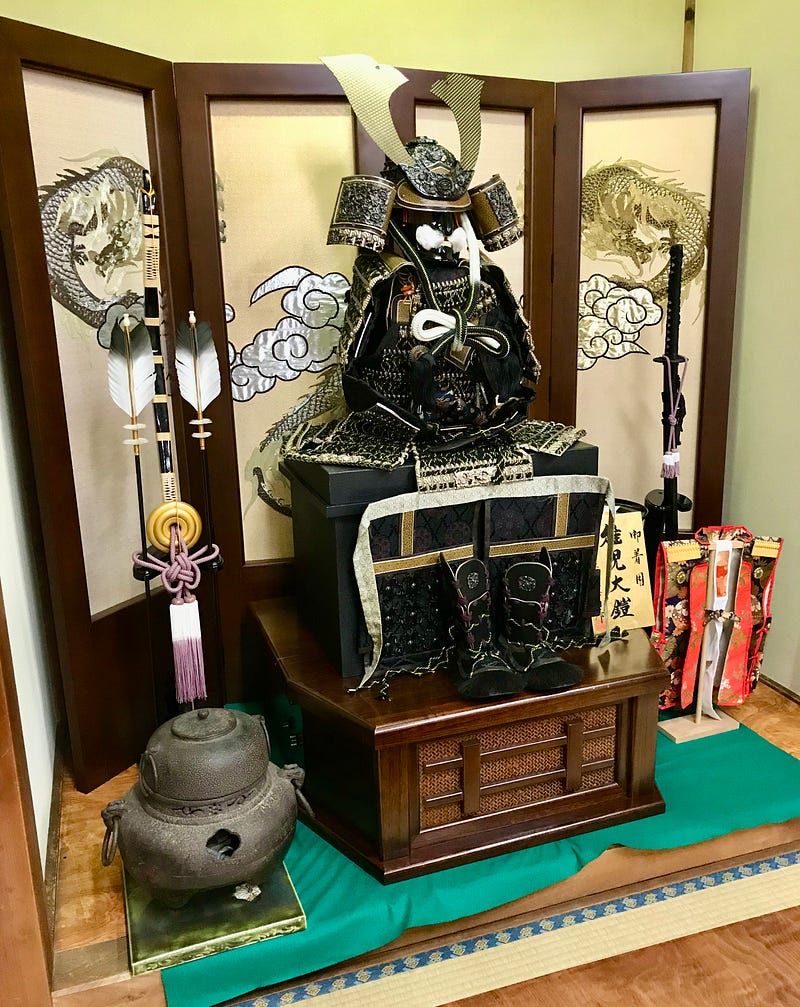
Samurai armor, arrows, and sword in front of a folding screen are decorations for Children's Day.
Children’s Day decorations. Shinchaya Inn. (©Diane Tincher)

Families visited shrines and gave offerings of armor, praying for the health and prosperity of all their sons, but most particularly, their heirs.

People began to decorate their houses with small displays of armor, helmets, swords, and arrows, symbolizing protection for their boys’ health. This custom continues to this day.

Carp streamers
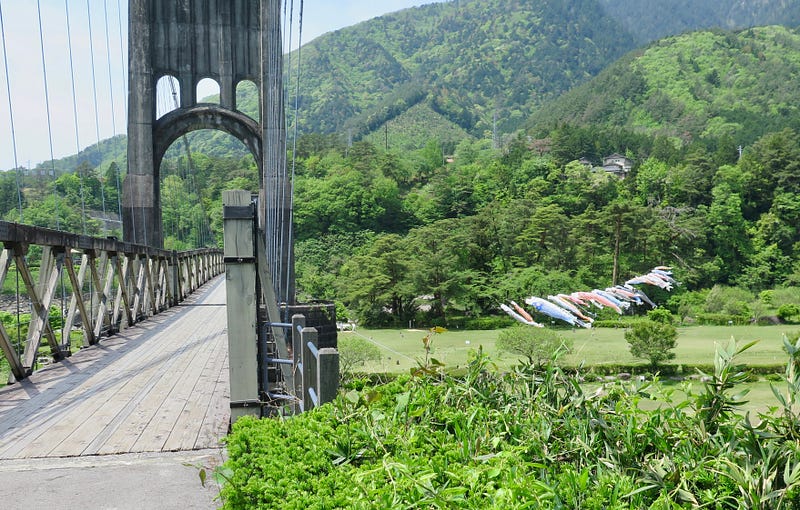
Carp streamers blow in the wind beside a wooden suspension bridge for Children's Day.
Carp streamers by Momosuke Bridge, Nagiso, Nagano. (©Diane Tincher)

During the Edo era (1603–1867), the practice of hanging koi-nobori, or windsock-like carp streamers, one for each boy in the family, began among the townspeople of Edo (Tokyo). 

Filled with strength, vitality, and adaptability, carp can survive in clear streams and muddy, in marshes and in lakes. They can persevere and struggle to swim upstream and even climb waterfalls. Koi-nobori streamers are hung with the prayer that a family’s sons will grow to be hardy, adaptable, and strong, like carp.

On the riverbanks of Edo, yet another custom began. Ishi-gasen, or stone-throwing fights, and it is exactly what it sounds like. This custom resulted in some serious injuries and even deaths among the young participants, so thankfully, the shogun soon outlawed it.
Screen Shot 2022 04 21 at 17.31.55
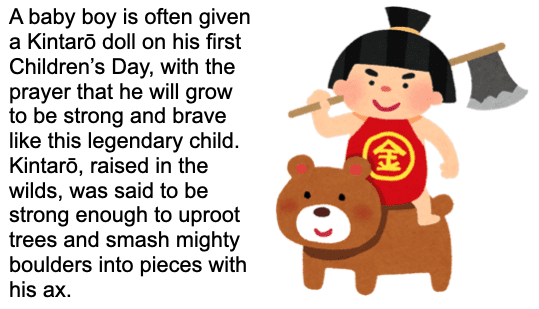
Kintarō. (irasutoya)

Children’s Day

In 1948, Boys’ Days was changed to Children’s Day and was christened as a day to celebrate not just children but to honor the family unit. In contrast to Girls’ Day on March 3, Children’s Day is a national holiday.

Celebratory Food
7F367523 49F5 4535 90D2 86EEF10B5661 1 201 a
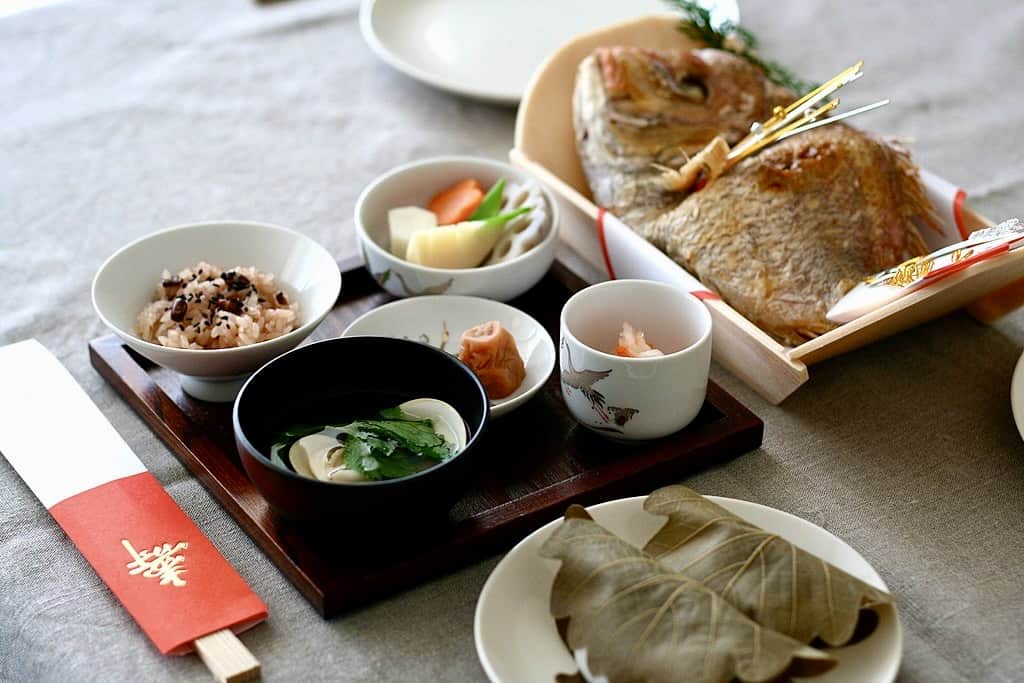
Children’s day celebratory meal. (Anzai Keisuke, Creative Commons)

Grandparents and families gather on Children’s Day to eat a special meal, often featuring carp, rice cooked with adzuki beans, and seasonal vegetables.

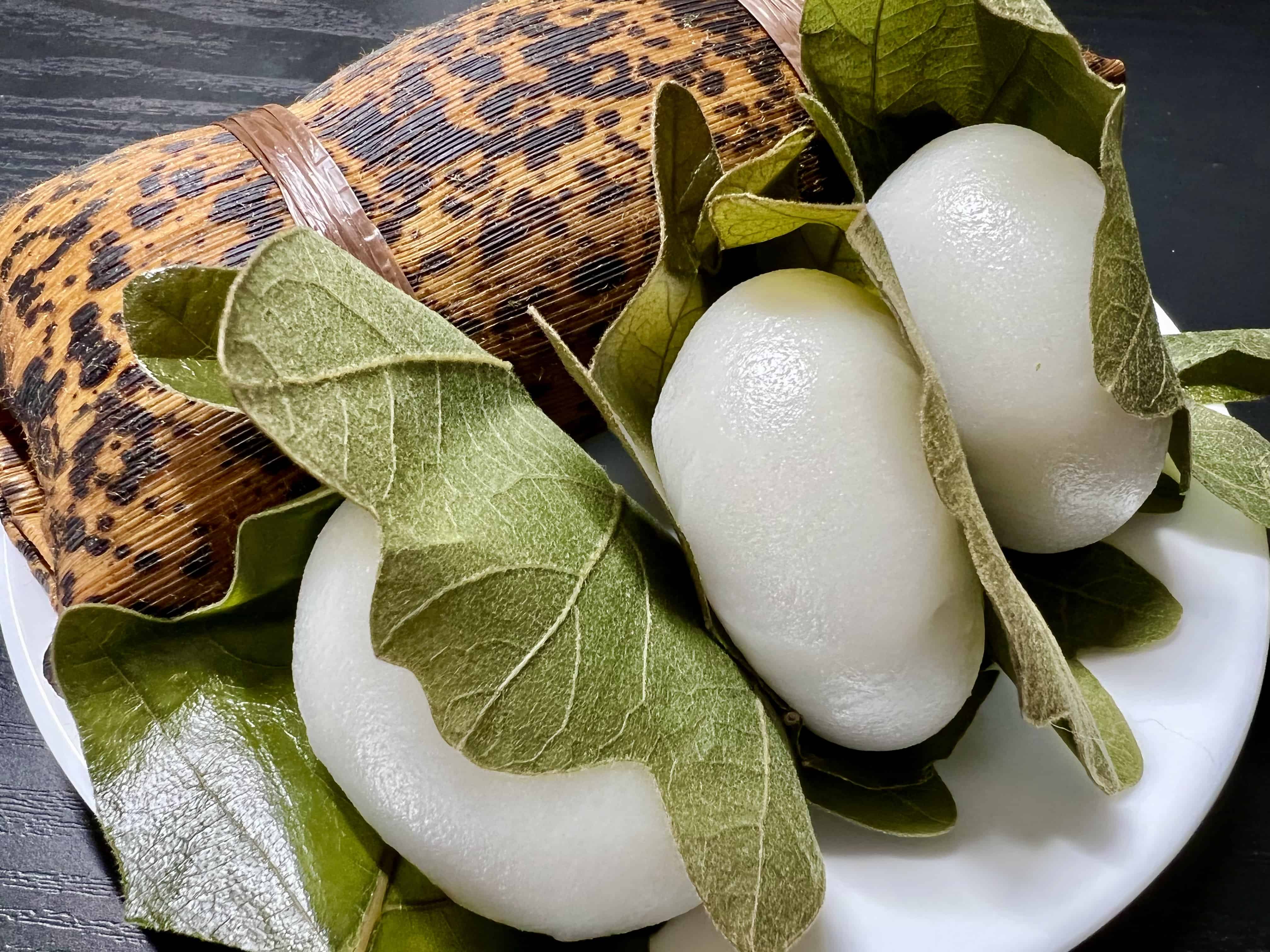
Children’s day is known for two special types of sweets. Chimaki are rice dumplings wrapped in bamboo leaves, chi signifying cleverness. Kashiwa-mochi are sticky rice cakes — soft yet chewy — filled with sweet red bean paste wrapped in oak leaves. Oak leaves symbolize force, manliness, and endurance.
IMG 1055
Kagoshima style chimaki and kashiwa mochi. (©diane tincher)

References:

図説民俗探訪事典 compiled by 大島 暁雄, http://www.ningyo-kyokai.or.jp/sekku/tango.html, https://www.nytimes.com/1991/05/01/garden/for-children-s-day-sweets-of-course.html, and more.


If you have questions about Japan or suggestions for articles, please add them in the comments. For more photos and information on Japan, follow me on instagram at: https://www.instagram.com/more_than_tokyo/

festivals holidays Japan Japanese culture Japanese Customs Samurai
Share
Write Comment
Leave a Reply Cancel reply

Your email address will not be published. Required fields are marked *

This site uses Akismet to reduce spam. Learn how your comment data is processed.

Previous Post

How the Wild Boar Became Divine

Next Post

The Kumaso Cave and How a Cross-Dressing Prince Ended a Great Tribe

If you enjoy my work and would like to help me continue creating, consider supporting me.

Thank you!
PayPal - The safer, easier way to pay online!
Newsletter

Subscribe

Enter your email for notifications of our latest posts

Tags
architecture Buddhism Christianity Edo Era elderly festivals folklore Food Ghosts gratitude Haunting Hiking history holidays honesty Japan Japanese Japanese cuisine Japanese culture Japanese Customs Japanese Food Japanese History Japanese Language Japanese words that English needs Japan Tips Japan travel Japan Travel Tips Jizō Kagoshima Kōyō Living in Japan longevity Manners Nature New Year Ninja Samurai Shinto shogun Shrine Tips Trade Travel volcano Washoku
Featured Posts
History Religion

The Shimabara Rebellion—The Last Stand of Japan’s Christians

July 8, 2026
History

The Okamoto Daihachi Affair—The Scandal That Turned the Tide Against Christianity in Japan

July 6, 2026
History

The 47 Ronin—Disgrace, Revenge, and Death

June 23, 2026
Destinations Folklore Ghosts

Omatsu Daigongen—The Amazing Cat Temple of Shikoku

June 1, 2026
History

Oura Kei—Unstoppable Pioneering Tea Merchant

January 19, 2026
Most Popular

Shinto — The Peaceful Spiritual Heart of Japan

Shinto gate Lake Biwa

Komorebi—A Beautiful Japanese Word that English Needs

Nakasendo Way

Dondoyaki—Burning New Year’s Decorations to Send off the God of the New Year

Dondoyaki fire

The Jizo Statues of Nashi-no-Ki—1,000s of Unique Offerings of Thanks

Jizo statues at Nashi no Jizo, Sado.

Sugawara no Michizane —Japan’s Three Most Infamous Vengeful Ghosts, part 3

Sugawara Michizane
You might also like
Nakasendo Way
Nature Language

Komorebi—A Beautiful Japanese Word that English Needs

1 Min read
November 11, 2021
temple pagoda
Culture Living in Japan

Death in Japan

8 Mins read
March 22, 2022
Elephant by Kano Furunobu
History

The Incredible Tale of the Elephant Who Had an Audience with the Japanese Emperor

7 Mins read
April 6, 2022
Exploring the wonders of rural Japan
Exploring the Wonders of Rural Japan
  • Home
  • About
  • Recommended Books
  • Interview
  • Privacy Policy
Exploring the Wonders of Rural Japan
  • Home
  • About
  • Discover
    • History
    • Culture
    • Nature
    • Food
    • Living in Japan
    • Destinations
    • Language
    • Tips
  • Interview
  • Recommended Books
We use cookies on our website to give you the most relevant experience by remembering your preferences and repeat visits. By clicking “Accept”, you consent to the use of ALL the cookies.
Do not sell my personal information.
Cookie SettingsAccept
Manage consent

Privacy Overview

This website uses cookies to improve your experience while you navigate through the website. Out of these, the cookies that are categorized as necessary are stored on your browser as they are essential for the working of basic functionalities of the website. We also use third-party cookies that help us analyze and understand how you use this website. These cookies will be stored in your browser only with your consent. You also have the option to opt-out of these cookies. But opting out of some of these cookies may affect your browsing experience.
Necessary
Always Enabled
Necessary cookies are absolutely essential for the website to function properly. These cookies ensure basic functionalities and security features of the website, anonymously.
CookieDurationDescription
cookielawinfo-checkbox-analytics11 monthsThis cookie is set by GDPR Cookie Consent plugin. The cookie is used to store the user consent for the cookies in the category "Analytics".
cookielawinfo-checkbox-functional11 monthsThe cookie is set by GDPR cookie consent to record the user consent for the cookies in the category "Functional".
cookielawinfo-checkbox-necessary11 monthsThis cookie is set by GDPR Cookie Consent plugin. The cookies is used to store the user consent for the cookies in the category "Necessary".
cookielawinfo-checkbox-others11 monthsThis cookie is set by GDPR Cookie Consent plugin. The cookie is used to store the user consent for the cookies in the category "Other.
cookielawinfo-checkbox-performance11 monthsThis cookie is set by GDPR Cookie Consent plugin. The cookie is used to store the user consent for the cookies in the category "Performance".
viewed_cookie_policy11 monthsThe cookie is set by the GDPR Cookie Consent plugin and is used to store whether or not user has consented to the use of cookies. It does not store any personal data.
Functional
Functional cookies help to perform certain functionalities like sharing the content of the website on social media platforms, collect feedbacks, and other third-party features.
Performance
Performance cookies are used to understand and analyze the key performance indexes of the website which helps in delivering a better user experience for the visitors.
Analytics
Analytical cookies are used to understand how visitors interact with the website. These cookies help provide information on metrics the number of visitors, bounce rate, traffic source, etc.
Advertisement
Advertisement cookies are used to provide visitors with relevant ads and marketing campaigns. These cookies track visitors across websites and collect information to provide customized ads.
Others
Other uncategorized cookies are those that are being analyzed and have not been classified into a category as yet.
SAVE & ACCEPT