

• Home
  • About
  • Discover
    • History
    • Culture
    • Nature
    • Food
    • Living in Japan
    • Destinations
    • Language
    • Tips
  • Interview
  • Recommended Books
Exploring the Wonders of Rural Japan
History

How the Wild Boar Became Divine

The story behind unusual Shinto shrine guardians

Visitors to shrines in Japan are usually greeted by a pair of fierce statues, komainu, on either side of the entrance. Komainu, lion-dogs, have been guarding shrines and temples in Japan since the 6th century, when they came along with Buddhism to Japan from China as shishi, or guardian lions. Over the years they developed into the distinctively Japanese lion-dog statues we see today.
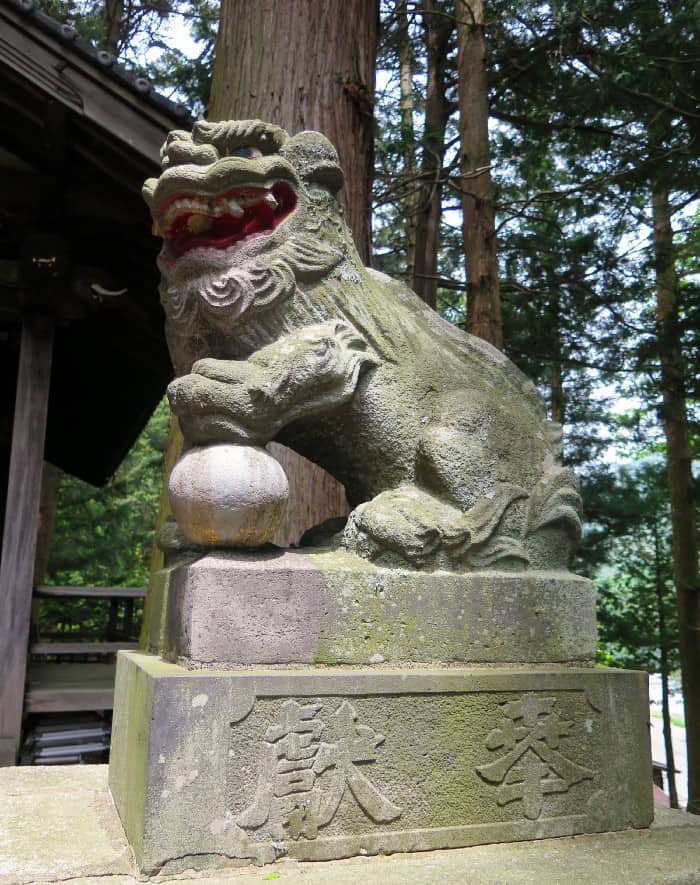
Komainu shrine guardian
Komainu, Hachiman Shrine, Narai, Nagano Prefecture.

Komainu come in pairs: one with an open mouth, a-gyo, and one with a closed mouth, un-gyo. A and un are the first and last letters of both the Sanskrit and the Japanese alphabets, representing the beginning and ending of all things, not unlike the Alpha and the Omega in Western tradition.
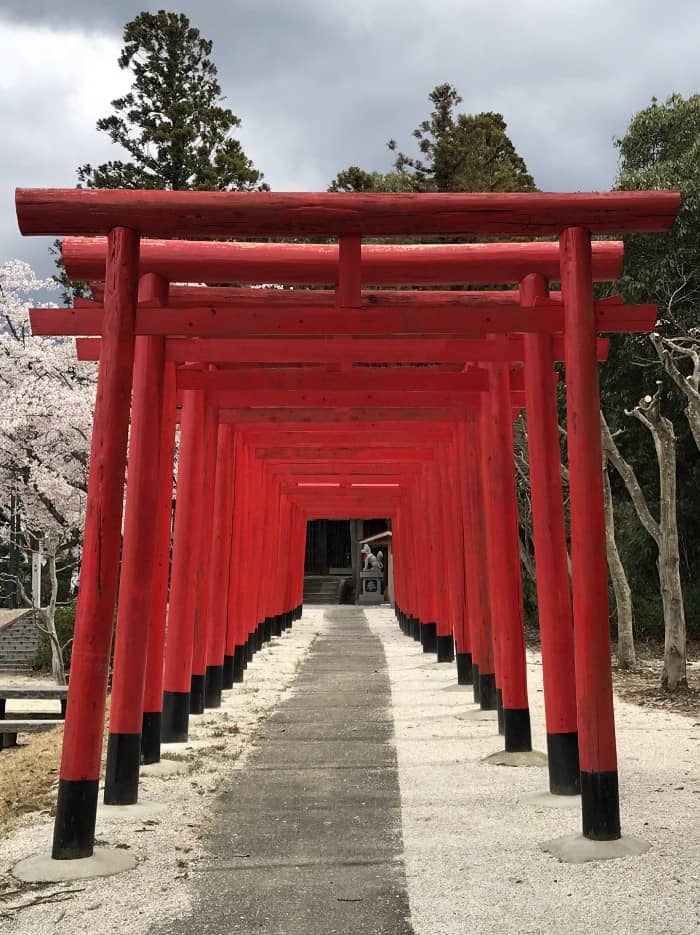
Inari shrine with fox guardian
Fox guardian, Asahigaoka-Fushimi Inari shrine, Nakatsugawa, Gifu Prefecture.

If you visit one of the over 30,000 Inari Shrines in Japan, you will see fox guardians. There are a small number of shrines guarded by tigers, and even fewer guarded by wild boars, koma-shishi. Not to be confused with the Chinese shishi, or lions, this word shishi is from the Japanese inoshishi, or wild boar.

Why boars?

In the 8th century, the powerful monk Dōkyō cured the illness of the retired Empress Kōken. In gratitude, she granted him political and religious authority. The ambitious Dōkyō then connived to receive a message from an oracle at Usa, an important Shinto shrine in Oita Prefecture, which stated that he was destined to become the next emperor.

In order to confirm Dōkyō’s message, the devout Buddhist and influential aristocrat, Wake no Kiyomaro, was sent to Usa Shrine. He received a contradictory message from an oracle declaring that the direct imperial line of the Sun Goddess, Amaterasu, should not be broken. Dōkyō could not become emperor.

This news enraged the monk, who used his influence with the empress to have Kiyomaro beaten, to have his hamstrings severed, and to banish him to Osumi, in what is now Kagoshima Prefecture.

On his way south into banishment, the faithful Kiyomaro wanted to again visit Usa, to thank the oracle for the message that protected the sanctity of the imperial line and prevented the power-hungry monk, Dōkyō, from seizing control.

As Kiyomaro’s palanquin was carried from the northern coast of Kyushu along the road leading to the inland shrine, 300 wild boars suddenly rushed out of the woods and surrounded his entourage. The animals escorted and protected Kiyomaro as he traveled the final 40 kilometers to Usa. When he disembarked from his palanquin, his legs were miraculously healed.

From that time on, boars were considered the divine attendants of Kiyomaro, protector spirits, and messengers of the gods.
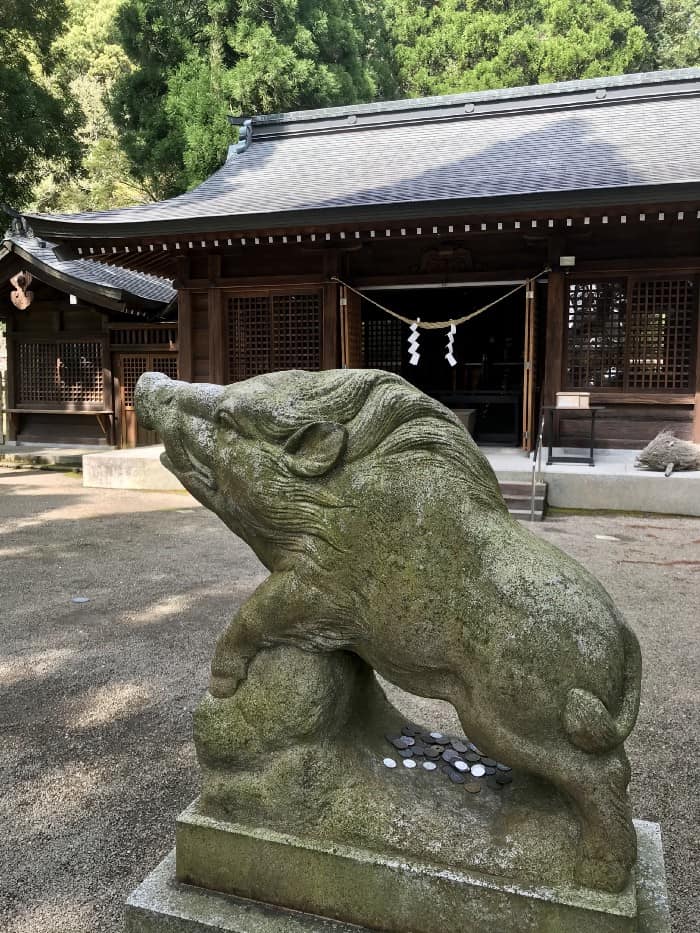
Boar guardian at Wake Shine, Kagoshima
Koma-shishi, Wake Shrine, Kagoshima Prefecture.

The Tables are Turned

While Kiyomaro was in Osumi, Empress Kōken returned to the throne as Empress Shōtoku. Upon her death, the newly installed Emperor Kōnin turned on the monk Dōkyō and banished him to Shimotsuke, now Tochigi Prefecture. He then recalled Kiyomaro from exile and granted him the elevated position of Junior Minister of State and governor of his home province of Bizen as well as Mimasaka, both part of Okayama Prefecture today.

Kiyomaro requested an investigation into the oracles at Usa. This caused a great upheaval, exposed two frauds, and led to the resignation of the head priest.

Kiyomaro remained an influential figure in the Nara government and was instrumental in relocating the capital to Heian-kyo (Kyoto) under the reign of Emperor Kanmu. This move was partially instigated as a means of separating the powerful Nara Buddhists from their influence on government.

After Kiyomaro’s death, he was deified as the Shinto kami, Goō Daimyōjin, Great Protector of the Emperor.
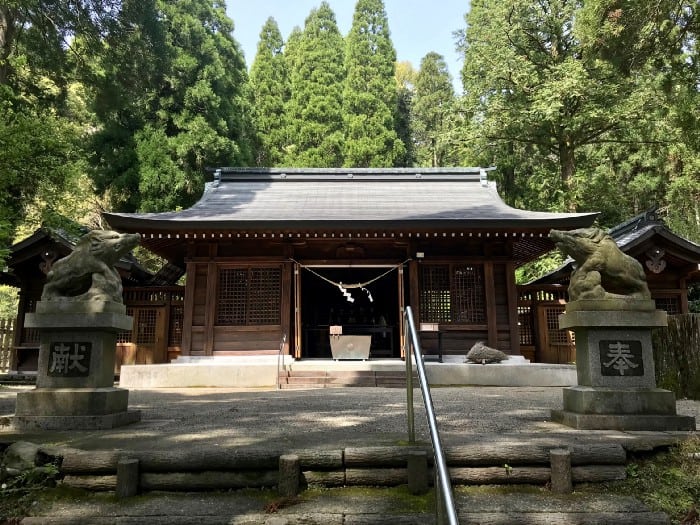
Boar guardians at Wake Shrine, Kagoshima
Wake Shrine, Kirishima, Kagoshima Prefecture.

Wake Shrine

In 1853, Shimadzu Nariakira, the lord of Satsuma and Osumi (Kagoshima Prefecture), conducted research that determined where Kiyomaro had stayed during his exile. Wake Shrine was built in that place for the deified Kiyomaro, in appreciation of his important contribution to saving the direct lineage of the imperial throne. Boars are the guardians, and a white boar captured from the nearby mountains, affectionately called Wake-chan, is kept as a sacred animal.

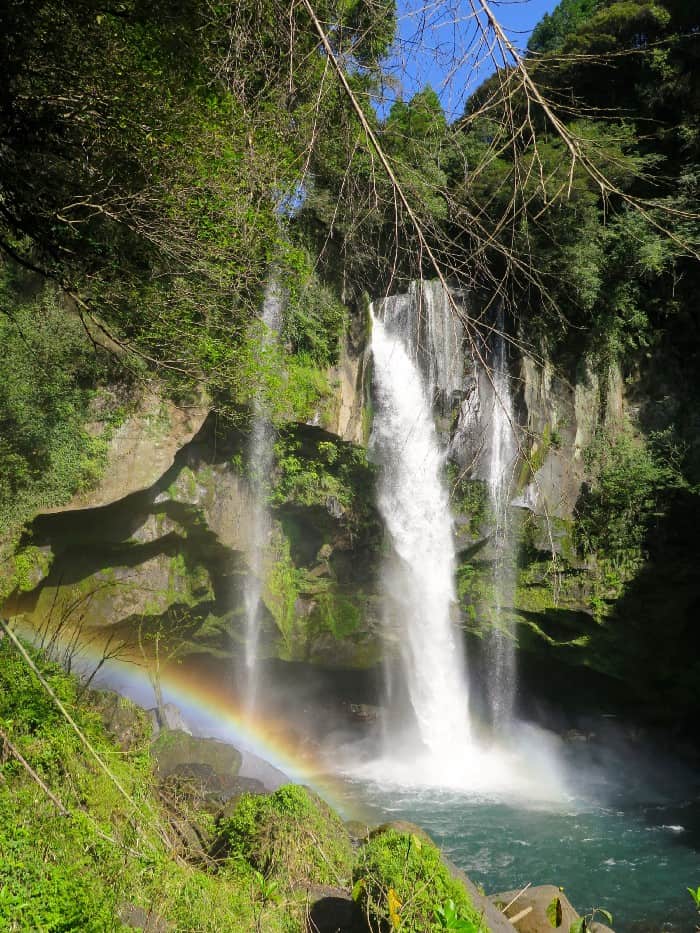
Curiously, Wake Shrine is home to the largest ema, prayer tablet, in the world. It depicts Kiyomaro and a white boar posed in front of Inukai Falls, the beautiful waterfall located across from the shrine.
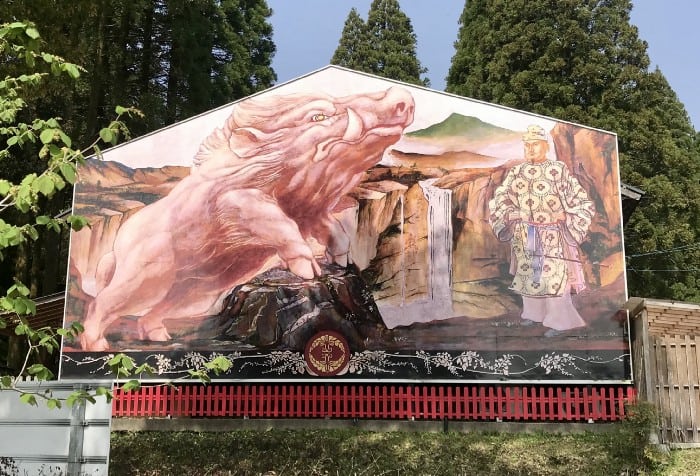
Boar ema at Wake Shrine, Kagoshima
8.3 by 12.5 meter ema, painted by Kan Shishino, Wake Shrine, Kirishima, Kagoshima Prefecture.
Waterfall beside Wake Shrine, Kagoshima
Inukai Falls, near Wake Shrine, Kirishima, Kagoshima Prefecture.

Photos ©Diane Tincher


If you have questions about Japan or suggestions for articles, please add them in the comments. For more photos and information on Japan, follow me on instagram at: https://www.instagram.com/more_than_tokyo/

Japan Japan travel Japanese culture Japanese History Shinto shishi
Share
Write Comment
Leave a Reply Cancel reply

Your email address will not be published. Required fields are marked *

This site uses Akismet to reduce spam. Learn how your comment data is processed.

Previous Post

The Three-Legged Crow—Unforgettable Guardian of the Kumano Kodo Pilgrimage

Next Post

Children’s Day in Japan—Carp Streamers, Samurai, and Sweets

If you enjoy my work and would like to help me continue creating, consider supporting me.

Thank you!
PayPal - The safer, easier way to pay online!
Newsletter

Subscribe

Enter your email for notifications of our latest posts

Tags
architecture Buddhism Christianity Edo Era elderly festivals folklore Food Ghosts gratitude Haunting Hiking history holidays honesty Japan Japanese Japanese cuisine Japanese culture Japanese Customs Japanese Food Japanese History Japanese Language Japanese words that English needs Japan Tips Japan travel Japan Travel Tips Jizō Kagoshima Kōyō Living in Japan longevity Manners Nature New Year Ninja Samurai Shinto shogun Shrine Tips Trade Travel volcano Washoku
Featured Posts
History Religion

The Shimabara Rebellion—The Last Stand of Japan’s Christians

July 8, 2026
History

The Okamoto Daihachi Affair—The Scandal That Turned the Tide Against Christianity in Japan

July 6, 2026
History

The 47 Ronin—Disgrace, Revenge, and Death

June 23, 2026
Destinations Folklore Ghosts

Omatsu Daigongen—The Amazing Cat Temple of Shikoku

June 1, 2026
History

Oura Kei—Unstoppable Pioneering Tea Merchant

January 19, 2026
Most Popular

Shinto — The Peaceful Spiritual Heart of Japan

Shinto gate Lake Biwa

Komorebi—A Beautiful Japanese Word that English Needs

Nakasendo Way

Dondoyaki—Burning New Year’s Decorations to Send off the God of the New Year

Dondoyaki fire

The Jizo Statues of Nashi-no-Ki—1,000s of Unique Offerings of Thanks

Jizo statues at Nashi no Jizo, Sado.

Sugawara no Michizane —Japan’s Three Most Infamous Vengeful Ghosts, part 3

Sugawara Michizane
You might also like
Nakasendo Way
Nature Language

Komorebi—A Beautiful Japanese Word that English Needs

1 Min read
November 11, 2021
temple pagoda
Culture Living in Japan

Death in Japan

8 Mins read
March 22, 2022
Elephant by Kano Furunobu
History

The Incredible Tale of the Elephant Who Had an Audience with the Japanese Emperor

7 Mins read
April 6, 2022
Exploring the wonders of rural Japan
Exploring the Wonders of Rural Japan
  • Home
  • About
  • Recommended Books
  • Interview
  • Privacy Policy
Exploring the Wonders of Rural Japan
  • Home
  • About
  • Discover
    • History
    • Culture
    • Nature
    • Food
    • Living in Japan
    • Destinations
    • Language
    • Tips
  • Interview
  • Recommended Books
We use cookies on our website to give you the most relevant experience by remembering your preferences and repeat visits. By clicking “Accept”, you consent to the use of ALL the cookies.
Do not sell my personal information.
Cookie SettingsAccept
Manage consent

Privacy Overview

This website uses cookies to improve your experience while you navigate through the website. Out of these, the cookies that are categorized as necessary are stored on your browser as they are essential for the working of basic functionalities of the website. We also use third-party cookies that help us analyze and understand how you use this website. These cookies will be stored in your browser only with your consent. You also have the option to opt-out of these cookies. But opting out of some of these cookies may affect your browsing experience.
Necessary
Always Enabled
Necessary cookies are absolutely essential for the website to function properly. These cookies ensure basic functionalities and security features of the website, anonymously.
CookieDurationDescription
cookielawinfo-checkbox-analytics11 monthsThis cookie is set by GDPR Cookie Consent plugin. The cookie is used to store the user consent for the cookies in the category "Analytics".
cookielawinfo-checkbox-functional11 monthsThe cookie is set by GDPR cookie consent to record the user consent for the cookies in the category "Functional".
cookielawinfo-checkbox-necessary11 monthsThis cookie is set by GDPR Cookie Consent plugin. The cookies is used to store the user consent for the cookies in the category "Necessary".
cookielawinfo-checkbox-others11 monthsThis cookie is set by GDPR Cookie Consent plugin. The cookie is used to store the user consent for the cookies in the category "Other.
cookielawinfo-checkbox-performance11 monthsThis cookie is set by GDPR Cookie Consent plugin. The cookie is used to store the user consent for the cookies in the category "Performance".
viewed_cookie_policy11 monthsThe cookie is set by the GDPR Cookie Consent plugin and is used to store whether or not user has consented to the use of cookies. It does not store any personal data.
Functional
Functional cookies help to perform certain functionalities like sharing the content of the website on social media platforms, collect feedbacks, and other third-party features.
Performance
Performance cookies are used to understand and analyze the key performance indexes of the website which helps in delivering a better user experience for the visitors.
Analytics
Analytical cookies are used to understand how visitors interact with the website. These cookies help provide information on metrics the number of visitors, bounce rate, traffic source, etc.
Advertisement
Advertisement cookies are used to provide visitors with relevant ads and marketing campaigns. These cookies track visitors across websites and collect information to provide customized ads.
Others
Other uncategorized cookies are those that are being analyzed and have not been classified into a category as yet.
SAVE & ACCEPT