

Loyalty, Vengeance, and the Akō Incident of 1703
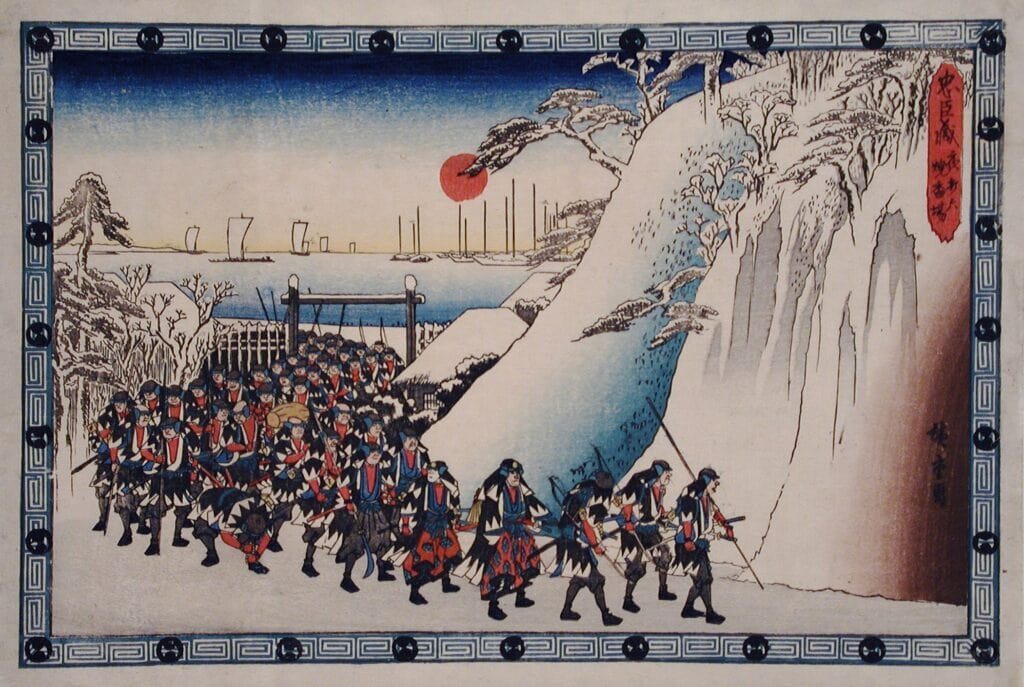
The story of the 47 rōnin begins in 1701, when two daimyō, feudal lords, were tasked with organizing a reception at Edo Castle for Emperor Higashiyama’s envoys. These men, Asano Takumi-no-Kami Naganori, the youthful ruler of the Akō Domain in western Honshū, and Kamei Korechika, lord of the even more westerly Tsuwano Domain, were to be instructed in court etiquette by Kira Kozuke-no-Suke Yoshinaka, one of Shogun Tokugawa Tsunayoshi’s hatamoto samurai.
The incident
Asano and Kemei were meeting with Kira in a luxurious hall within the honmaru, the inner citadel of Edo Castle. Kira, hereditary Master of Court Ceremony, was a fiefless samurai of lower ranking than a daimyō. His job was to ensure proper protocol was observed during the envoys’ visit and to instruct these countryside lords in the finer points of court etiquette.
In the course of this instruction, Kira treated the lords with open contempt. Perhaps he felt his students were too boorish to learn the refined manners of the elite. Or maybe he resented their failure to provide the gifts and bribes he felt he deserved. Or perhaps Kira was simply impolite, arrogant, and corrupt.
Both Asano and Kamei were getting fed up with Kira and his high-and-mighty ways, and Kamei was ready to attack him. Fortunately for Kamei, his retainers intervened and discreetly gave Kira a substantial bribe. Kira’s attitude towards Kamei suddenly improved.
But Kira continued to abuse Asano, whose retainers had given no bribe. When Kira called him a mannerless country boor, Asano could endure the insults no longer. In the grand Matsu no Ōrōka hallway within the Honmaru Goten castle residence, he unsheathed his short sword and slashed Kira across the face. Guards swiftly restrained Asano.
Although Kira was not badly injured, attacking a shogunate official within the castle grounds was a serious offense. Even drawing a blade was forbidden. Asano was ordered to commit seppuku, the samurai’s honorable suicide. His punishment did not end there. His fief was to be confiscated, and his vassals would become rōnin, masterless samurai.
When news of the incident and Asano’s sentence reached Akō, Asano’s chief retainer, Ōishi Kuranosuke Yoshio, moved Asano’s family to safety before surrendering Akō Castle to the shogunate’s representatives. Then he quietly set to plotting revenge.
The rōnin’s plot
Ōishi and 46 of Asano’s loyal retainers, now rōnin, made a pact to avenge their lord’s death.
Anticipating retaliation, Kira fortified his mansion and stationed guards to watch for any sign of an attack. Ōishi realized he would need to be patient. He advised his fellow rōnin to take up trades or become monks, while he himself played the fool in Kyoto, carousing in taverns and brothels.
Kira’s spies followed Ōishi and came to believe he was no threat. They reported his behavior to their lord, and Kira began to sleep more easily at night. As the months passed, he lowered his guard.
Behind the façade, Ōishi quietly continued his preparations. He divorced his wife and sent her away to safety. He gave his eldest son the choice to fight with him or stay with his mother. He chose to fight.
Still, Ōishi continued in his drunken and decidedly un-samurai behavior. Kira’s spies reported this to Kira, who was starting to believe that Asano’s rōnin were, like their late master, no more than boorish country samurai with no discipline or integrity. He let his extra guards go.
Meanwhile, Asano’s rōnin had gathered at Kannon-ji in Edo to plot their revenge. Those who had been tradesmen sought employment in households connected to Kira and familiarized themselves with his mansion. One married the daughter of the man who had built his residence and obtained its blueprints. Others gathered weapons that had to be smuggled into Edo past checkpoints that forbade their import.
The attack
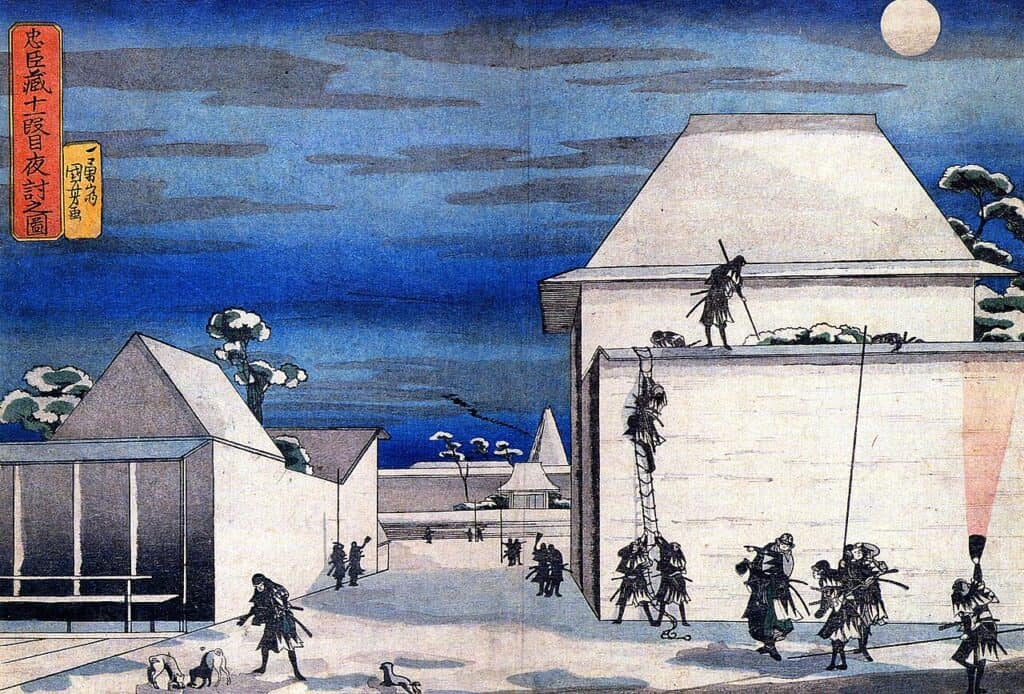
Nearly two years after Asano’s death, Ōishi quietly left Kyoto and joined his fellow rōnin in Edo. They agreed that no innocents should be hurt. Their target was Kira and Kira alone. They were to restrain the guards and warn the neighbors that they were there only to avenge their master, Asano. No harm would come to them.
In the early hours of January 30, 1703, the 47 rōnin carried out their plan. The guards were overpowered and bound, the neighbors were informed of their revenge raid, archers took up positions to prevent anyone from escaping, and a drumbeat signaled the start of the attack.
Ōishi led half the rōnin against the front gate, while his son led the attack at the rear. Kira’s samurai held off the attack at the front, but Ōishi’s son and his men broke through the back and entered the residence.
Kira, awakening in terror, hid in a closet with his wife and female servants. Although his vassals tried to defend their lord, they were no match for the determined and well-prepared rōnin. Those who attempted to escape and summon help were cut down by arrows from the rooftop archers.
By the time the fighting subsided, sixteen of Kira’s men lay dead, and twenty-two more were wounded. But Kira was nowhere to be found. Searching the mansion room by room, Ōishi entered Kira’s bedchamber and placed a hand on the bedding. The futons were warm. Kira was in the house.
At this point, the story begins to blur into legend, and later retellings offer a far more dramatic account of what happened next.
According to the popular version, one of Ōishi’s men found a hidden door concealed behind a hanging scroll. It led to a secret courtyard and a small storage room. After dispatching the two guards stationed outside, the rōnin opened the door to find a man clutching a dagger. He would not tell them who he was.
Who else could it be?
They sounded a whistle—the signal that Kira had been found—and Ōishi rushed to the doorway. Lifting his lantern, he easily recognized Kira by the scar on his face left by Asano’s attack.
Ōishi knelt and, in deference to Kira’s higher rank, politely informed Kira that they were Asano’s former retainers and had come to avenge their lord. He then offered Kira the chance to die with honor. Presenting Asano’s own short sword, Ōishi invited him to commit seppuku and promised to serve as his kaishakunin, the second who would sever his head to spare him a lingering death.
No words escaped Kira’s mouth as he crouched and cowered before these honorable samurai. At last, Ōishi himself freed Kira of his head.
The historical account, however, is considerably less dramatic.
Several rōnin discovered Kira cowering in the closet. When he refused to identify himself, Takebayashi Takashige struck him through, and Hazama Mitsuoki severed his head.
Both accounts continue:
Their task complete, the rōnin extinguished all lanterns and fires and left the house. Carrying Kira’s head, they set out for Sengaku-ji to report their success to their fallen lord.
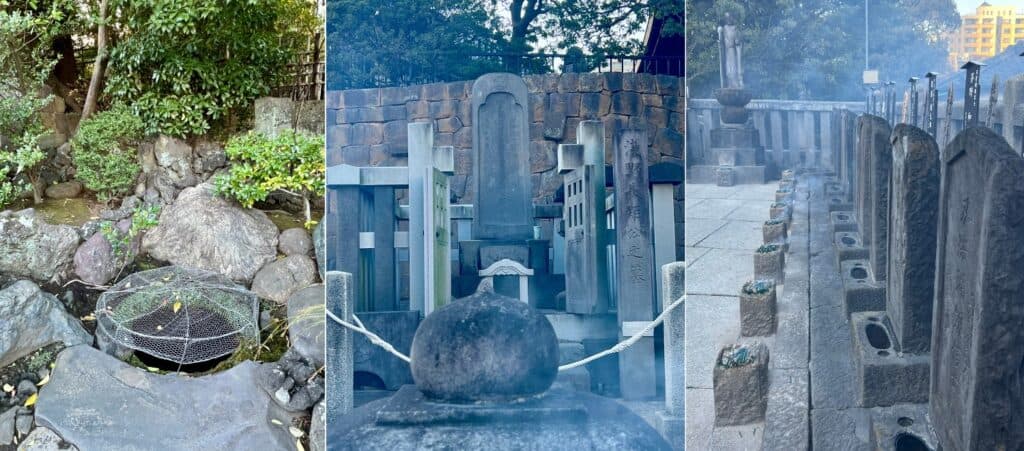
After Kira was killed, Ōishi ordered the Terasaka Kichiemon to bring word back to Akō that their lord had finally been avenged. The remaining 46 rōnin brought Kira’s head to Sengaku-ji, where Asano was interred. There, they washed it in a well and laid it, together with their lord’s short sword, before Asano’s grave. Then, the men gave all their money to the temple priest, asking him to see to their burials. Having fulfilled their duty, they surrendered themselves to the authorities and awaited judgment.
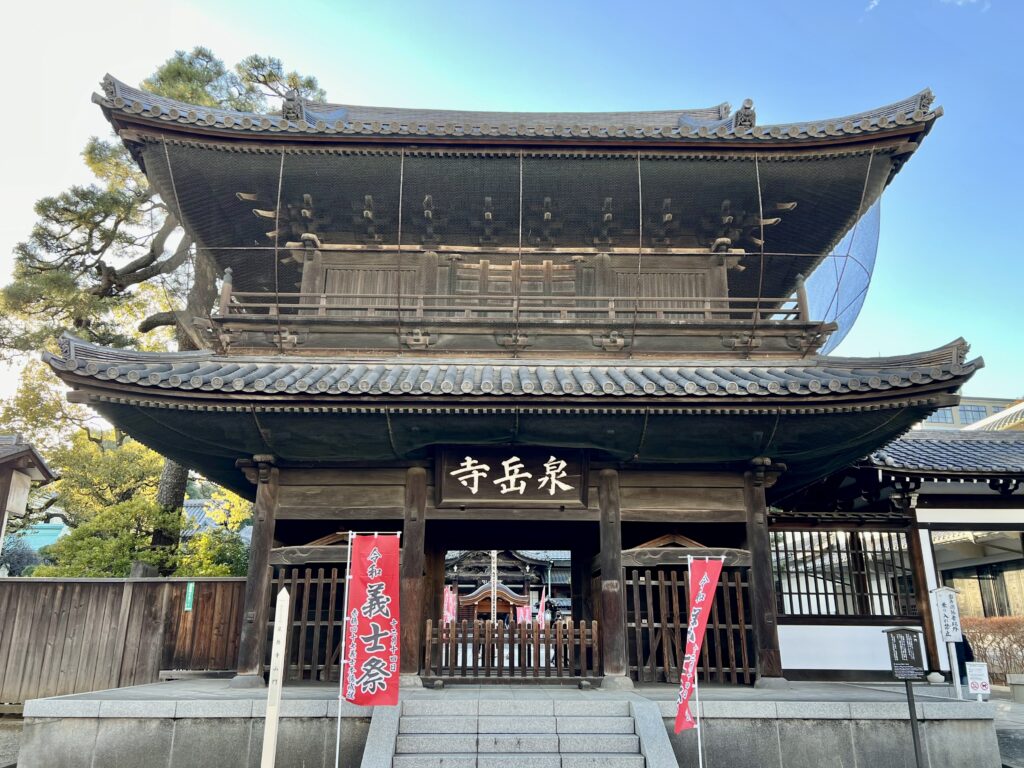
News of the raid quickly spread throughout Edo. Kira had few admirers, and crowds gathered to praise the rōnin for their loyalty and devotion to their fallen lord.
Legacy
The shogunate now faced a dilemma. The rōnin were being publicly celebrated for upholding the warrior code. In the eyes of many, they had behaved exactly as faithful samurai should. Yet they had taken the law into their own hands, carried out a deadly raid, and killed a shogunate official.
After considerable debate, Shogun Tokugawa Tsunayoshi, most remembered for his laws against animal cruelty, rendered his decision. The rōnin would not be executed as common criminals. Instead, they would be permitted to die as samurai.
From Ōishi’s sixteen-year-old son to the oldest among them, the men were ordered to commit seppuku. At the residences where they were being held, they knelt before witnesses and ritualistically cut open their stomachs.
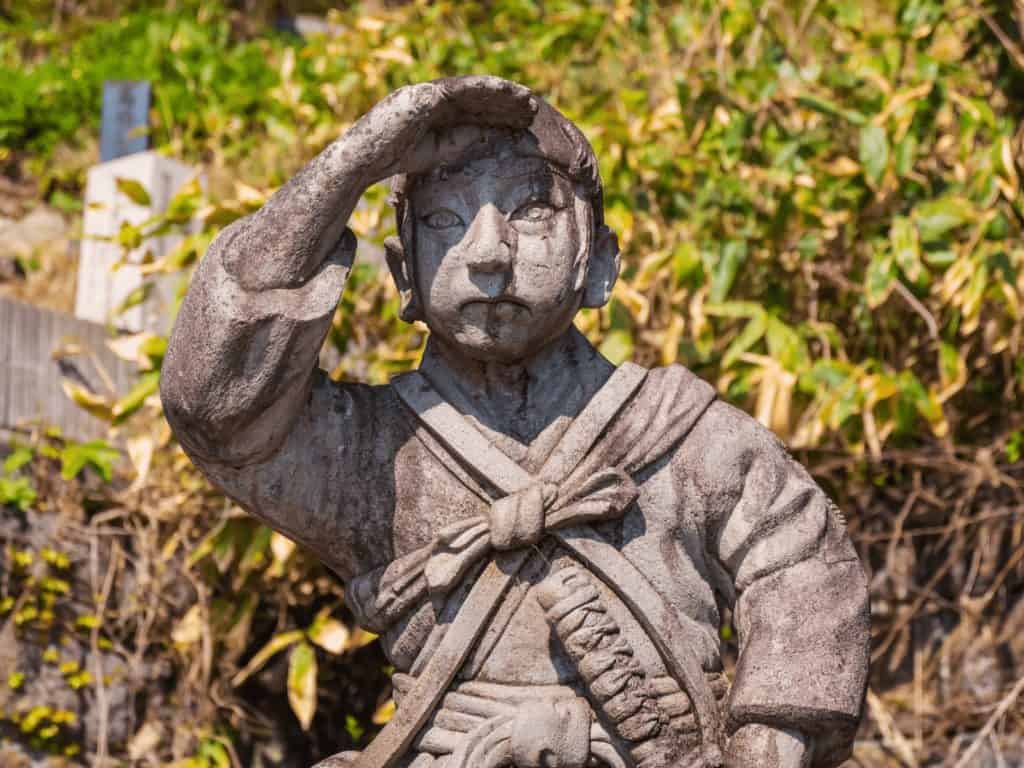
Their remains were laid to rest beside their lord at Sengaku-ji, where visitors continue to offer incense and prayers at the graves of Asano, his family, and the loyal rōnin who avenged him. The temple’s small museum preserves statues of the forty-seven men as well as relics connected with the raid that made them famous.
The story of the forty-seven rōnin has become one of Japan’s most enduring and influential historical tales. Often known by the title of its most well-known retelling, Chūshingura —The Treasury of Loyal Retainers—it has inspired countless books, kabuki plays, films, television dramas, and other adaptations over the past three centuries.
To read another tale of samurai loyalty, albeit tragically misguided, see my article on the Byakkotai.
If you have questions about Japan or suggestions for articles, please add them in the comments. For more photos and information on Japan, follow me on instagram at: https://www.instagram.com/more_than_tokyo/