

Bribery, forgery, and betrayal
Background
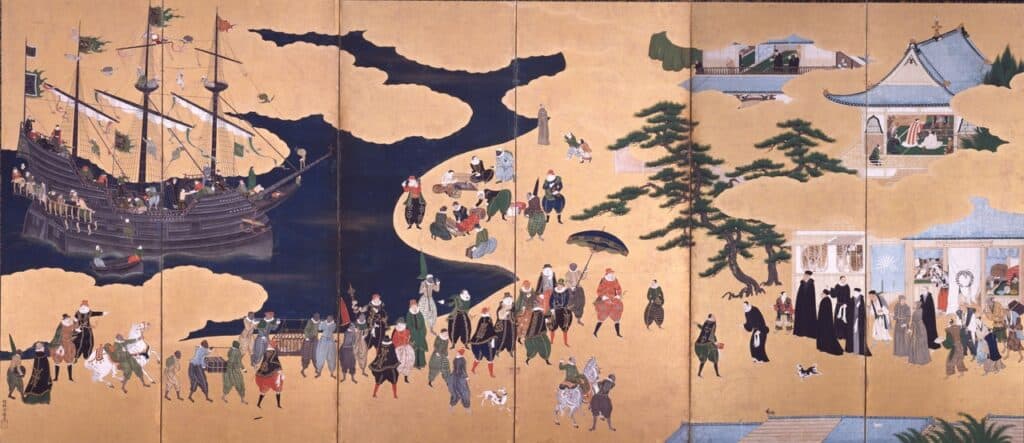
Christianity reached Japan in 1549, when the Jesuit missionary Francis Xavier landed on the southern island of Kyushu. With the permission of the local daimyō, or feudal lord, he began to preach. The new faith spread rapidly throughout Kyushu, aided by the conversion of influential daimyō, including Ōmura Sumitada of Ōmura and Arima Harunobu of Hinoe (both in present-day Nagasaki Prefecture). In their zeal, these lords compelled their subjects to become Catholics and ordered the destruction of Buddhist temples and Shinto shrines. By the late sixteenth century, an estimated 300,000 Japanese were Christians.
Along with Christianity came overseas commerce. Portuguese merchants introduced Japan to the lucrative trading networks of Southeast Asia. To regulate this trade, Toyotomi Hideyoshi established the red-seal licensing system, under which mostly hybrid Japanese and foreign vessels known as shuinsen, red-seal ships, carried official licenses, shuinjō, authorizing them to trade at ports throughout Southeast Asia. The system marked the ships as legitimate merchants, differentiating them from the wakō pirates who menaced the trade routes.
After establishing the Tokugawa shogunate in 1603, Tokugawa Ieyasu expanded the red-seal system. It was within this commercial and political environment that the Okamoto Daihachi Affair began.
Trouble with the Portuguese
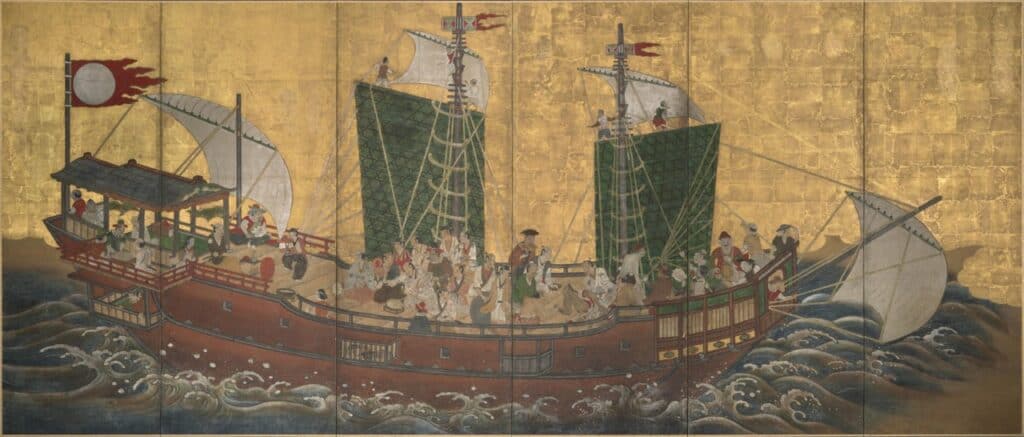
In 1609, a shuinsen belonging to Arima Harunobu, devout Catholic daimyō of Hinoe Domain, wintered at the Portuguese colony of Macau on their return from Cambodia. During its stay, a brawl broke out between Arima’s crew and some Portuguese. The altercation escalated into a full-blown riot that was finally suppressed by the Captain-Major of Macau, André Pessoa, but not before fifty of Arima’s sailors lay dead. Pessoa forced the Japanese to sign a declaration that they alone were to blame, but when they returned to Japan, they told a different story.
The following year, Pessoa sailed to Nagasaki with a dozen Jesuits and a cargo worth more than a million crowns, and submitted an official report of the incident in Macau to the Nagasaki magistrate, Hasegawa Fujihiro. Pessoa wanted to personally present his case to Tokugawa Ieyasu, who, although retired as shogun, still held the reins of power from his home in Sunpu (in present-day Shizuoka Prefecture). Fearing that the incident might jeopardize Nagasaki’s lucrative Portuguese trade, Hasegawa refused the request, concealed the affair from Ieyasu, and instead sent his own representative to report on the matter.
Pessoa was incensed. His frustration was compounded by longstanding complaints from Portuguese merchants about the shogunate’s ito-wappu system, which fixed the price of imported Chinese raw silk, the merchants’ most profitable commodity. Determined to present his grievances in person, Pessoa began making plans to go to Sunpu despite Hasegawa’s refusal to grant permission. Although Jesuit missionaries were able to persuade him not to go, news of his plan offended Hasegawa, who viewed it as a challenge to his authority.
Meanwhile, Arima Harunobu was intent on avenging the deaths of his men in Macau. Seeing an opportunity to settle accounts with Pessoa for his own affront, Hasegawa agreed to send Arima to petition Ieyasu for permission to seize Pessoa and his merchant vessel. At the same time, Arima requested authorization to dispatch a shuinsen to obtain kyara, the highest grade of aloeswood, used in incense and perfumes. Because Ieyasu had already asked Hasegawa to procure kyara for him, the men felt their bundled request would not be refused.
For Ieyasu to permit Arima to attack a Portuguese vessel would risk damaging relations with Portugal. But by this time, trade with Spain and the Dutch Republic was expanding, reducing Portugal’s relative importance. This, together with Ieyasu’s fondness for kyara, may have been behind his approval of Arima’s requests.
To monitor the attack, Ieyasu sent Okamoto Daihachi to Nagasaki. Formerly a retainer of Hasegawa, he was then serving Honda Masazumi, one of Ieyasu’s closest advisers. Meanwhile, Pessoa was presented with a shuinjō red-seal decree prohibiting Japanese ships from calling at Macau, and he was ordered to appear before Ieyasu. Fearing for his life, Pessoa attempted to leave Japan. Just then, Arima entered Nagasaki at the head of a fleet of red-seal ships.
With Hasegawa and Okamoto Daihachi looking on, Arima attacked Pessoa’s flagship, the Madre de Dios, outside Nagasaki Harbor at the end of 1610. The battle continued for four days and four nights. With his ship engulfed in flames, Pessoa ignited the powder magazine, sinking his crew, the priests, and valuable cargo. The Japanese killed any swimmers who survived the explosion. The engagement became known as the Madre de Dios Incident. Okamoto carried word of the successful attack back to Ieyasu.
The consequences were immediate. Portuguese ships stopped sailing to Japan, interrupting the import of Chinese raw silk. That same year, the Jesuit priest João Rodrigues—who had long served as interpreter and trusted adviser to Tokugawa—was exiled to Macau after Hasegawa and others leveled accusations against him. Rodrigues had long been instrumental to Portuguese-Japanese relations, and his exile further weakened the ties between Portugal and Japan.
In 1611, Portugal sought to mend those ties and restore trade. With help from the Satsuma Domain (present-day Kagoshima), it dispatched a diplomatic mission to seek audiences with Tokugawa Ieyasu at Sunpu and his son, the current shogun Tokugawa Hidetada, in Edo. This representative explained the Macau incident, requested the dismissal of Nagasaki magistrate Hasegawa Fujihiro, and sought compensation for the loss of the Portuguese vessel. The shogunate, however, held André Pessoa solely responsible for the affair and rejected both requests, agreeing only to resume trade.
Bribery and Fraud
Arima Harunobu was rewarded for the sinking of the Madre de Dios with a prized sword and the honor of Ieyasu’s granddaughter, Kunihime, given to his son as wife, causing him to leave his Catholic wife and marry Kunihime. But Arima Harunobu wanted more. He desired the return of territories lost to the Ryūzōji clan over the preceding decades. Having avenged the deaths of his retainers and delivered the kyara requested by Ieyasu, Arima believed the time had come to petition for their return.
At the same time, relations between Arima and Hasegawa were deteriorating. Hasegawa was a sworn enemy of Christians and not fond of the pious Arima. It didn’t help that Arima was the one to procure the kyara that Ieyasu wanted. Then Hasegawa insulted Arima by claiming his four-day assault on the Madre de Dios as “too half-hearted.” When he heard that, a furious Arima exclaimed, “Next time, I’ll sink Hasegawa instead!”
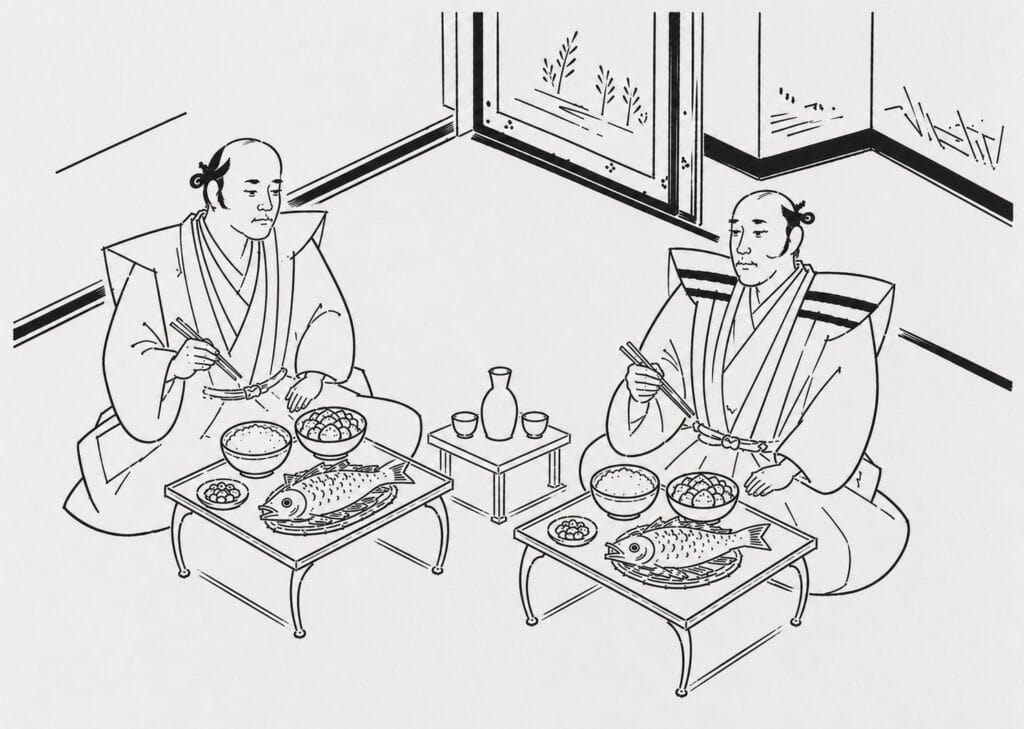
Okamoto Daihachi, a fellow Catholic whom Arima regarded as a brother in faith, saw an opportunity in Arima’s hope of recovering his lost lands. After returning from Sunpu, Okamoto visited Arima, who welcomed him with a feast. While discussing Arima’s desires, Okamoto claimed that Ieyasu would surely reward him with his former territories. He said he could secure the grant through the influence of his lord, Honda Masazumi, who oversaw the redistribution of fiefs. But this could be accomplished only if Arima provided money to facilitate the arrangement.
Believing Okamoto and confident that Honda’s backing would secure the restoration of his lands, Arima agreed. He handed over 6,000 ryō to Okamoto to expedite the process. Okamoto soon presented Arima with forged shuinjō, official red-seal documents, promising his territories’ return. Before long, Okamoto said the transfer had been thwarted by Hasegawa..
Months passed without any confirmation from the shogunate. When Arima Harunobu encountered Honda Masazumi during his obligatory visit to Edo, he discovered that Honda knew nothing of the arrangement.
Discovery and Punishment
Honda interrogated Okamoto at Sunpu, but he denied all wrongdoing, and the inquiry reached a deadlock. Although Arima had committed an offense by paying the bribe, because his eldest son, Naozumi, was married to Ieyasu’s granddaughter, Honda left Arima’s judgment to Ieyasu.
Ieyasu ordered the Sunpu town magistrate to conduct a formal investigation. In the second month of 1612, Okamoto was arrested. Under severe torture, he confessed to forging the shuinjō. He accused Arima of plotting to assassinate Hasegawa, citing his earlier threat to “sink” the Nagasaki magistrate.
After Okamoto’s confession, Honda summoned Arima. He admitted that he had indeed threatened to kill Hasegawa.
Okamoto was paraded through the streets of Sunpu for forging shuinjō and eliciting bribes before being burned alive on the banks of the Abe River. The next day, Arima was exiled for bribery and for conspiring to murder Hasegawa. His heir, Naozumi, was permitted to succeed as head of the Arima family.
Arima was soon ordered to commit seppuku. As a Christian, however, he refused to take his own life. Instead, in the fifth month of 1612, he placed a crucifix before him, knelt, and ordered one of his retainers to behead him. He was forty-six years old.
Effect on Christians
(Public Domain)
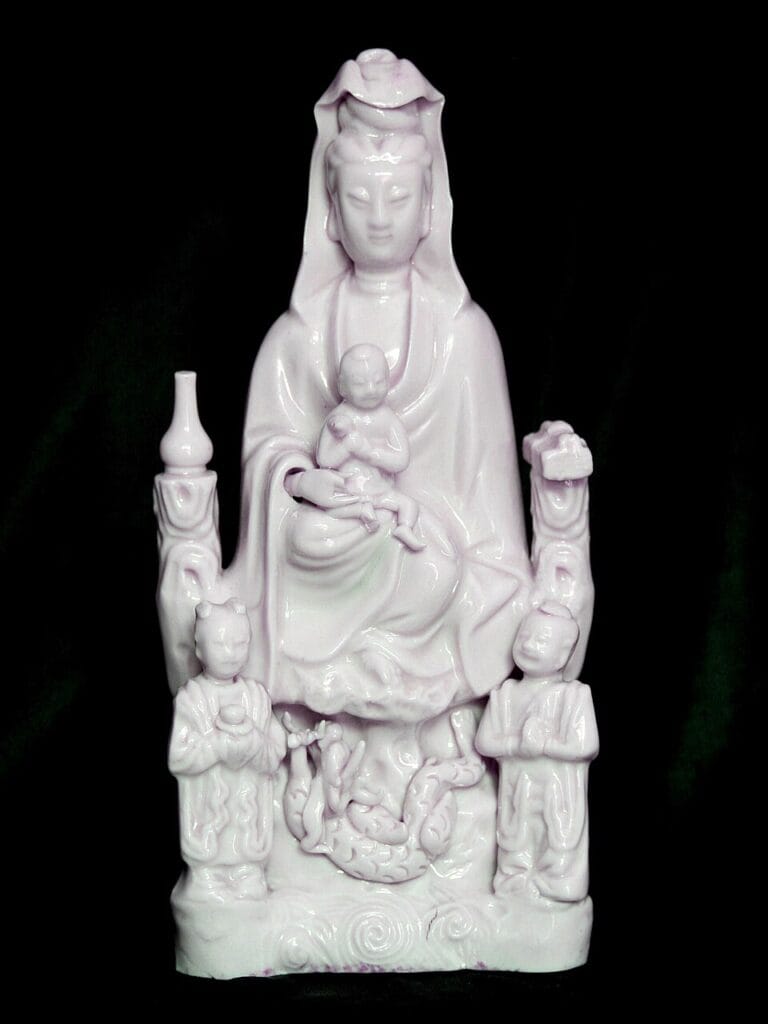
Had the affair not involved two prominent Catholics, most likely their punishments would have been the end of the matter. Instead, the Okamoto Daihachi Affair reinforced Ieyasu’s suspicion that Christians could hold loyalties to fellow believers and their church above their loyalty to the shogun.
On the same day that Okamoto was executed, the shogunate formally prohibited Christianity within its directly administered territories and ordered all daimyō to renounce the faith. Christian lords who refused faced severe penalties, including exile and confiscation of their domains. Ieyasu dismissed all Christians in his service, stripped them of their stipends, and forbade any daimyō from giving them refuge.
In the second month of 1613, the prohibition of Christianity was extended throughout Japan. Ieyasu also ordered the drafting of the Bateren Tsuihō no Bun, Edict Expelling the Padres, which was promulgated in the name of Tokugawa Hidetada. Although the shogunate officially treated the Okamoto Daihachi Affair as an isolated case of fraud rather than a religious conspiracy, it catalyzed the systematic suppression of Christianity in Japan.
Hasegawa was made Arima Naozumi’s guardian. Having long regarded Christianity as a threat to Japan’s religious order, Hasegawa promoted the persecution of Christians in Arima’s territory. Naozumi himself renounced Christianity and enforced the shogunate’s anti-Christian policies, expelling missionaries, demolishing churches, and even executing Christian relatives.
Persecution intensified in the following years, culminating in the Shimabara Rebellion of 1637–1638. For more than two centuries, Christianity was a capital crime. Yet despite the ban and the threat of execution, thousands of Japanese believers preserved their faith in secret as Hidden Christians.
The characters:
- Arima Harunobu—Lord of Hinoe, part of present-day Nagasaki Prefecture.
- André Pessoa—Captain-Major of the Portuguese colony of Macau
- Hasegawa Fujihiro—Nagasaki magistrate, under direct Tokugawa control
- Tokugawa Ieyasu—the first shogun of the Edo era (1603-1867)
- Tokugawa Hidetaka—Ieyasu’s son, and the 2nd shogun of the Edo era
- Honda Masazume—shogunate advisor and daimyō of the Oyama Domain, north of Edo
- Okamoto Daihachi—Christian vassal of Honda Masazume
If you have questions about Japan or suggestions for articles, please add them in the comments. For more photos and information on Japan, follow me on instagram at: https://www.instagram.com/more_than_tokyo/