

• Home
  • About
  • Discover
    • History
    • Culture
    • Nature
    • Food
    • Living in Japan
    • Destinations
    • Language
    • Tips
  • Interview
  • Recommended Books
Exploring the Wonders of Rural Japan
Culture Events

Shichi-Go-San — The Day of Happy Shrine Visits for 7, 5, and 3 Year Olds

Giving thanks and offering prayers for children’s health, safety, and long life
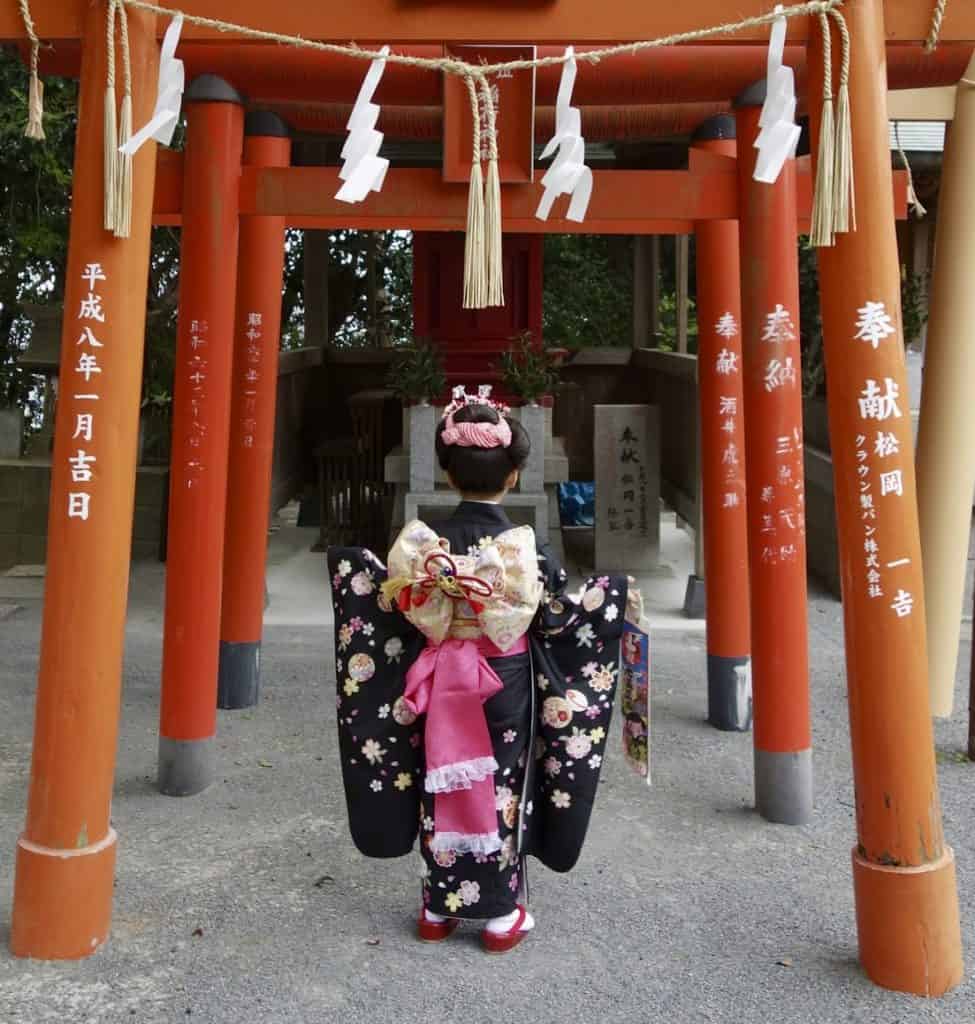
A little girl in formal kimono standing under torii gates at a Shinto shrine.
Seven-year-old girl at a shrine for her Shichi-Go-San celebration. (Photo by Yamada Shinji via Pixabay. No attribution required.)

Perhaps you’ve been lucky enough to catch a glimpse of a cute little girl dressed in a formal kimono walking with her parents at a Shinto shrine. Or maybe a little boy playfully running about in a men’s style hakama kimono.

These children have gone with their parents to their local shine to celebrate their Shichi-Go-San, continuing a tradition of offering thanks and prayers that started over 1,000 years ago.
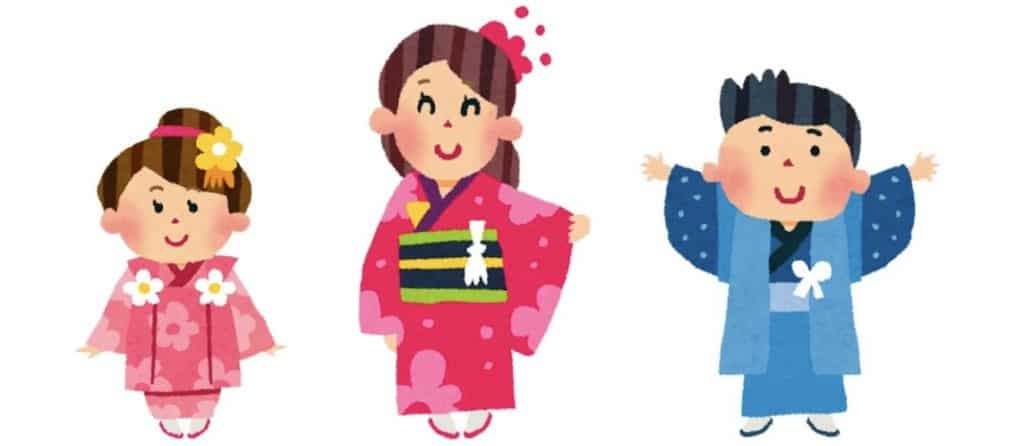
Children dressed in formal kimonos for their Shichi-Go-San celebrations.
Three-year-old girl dressed in kimono with a hifu vest. Seven-year-old girl in kimono. Five-year-old boy wearing formal kimono hakama trousers and long haori jacket. (Illustrations courtesy of irasutoya.)

Shichi-Go-San, 7–5–3

During the Heian Era (794–1185), the lucky, odd-numbered years of 3, 5, and 7 marked important milestones in a child’s life. To celebrate these auspicious occasions, children were dressed in their Sunday best and paid a visit to a Shinto Shrine or Buddhist temple.

Shichi-Go-San collectively refers to these events:

For both boys and girls at age 3 — 髪置き Kamioki

Parents had traditionally kept their little ones’ heads shaved. At age 3, children celebrate the age when this practice stops and they can start growing their hair. 

For boys age 5 — 袴着 Hakamagi

At age 5, boys wear their first hakama, formal kimono trousers worn by adult men. On top of these, the child wears a long haori jacket. These clothes symbolize his entrance into society as a parishioner of his local shrine or temple.

For girls age 7 — 帯解 Obitoki

At age 7, girls wear their first stiff kimono obi sash, just like adult women. Until then, they wear a sort of soft, padded vest over the top of their kimono called a hifu, 被布. These beautifully decorated vests are worn to cover the soft sash or narrow belt with which the kimono was tied in lieu of an obi.
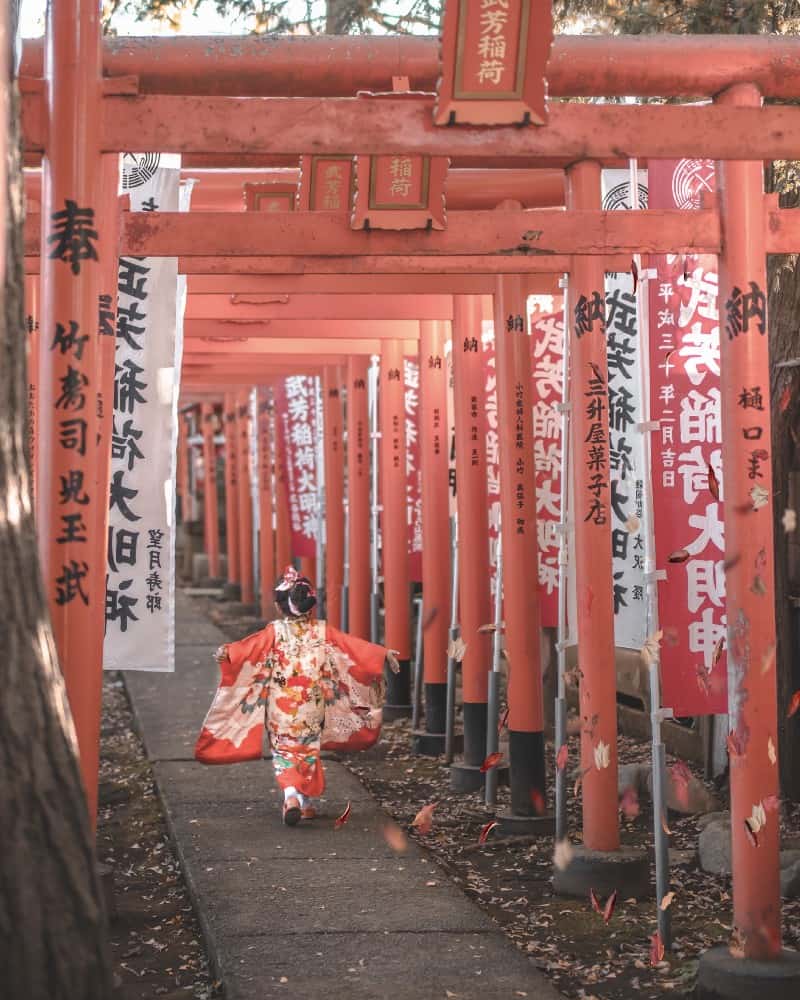
A little girl in formal kimono celebrating her Shichi-Go-San beneath torii gates at a shrine.
Three-year-old girl in hifu vest and kimono at a shrine to celebrate Shichi-Go-San. (Photo by Eea Ikeda on Unsplash)

As the centuries passed, the Shichi-Go-San customs spread down to the common people. Part of this celebration marked the child’s transition from the more dangerous stage of infancy — child mortality rates were high — to the more secure stage of childhood. Parents expressed gratitude and offered prayers for their child’s continued health, safety, and longevity. 

Shinto ceremony

When the parents and their child arrive at the shrine, they traditionally offer a Sakaki branch decorated with paper strips called a tamagushi, 玉串. Sakaki has long been considered a type of lightning rod that invokes the spirit of Kami, the Shinto god. Offering a sacred Sakaki branch shows respect to the deity and transmits the prayers of the believers.
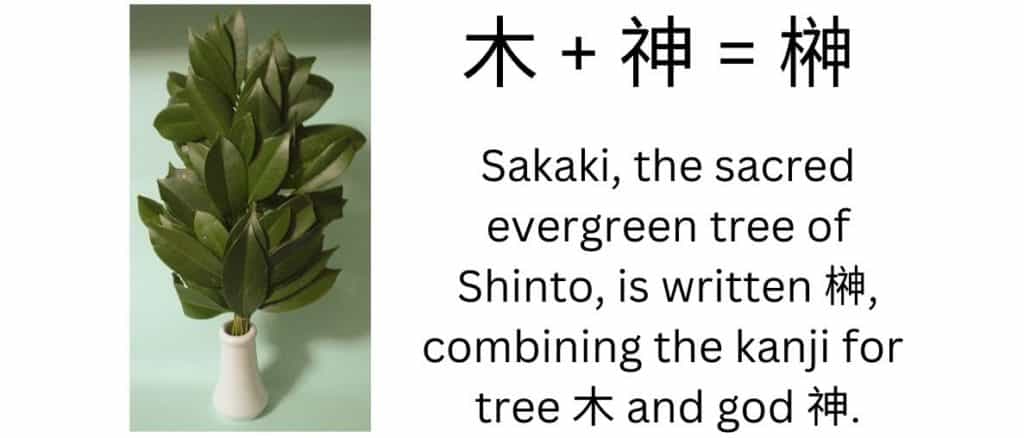
Sakaki, the sacred evergreen tree of Shinto, is written using the Japanese characters for "tree" and "god."
Sakaki leaves. (public domain)

The priest then purifies the family by removing their sin, uncleanness, and misfortune by using a stick or Sakaki branch tied with linen or paper streamers which he waves left, right, and left over the family.

He then reads aloud the names of the children present, after which each child presents a tamagushi at the altar.

The ceremony ends with a traditional kagura dance performed by one of the shrine maidens, or miko, 巫女. Then the children receive gifts.

Children’s gifts
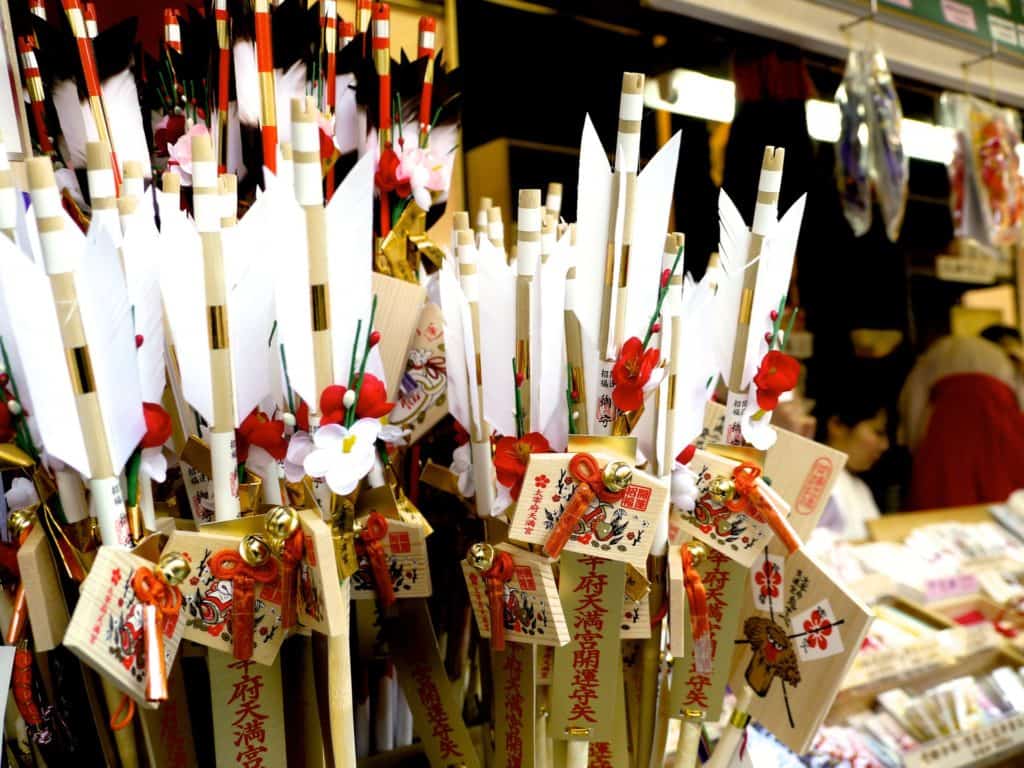
Lucky arrows on sale at a shrine.
Hamaya, lucky arrows. (Masumoto Mamoru via Pixabay. No attribution required.)

Parents give special gifts to their children on Shichi-Go-San. 

Hamaya 破魔矢

Hamaya are good-luck arrows that attract happiness and ward off misfortunes. These are also popular gifts at New Year and on Children’s Day, celebrated on May 5th.

Omamori お守り

Omamori are small amulets sold at all shrines and many temples that invoke various benefits, such as good health, protection, success in studies, etc. 

Chitose ame 千歳飴

Chitose ame, 1,000 year candy, originated at the Kanda Shrine in Tokyo and has since spread all over the country. On Shichi-Go-San, children are given gift bags of chitose ame, or 1,000-year candy. This long, thin candy is traditionally red and white, considered celebratory colors in Japan. 

The child receives the same number of candies as his age. This gift symbolizes the parents’ wish for health, prosperity, and long life for their child.

Chitose ame are presented to the child in elaborately decorated bags with designs featuring cranes and turtles — symbols of long life; or pine, bamboo, and plum trees — symbols of steadfastness, perseverance, and resilience. 

When Shichi-Go-San is celebrated

For centuries, people in Japan used the traditional method of counting age for celebrating Shichi-Go-San. In that method, a child is one year old upon birth and then a year is added to that age on each New Year’s Day. Although some families still use that reckoning when celebrating Shichi-Go-San, generally people use the modern method of determining age.

The official date for Shichi-go-san was set during the Edo era (1603–1867), as the 15th day of the 11th month. This date was chosen, it is said, because it was the day when the 5th Tokugawa shogun, Tsunayoshi, made offerings for his child, Tokumatsu. When the Gregorian calendar was adopted during the Meiji Era (1868–1912), the official name and date for Shichi-Go-San were determined. Nevertheless, parents are free to celebrate Shichi-Go-San at their convenience, generally sometime in mid-November.

Photoshoot

Celebrating Shichi-Go-San makes for a great photo opportunity, and many families visit photo studios to have their pictures taken in their formal attire to commemorate their child’s Shichi-Go-San.

As you would expect, the day ends with a celebratory meal together. 
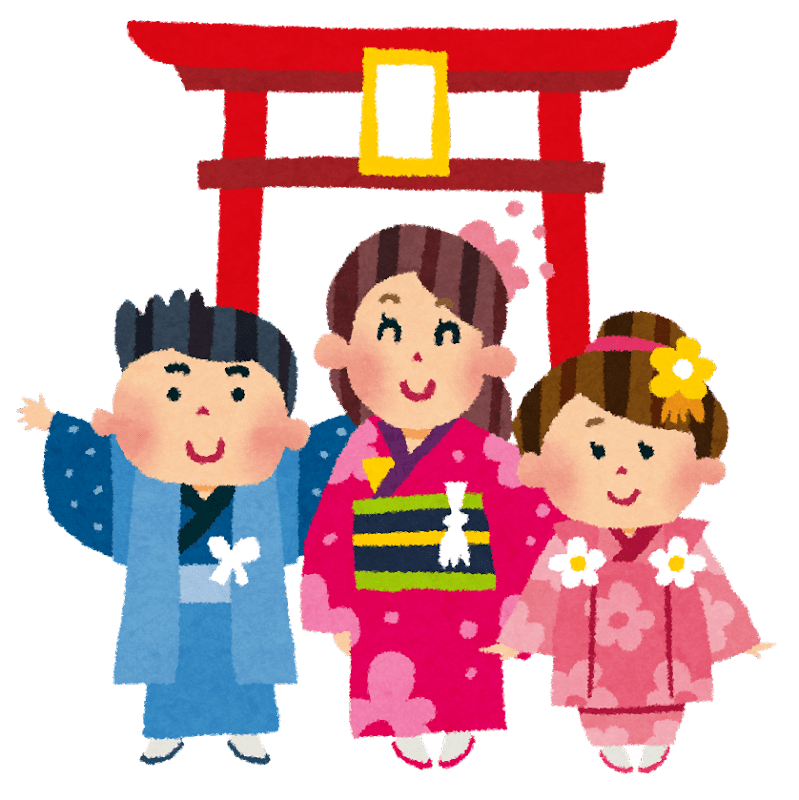
Happy children celebrating Shichi-Go-San.
Five, seven, and three-year-old children celebrating Shichi-Go-San. (Image courtesy of irasutoya.)

One of the beauties of Shinto is how its ceremonies mark the passage of time. Not only throughout the year with planting and harvest festivals, but with milestone reminders in individuals’ lives, like Shichi-Go-San.

References:

Encyclopedia of Shinto, The Essence of Shinto, 七五三, 民俗探訪事典.


If you have questions about Japan or suggestions for articles, please add them in the comments. For more photos and information on Japan, follow me on instagram at: https://www.instagram.com/more_than_tokyo/

Japan Japanese culture Japanese Customs Shichi Go San Shichi-Go-San Shinto
Share
Write Comment
Leave a Reply Cancel reply

Your email address will not be published. Required fields are marked *

This site uses Akismet to reduce spam. Learn how your comment data is processed.

Previous Post

Shinto — The Peaceful Spiritual Heart of Japan

Next Post

10 Things Visitors to Japan Think are Completely Awesome

If you enjoy my work and would like to help me continue creating, consider supporting me.

Thank you!
PayPal - The safer, easier way to pay online!
Newsletter

Subscribe

Enter your email for notifications of our latest posts

Tags
architecture Buddhism Christianity Edo Era elderly festivals folklore Food Ghosts gratitude Haunting Hiking history holidays honesty Japan Japanese Japanese cuisine Japanese culture Japanese Customs Japanese Food Japanese History Japanese Language Japanese words that English needs Japan Tips Japan travel Japan Travel Tips Jizō Kagoshima Kōyō Living in Japan longevity Manners Nature New Year Ninja Samurai Shinto shogun Shrine Tips Trade Travel volcano Washoku
Featured Posts
History Religion

The Shimabara Rebellion—The Last Stand of Japan’s Christians

July 8, 2026
History

The Okamoto Daihachi Affair—The Scandal That Turned the Tide Against Christianity in Japan

July 6, 2026
History

The 47 Ronin—Disgrace, Revenge, and Death

June 23, 2026
Destinations Folklore Ghosts

Omatsu Daigongen—The Amazing Cat Temple of Shikoku

June 1, 2026
History

Oura Kei—Unstoppable Pioneering Tea Merchant

January 19, 2026
Most Popular

Shinto — The Peaceful Spiritual Heart of Japan

Shinto gate Lake Biwa

Komorebi—A Beautiful Japanese Word that English Needs

Nakasendo Way

Dondoyaki—Burning New Year’s Decorations to Send off the God of the New Year

Dondoyaki fire

The Jizo Statues of Nashi-no-Ki—1,000s of Unique Offerings of Thanks

Jizo statues at Nashi no Jizo, Sado.

Sugawara no Michizane —Japan’s Three Most Infamous Vengeful Ghosts, part 3

Sugawara Michizane
You might also like
Nakasendo Way
Nature Language

Komorebi—A Beautiful Japanese Word that English Needs

1 Min read
November 11, 2021
temple pagoda
Culture Living in Japan

Death in Japan

8 Mins read
March 22, 2022
Elephant by Kano Furunobu
History

The Incredible Tale of the Elephant Who Had an Audience with the Japanese Emperor

7 Mins read
April 6, 2022
Exploring the wonders of rural Japan
Exploring the Wonders of Rural Japan
  • Home
  • About
  • Recommended Books
  • Interview
  • Privacy Policy
Exploring the Wonders of Rural Japan
  • Home
  • About
  • Discover
    • History
    • Culture
    • Nature
    • Food
    • Living in Japan
    • Destinations
    • Language
    • Tips
  • Interview
  • Recommended Books
We use cookies on our website to give you the most relevant experience by remembering your preferences and repeat visits. By clicking “Accept”, you consent to the use of ALL the cookies.
Do not sell my personal information.
Cookie SettingsAccept
Manage consent

Privacy Overview

This website uses cookies to improve your experience while you navigate through the website. Out of these, the cookies that are categorized as necessary are stored on your browser as they are essential for the working of basic functionalities of the website. We also use third-party cookies that help us analyze and understand how you use this website. These cookies will be stored in your browser only with your consent. You also have the option to opt-out of these cookies. But opting out of some of these cookies may affect your browsing experience.
Necessary
Always Enabled
Necessary cookies are absolutely essential for the website to function properly. These cookies ensure basic functionalities and security features of the website, anonymously.
CookieDurationDescription
cookielawinfo-checkbox-analytics11 monthsThis cookie is set by GDPR Cookie Consent plugin. The cookie is used to store the user consent for the cookies in the category "Analytics".
cookielawinfo-checkbox-functional11 monthsThe cookie is set by GDPR cookie consent to record the user consent for the cookies in the category "Functional".
cookielawinfo-checkbox-necessary11 monthsThis cookie is set by GDPR Cookie Consent plugin. The cookies is used to store the user consent for the cookies in the category "Necessary".
cookielawinfo-checkbox-others11 monthsThis cookie is set by GDPR Cookie Consent plugin. The cookie is used to store the user consent for the cookies in the category "Other.
cookielawinfo-checkbox-performance11 monthsThis cookie is set by GDPR Cookie Consent plugin. The cookie is used to store the user consent for the cookies in the category "Performance".
viewed_cookie_policy11 monthsThe cookie is set by the GDPR Cookie Consent plugin and is used to store whether or not user has consented to the use of cookies. It does not store any personal data.
Functional
Functional cookies help to perform certain functionalities like sharing the content of the website on social media platforms, collect feedbacks, and other third-party features.
Performance
Performance cookies are used to understand and analyze the key performance indexes of the website which helps in delivering a better user experience for the visitors.
Analytics
Analytical cookies are used to understand how visitors interact with the website. These cookies help provide information on metrics the number of visitors, bounce rate, traffic source, etc.
Advertisement
Advertisement cookies are used to provide visitors with relevant ads and marketing campaigns. These cookies track visitors across websites and collect information to provide customized ads.
Others
Other uncategorized cookies are those that are being analyzed and have not been classified into a category as yet.
SAVE & ACCEPT