

A Brief History of (Nearly) Forgotten Island Nation
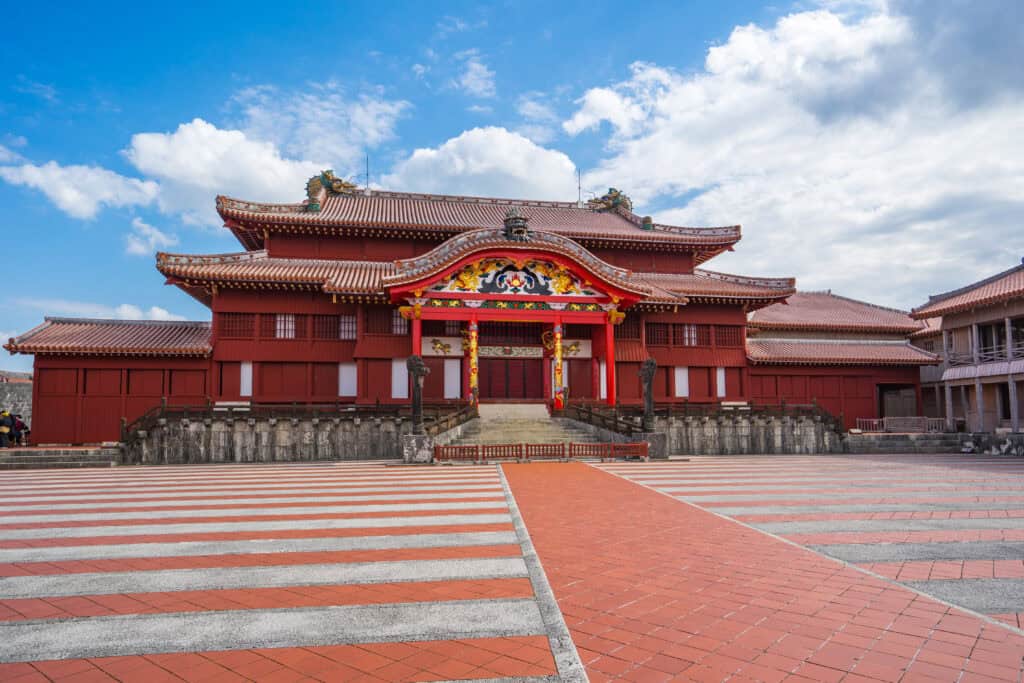
I wrote a detailed history of the Ryukyu Kingdom here; this article offers a shorter version.
For 450 years, Okinawa was the seat of the refined Ryukyu Kingdom, a Chinese tributary, and a pivotal hub of East Asian trade. Strategically positioned at the crossroads of Japan, China, and Southeast Asia, the Ryukyu Islands became a major entrepôt, attracting trading ships from Japan, Korea, and as far south as Java. Renowned for their diplomacy, hospitality, and peaceful nature, the Ryukyu people developed a rich, cosmopolitan culture, turning their island paradise into a repository of treasures and ideas from foreign lands.
Today, Okinawa Prefecture consists of 160 islands, 49 inhabited, stretching 400 kilometers (250 miles) from north to south and 1,000 km (620 miles) from east to west. The prefecture is divided into two main island chains: the central Okinawa Islands and the southern Sakishima Islands. The Sakishima Islands are further subdivided into smaller archipelagos: the Miyako Islands and the Yaeyama Islands.
Agricultural Development and the Aji
The organization of the kingdom began in the 11th century, when the cultivation of rice and foxtail millet spread to the central Ryukyus, giving rise to an agricultural society. Local chieftains, or aji, emerged to rule farming communities from gusuku, fortified hilltop castles. Over time, the more powerful aji expanded their territories, accumulated wealth, and
led bands of armed retainers.
These regional leaders eventually formed loose confederations that divided Okinawa Island into three polities: Hokuzan in the north, Chuzan in the center, and Nanzan in the south. While Hokuzan had fertile farmland, Chuzan and Nanzan grew more prosperous through international trade, importing ceramics and exporting goods such as sulfur and green turban shells, valued for their use in mother-of-pearl inlay. This early trade cast only a faint shadow of the flourishing cosmopolitan kingdom Ryukyu would later become.
The Rise of Satto, King of Chuzan (reigned 1345-1395)—Official Trade with China Begins
In 1349, a young local governor named Satto seized control of the central region of Chuzan and proclaimed himself king. His rise coincided with major upheavals in East Asia: the Mongol Empire was collapsing, Japanese pirates roamed the seas attacking trading ships and coastal ports, and a former beggar, Zhu Yuanzhang, was on his way to conquering China. After capturing Nanjing in 1356, Zhu went on to declare himself the first emperor of the Ming dynasty in 1368.
To the Chinese, all foreign peoples were considered “barbarians” who must submit to the divinely mandated Chinese emperor. As such, in 1372, Chinese emissaries arrived in Okinawa to establish a tributary relationship. King Satto responded by sending envoys to China, who returned with a royal seal and documents recognizing him as the legitimate ruler of Chuzan. This began formal trade relations with China—a relationship that would last for 500 years and have a profound impact on Okinawan culture.
Trade with China brought prosperity and cultural exchange. Okinawa sent goods such as sulfur and textiles, while the Chinese sent ceramics, ironware, and books. Young Okinawan nobles traveled to Nanjing to study, as it was understood that “barbarian” nations had much to learn from China—and learn they did. The students mastered the Chinese language, Confucian philosophy, ethics, history, and poetry.
Both the tribute envoys and these students’ mastery of Chinese court etiquette earned them such distinction that, in later years, one emperor honored the king with a tablet inscribed with “The Land of Propriety,” acknowledging the refinement and decorum of the Ryukyuan people.
The First King of Ryukyu, Sho Hashi (Reigned 1422-1439)
King Satto died in 1395, leaving the throne to his son, Bunei. However, in 1407, a young aji named Hashi led a rebellion, ousted Bunei, and took the throne. Taking the name Sho Hashi, he unified Okinawa’s three polities—Hokuzan, Nanzan, and Chuzan—founding the Ryukyu Kingdom. He remodeled Shuri Castle, originally built in the 13th century, after China’s Forbidden City. For the next 450 years, the castle stood as the kingdom’s political center and a symbol of its strength and connection with China.
Chinese-educated officials guided the kingdom’s administration, strengthening diplomatic and trade ties with China. The capital, Shuri, prospered as luxury goods from Southeast Asia were funneled through the port of Naha and traded with China, Korea, and Japan. The savvy Ryukyuans, avoiding conflict and lacking military power, relied on diplomacy and cultural refinement to secure their place in regional networks.
Naha grew into a bustling port. Ceramics, lacquerware, textiles, spices, medicinal herbs, Chinese brocade, coins, books, and even exotic animals, like parrots and peacocks, flowed through its docks. While the Shuri elites flourished, much of the population remained poor. Inspired by imported luxuries they could not afford, Okinawan peasants created bashofu, a fine gauze woven from the fibers of banana plants, well-suited to the island’s tropical climate. Kasuri, an intricate dyed textile technique from the Indies, was adopted and refined, as well as tie-dyeing methods. Musical instruments and dance forms from abroad also took root, shaping Ryukyuan culture.
Despite the growing prosperity of the capital, life for the average islander was hard. To cope, communities developed a tradition of mutual aid and cooperation, helping one another in any way they could. Known as yuimaru, this deep community spirit remains a cornerstone of Okinawan culture.
Through the reigns of Sho Hashi and his successors, the Ryukyu Kingdom evolved from a fragmented island society into a powerful and culturally rich trading nation, with the magnificent Shuri Castle as its heart.
New Agricultural Products
In 1606, an Okinawan sailor brought sweet potatoes back from China and planted them in his yard, unwittingly altering the course of the islands’ economy. Within 15 years, this hardy, high-yield crop became a staple across the Ryukyu Islands.
A second major crop arrived in 1623 when an envoy to China returned with sugarcane slips. The introduction of sugar—a prized luxury in Japan—led to profitable trade with the Satsuma domain in southern Kyushu. Together, sweet potatoes and sugarcane transformed the kingdom’s agricultural economy, strengthening food security and driving trade.
The Rise of the “Lords of the Southern Islands”—Shimadzu Rule (1609-1872)
In the late 12th century, Japan’s first shogun, Minamoto no Yoritomo, appointed Shimadzu Tadahisa as ruler of southern Kyushu, granting him the title “Lord of Satsuma” and the honorary title “Lord of the Southern Islands.” Though the latter title faded into obscurity, it would resurface with weighty consequences centuries later.
When Tokugawa Ieyasu unified Japan and became shogun in 1603, he recognized Ryukyu’s strategic value—both as a buffer against European powers like Spain, which had seized the Philippines in 1571, and as a covert channel for trade with the Ming. In 1609, Ieyasu’s son ordered the Shimadzu clan of Satsuma to conquer the Ryukyu Kingdom.
The peace-loving islanders were no match for the battle-hardened Shimadzu samurai, armed with Western matchlock muskets. Shuri Castle fell within two months, and the Ryukyuan king was taken in chains to Satsuma, present-day Kagoshima.
Though Ryukyu was now under Satsuma’s control, the Shimadzu preserved the appearance of independence to protect access to Chinese trade. The king was reinstated, tribute missions to the Ming court continued, and outwardly, little seemed changed. But Ryukyu’s autonomy was lost, and the bulk of its wealth now flowed into Satsuma’s coffers.
Subjugated Ryukyu
To keep Ryukyu’s puppet status hidden from China, the Shimadzu clan enforced strict secrecy. Japanese writing was concealed, and if a Satsuma man was addressed in Japanese by a Chinese official, he had to feign ignorance. Okinawans were banned from adopting Japanese names, dress, or customs—a policy that, ironically, helped preserve Ryukyuan culture from assimilation.
Under Shimadzu rule, Chinese cultural influence continued to shape Okinawa. New traditions emerged, such as ishigantō stones placed at T-junctions to ward off evil spirits, kamekō-baka turtleback family crypts, and shīsā lions guarding the sides of residential entrances. From the Meiji Era (1868-1912), shīsā also began appearing on rooftops.
While profiting from Ryukyu’s trade with China, the Shimadzu placed heavy burdens on the kingdom. In addition to demanding frequent diplomatic missions to Edo, they imposed steep taxes. The Ryukyu government, in turn, passed these costs onto the Sakishima Islands through a poll tax.
Instituted in 1638 and lasting until 1903, the tax required all adults between the ages of 15 and 50 to pay in rice and cloth, regardless of their ability to produce. Quotas were based on the population of each village, placing a disproportionate strain on farmers. To prevent organized resistance, the kingdom forbade the migration of islanders.
The Shimadzu also outlawed weapons—a policy some historians link to the development of Okinawan martial arts. Locals adapted Chinese ti into a system of self-defense that became karate, meaning “empty hand.” Originally practiced in secret, karate emphasized respect, self-discipline, self-control, and the principle of avoiding conflict, qualities easily understood within the context of Ryukyu’s history and culture.
The Assimilation of the Ryukyu Kingdom and the Meiji Era (1868-1912)
In 1864, the Ryukyuan king received investiture from China for the last time, marking the end of a 500-year tradition. Meanwhile, Japan stood on the cusp of radical change. In 1867, the Meiji Emperor ascended the throne, ending 750 years of feudalism and ushering in an era of rapid modernization and territorial consolidation.
Japan quickly adopted Western models for industry, military organization, and education. Feudal domains were replaced by prefectures, and lords gave way to governors. In 1871, the Meiji government declared the Ryukyu Kingdom a Japanese domain. Eight years later, it was annexed and renamed Okinawa Prefecture. Japanese was made the official language, local dialects were banned, and schools adopted the standard national curriculum. Students caught speaking the Ryukyu language were publicly shamed.
Many Okinawans who moved to mainland Japan concealed their origins to avoid prejudice. They were often stereotyped as unsophisticated country folk, while Okinawans, in turn, looked upon the inhabitants of the Sakishima Islands as even more “backward.” The Sakishima Islanders were treated as lesser subjects; they still carried the burden of the poll tax, and their islands were now being used as penal colonies for Okinawan convicts.
The Militarization of Okinawa
From the perspective of the Meiji Imperial Army, the Ryukyu Islands were a critical link between Formosa (the Japanese colony of Taiwan) and mainland Japan. Yet, Okinawans were considered unfit for military service as most adult men fell below the minimum height and weight requirements. The older generation vehemently opposed militarization, fearing it would invite attacks. Unlike the samurai of the mainland, Okinawans had no history of combat; they were peace-loving traders and diplomats, not warriors.
However, after Japan’s victory in the Russo-Japanese War of 1905, Okinawans were drafted into the military, and fitness programs were introduced across the islands. The towns that produced the most recruits were honored. Military leaders sought to instill a fanatic spirit in the islanders to compensate for their small stature.
WWII—The Battle of Okinawa
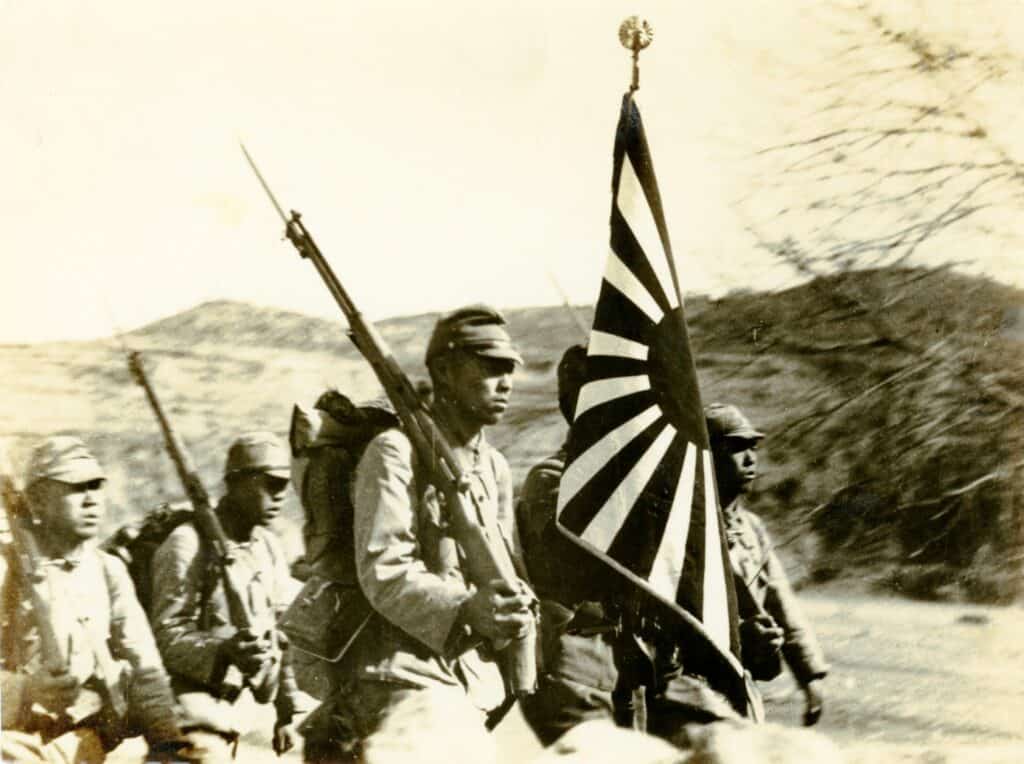
By February 1944, with Allied forces advancing toward Japan, Okinawa stood directly in their path, a final buffer to delay an attack on the main islands. In anticipation of invasion, civilians were conscripted to build defenses, soldiers seized homes, and centuries-old pines lining Okinawa’s highways were stripped away.
On April 1, 1945, American forces landed near Kadena, about a third of the way up Okinawa Island. To their surprise, they encountered little resistance and quickly advanced to the eastern coast, splitting the island. Civilians fled north, unprotected and terrified by Imperial propaganda warning of American atrocities. By May 5, the northern half of the island fell under American control.
Meanwhile, General Ushijima, the top Imperial commander, had made his headquarters beneath Shuri Castle. His strategy was to draw the American forces under Shuri’s craggy heights, unleash a powerful crossfire, and hold them off until reinforcements could arrive from the mainland.
As American troops advanced, the fighting intensified into one of the fiercest artillery battles of the war. Though they reached the castle, its 500-year-old walls held firm. Offshore, kamikaze pilots from Kyushu attacked the American fleet, causing damage but failing to disrupt operations. On May 24, the battleship USS Mississippi opened fire on Shuri. For three days, it shelled the fortress until the once-magnificent ancient castle was reduced to ruins, its formidable walls crumbled into rubble.
On May 31, General Ushijima abandoned his headquarters beneath Shuri and relocated to a cave on the southern coast. Although the retreating Japanese fought with unparalleled ferocity from cave to cave, organization and discipline had disintegrated. The Imperial forces chose death over surrender, but with utter disregard for the civilians trapped among them.
Terrified locals, including the wounded and sick, sought refuge in caves, but these sanctuaries offered little safety. Japanese troops often took over the caves, forcing civilians out or using them as sniper positions, drawing American fire.
Naha fell on June 13. In the early hours of June 21, General Ushijima and his chief of staff, facing the humiliation of defeat, went to the ledges overlooking the southern sea, saluted the emperor in distant Tokyo, and took their own lives.
War’s Tragic Toll
The Battle of Okinawa inflicted immense suffering on civilians, who accounted for the majority of the casualties, more than those of both American and Japanese troops combined. Indoctrinated by the Imperial Army, Okinawans were taught that it was more honorable to die than face the “shame” of capture. Civilians were often issued two grenades—one to kill the enemy and the other to take their own lives.
Strict military control and relentless propaganda fostered an atmosphere of fear. Anyone caught speaking English or their local dialect was executed for suspected espionage. Those urging surrender were killed. Civilians were warned of torture, rape, and death if captured. As American troops advanced, these warnings triggered mass suicides. Soldiers instructed families to avoid capture at all costs, with mothers urged to kill their children and then themselves rather than fall into enemy hands.
Survivor accounts reveal the horror. In one case, Mr. Komine recalled his family forming a circle as his father prepared to execute them. He watched in horror as his father bludgeoned his mother and siblings before he was struck. After the killings, his father hanged himself from a tree. Against all odds, Mr. Komine was rescued by American troops and survived.
Despite the widespread fear, many civilians hiding in caves were eventually driven out by hunger or desperation. Bracing for poison or brutal treatment, they were astonished to be given water, food, and medical care by American soldiers. Okinawa remained under US occupation after the war until it was returned to Japan in 1972.
Okinawa’s Ongoing Struggles
Government policies have long prioritized the welfare and economic growth of mainland Japan over Okinawa, leaving the prefecture with a legacy of occupation, repression, and militarization. Today, critics argue that Okinawa continues to bear a disproportionate burden for the mainland’s interests, particularly through the continued presence of US military bases.
Okinawa’s poverty rate stands at approximately 35%, double the national average, with per capita income about 20% lower. The prefecture also records Japan’s highest rates of unemployment, irregular employment, and single-parent households, along with the second-highest divorce rate.
Educational outcomes remain troubling. Okinawa consistently ranks lowest on national academic achievement tests for students in grades six through nine and has the country’s lowest rate of university enrollment.
The elderly face acute financial hardship. Roughly 6.2% of residents aged 65 and older receive no pension—about twice the national average. Among those who do, the average monthly benefit is just ¥51,864, the lowest in Japan.
A Beacon of Resilience
Despite, or perhaps because of, a history of economic hardship and adversity, Okinawans are renowned for their kindness, resilience, and longevity. Women, in particular, enjoy an average life expectancy of 87.44 years, evoking the ancient image of the Ryukyu Islands as a mythical “land of the immortals.”
Designated a Blue Zone—one of several regions in the world known for exceptional longevity—Okinawa exemplifies the benefits of a balanced, traditional lifestyle. Residents maintain low stress levels, strong family and community ties, and active lives well into their 80s and beyond. Their diet, rich in locally sourced and nutrient-dense foods like sweet potatoes and other plant-based staples, is said to help reduce the risks of cancer, heart disease, and dementia, diseases common in Western populations.
The Okinawan way of life is rooted in a deep sense of community, or yuimaru, and the concept of ikigai, a profound sense of purpose. These cultural pillars, combined with physical activity and a healthy diet, have been praised as key factors in their well-being.
Though Okinawa has faced myriad challenges, its people continue to inspire with their warmth, deep-rooted mutual care, and positive outlook. Their enduring vitality and joie de vivre stand as a testament to the strength of their culture.
If you have questions about Japan or suggestions for articles, please add them in the comments. For more photos and information on Japan, follow me on instagram at: https://www.instagram.com/more_than_tokyo/


