

Why it’s not just another bowl of carbs
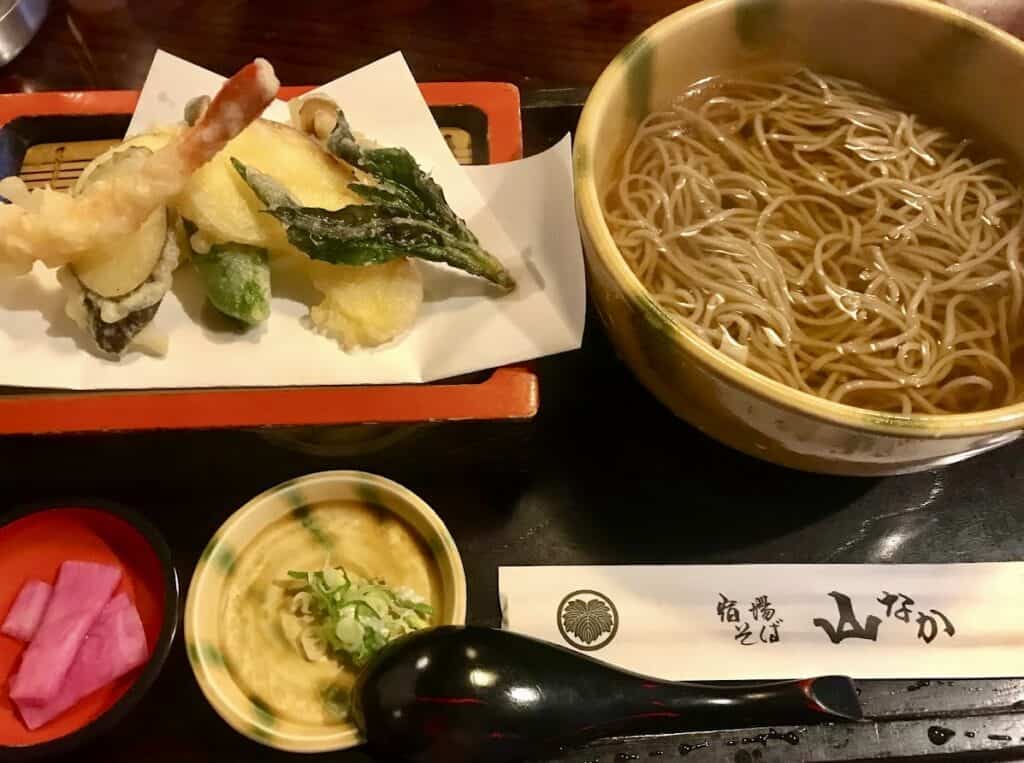
Known as soba in Japan, buckwheat, despite its name, is not related to wheat at all. It is a pseudocereal—a non-grass plant whose seeds are used like grains. You are probably familiar with other pseudocereals, such as quinoa, amaranth, and chia. Unlike true cereal grains like wheat and rice, which come from grasses (monocots), pseudocereals are broadleaf flowering plants (dicots). They resemble grains in appearance and are used in similar ways—in noodles, porridge, baked goods, and more.
Soba, a term used for both the buckwheat grain and the noodle dish, is low in calories but rich in nutrients. It’s one of the highest-protein pseudocereals, containing between 8 and 14 grams of protein per 100 grams, depending on how it’s prepared. Noodles made from 100% buckwheat flour are higher in protein than those blended with wheat flour, which is often added to improve texture and elasticity. Buckwheat protein also contains all nine essential amino acids that the body cannot produce on its own, very rare among plant-based foods.
History
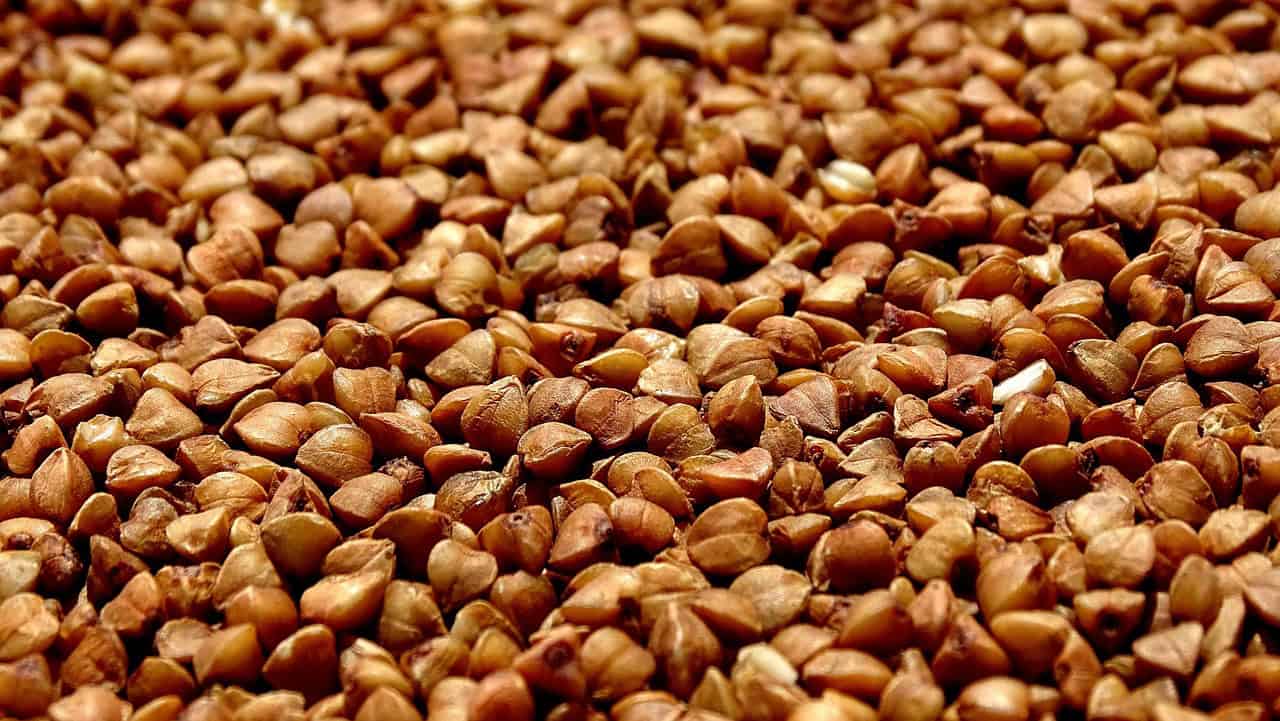
One of the oldest domesticated crops in Asia, buckwheat was introduced to Japan as an agricultural crop from the Korean peninsula during the mid to late Yayoi period (300 BC–250 AD). At first, it was raised for its edible leaves, but by the Nara period (710–794), its seeds had become a vital staple. Considered peasant food, soba was cultivated in mountainous regions where rice and wheat were difficult to grow, such as today’s Nagano and Yamanashi Prefectures.
Legend tells us that En no Gyōja, the founder of Shugendō, mountain asceticism, brought soba seeds from Nara to these remote areas. His followers are said to have helped spread buckwheat cultivation to the foothills of sacred mountains throughout Japan.
The cool climate, steep terrain, and poor, rocky soil of Nagano were not suitable for rice cultivation but were ideal for buckwheat. Hardy and fast-growing, buckwheat matures in 70 to 90 days and thrives where other crops fail. Farmers could plant it after the last spring frost and harvest before autumn’s cold set in, making it a natural fit for the region’s short growing season.
The earliest known reference to soba noodles comes from a small town in Nagano, Suhara-juku, a post town along the Kisoji section of the old Nakasendō Highway. A 1574 document describing repairs to the Buddha Hall of Jōshō-ji Temple notes that a man named Kanei served the workers soba-kiri, literally “cut buckwheat,” the early term for soba noodles—to celebrate the completion of the repair work.
Health benefits of soba
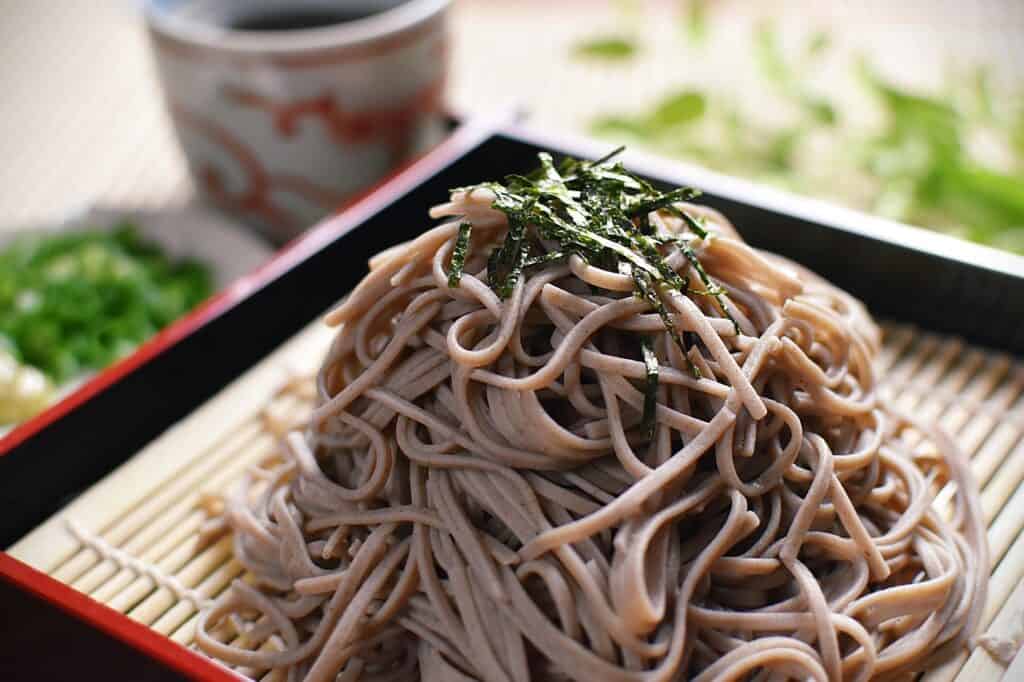
One serving of soba noodles, 170 grams (6 ounces), contains:
- 151 calories
- 7 grams of protein
- 0.7 grams of fat
- 1.76 grams of dietary fiber, about half soluble and half insoluble
- 27 grams of carbohydrates (slow-digesting, complex carbs)
It’s also particularly rich in vitamins A, B1, B2, niacin, vitamin B6, and folic acid, as well as a wide range of minerals including iron, magnesium, manganese, potassium, and zinc. With a glycemic index of 54, soba is considered a low GI food, meaning it leads to a slower and more gradual rise in blood glucose levels after eating.
Oh, and did I mention? When made without the addition of wheat flour, soba noodles are completely gluten-free.
Back to history
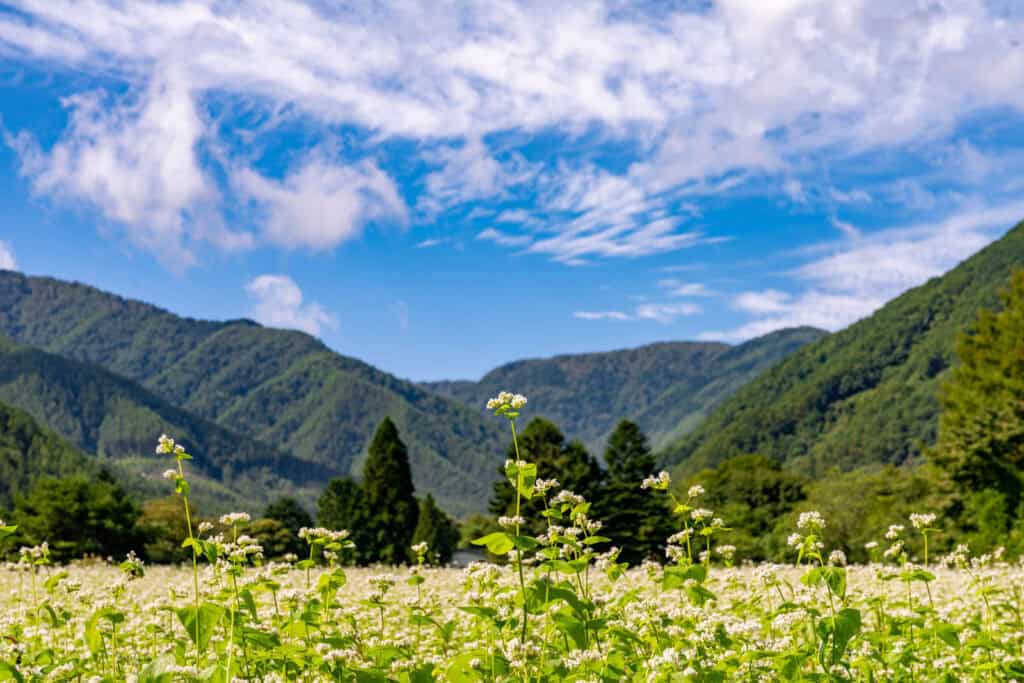
Soba noodles are made by mixing buckwheat flour with a small amount of wheat flour, then slowly and carefully adding water little by little. The dough is mixed by hand, kneaded, rolled with a long rolling pin, folded, then cut. Soba prepared this way is called te-uchi, hand hit, noodles. Although soba noodles can be made by machines, te-uchi noodles are by far the best, as they can withstand a lower ratio of wheat flour and, therefore, taste more like soba.
Originally, soba noodles were served separately and dipped in a small bowl of tsuyu broth. But as yatai, street food stalls, proliferated during the Edo era (1603-1867), it became more common and convenient to serve the noodles with the tsuyu poured directly over them in a single bowl. Yatai soba sellers would preboil the noodles, then, when an order was placed, quickly blanch them, drain them, and pour soup on top. This dish was called kakesoba, poured-on soba. Easy to prepare, easy to eat, and inexpensive, kakesoba soon became a popular fast food throughout Edo (modern-day Tokyo).
During this period, nearly every neighborhood in Edo had one or two yatai selling soba, many of which also served sake. The city’s residents—generally wealthier than those in rural areas—were prone to beriberi, a disease caused by a deficiency of thiamine (vitamin B1). Their refined diets, centered on polished white rice—costly but nutritionally poor—lacked sufficient thiamine. By and by, it was discovered that regularly eating thiamine-rich soba could help prevent the illness.
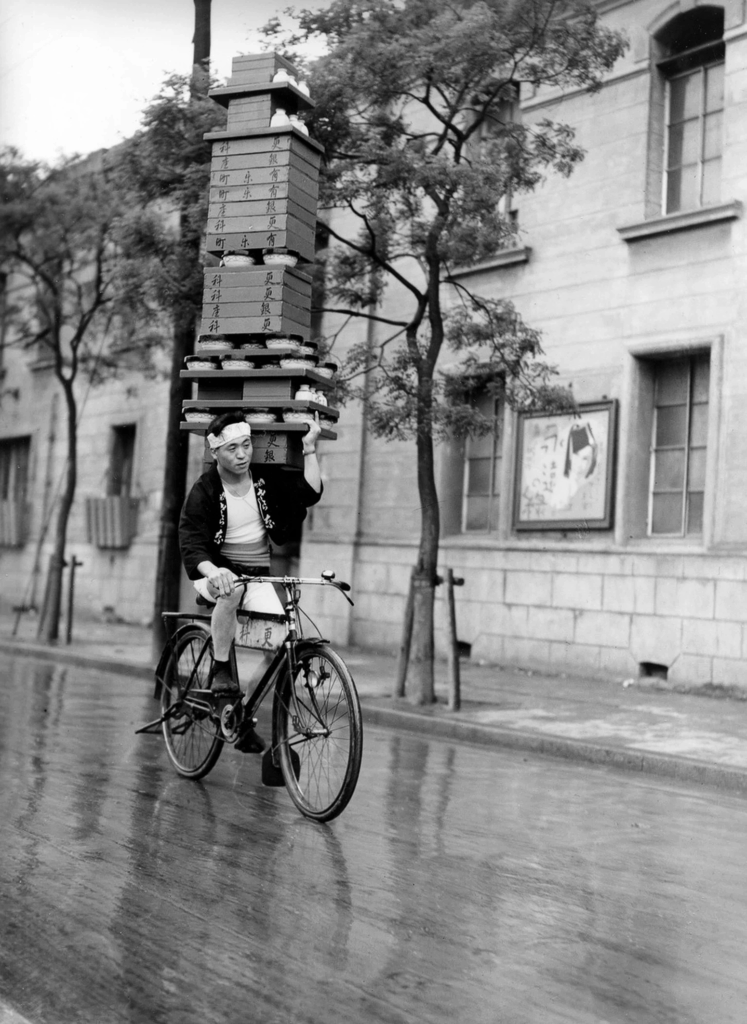
Edo food delivery, called demae, began in the 1700s as a service to wealthy daimyō, feudal lords. Until the late Showa period (1926-1989), it was common to see bicycle couriers balancing stacks of soba in boxes and bowls on their shoulders, weaving through the crowded streets of Tokyo. However, the practice was curtailed in March 1961, when officials of the Tokyo Metropolitan Police Department warned, “To ride on a bicycle with piles of soba bowls on your shoulder is dangerous.” Although getting rarer by the day, I still occasionally see people delivering bowls of noodles piled on motorcycles or scooters in my area.
Soba pillows

In keeping with the Japanese motainai philosophy of avoiding all waste, buckwheat hulls have been used for centuries as a filling for pillows. Because of the airflow created by the loose hulls, soba pillows naturally resist pests, mold, and dust mites. They conform to the shape of the head and are much cooler in the hot, humid Japanese summers compared to modern feather or synthetic alternatives.
For more about Japanese food, see Washoku—Wonderful and Beautiful Japanese Cuisine.
If you have questions about Japan or suggestions for articles, please add them in the comments. For more photos and information on Japan, follow me on instagram at: https://www.instagram.com/more_than_tokyo/


