

• Home
  • About
  • Discover
    • History
    • Culture
    • Nature
    • Food
    • Living in Japan
    • Destinations
    • Language
    • Tips
  • Interview
  • Recommended Books
Exploring the Wonders of Rural Japan
History Destinations

Nakasendo Way — Hiking the Ancient “Road Through The Mountains”

Off the beaten path in Japan

Sunrays through trees lights the cobblestones along the Nakasendo Way.
Walking the Nakasendo. (All photos ©Diane Tincher unless otherwise noted.)

Pre-pandemic, when Japan’s borders were open to tourists, I had the pleasure of taking groups of adventurous foreigners along some of the ancient roads of Japan. 

A favorite was the Nakasendo Way, one of five main roads used during the Edo era (1603–1868) for daimyos to travel from their domains to and from the capital, Edo (Tokyo). 

The Tokaido, known today as a shinkansen route, and the Nakasendo were the two highways that linked the capital of Edo to the imperial city of Kyoto. Like all of the five main roads, they started at the Nihonbashi Bridge in Tokyo. 

The Tokaido went along the coast, crossing wide rivers, before meeting up with the Nakasendo for the final stretch to the Sanjo Bridge in Kyoto.

The Nakasendo Way, 中山道, “the way through the mountains,” took a 500 km route through the heart of Japan. It was not only used by daimyos, merchants, and pilgrims, but princesses who were to be married to shoguns.

The most famous of these was the 16-year-old Princess Kazunomiya, who was compelled to leave her fiancé in Kyoto and marry the 14th shogun, Tokugawa Iemochi, in 1862. 

The princess’s entourage consisted of 10,000 people who had been sent from Edo to escort her, plus uncounted porters and servants with baggage and animals. The royal procession took three days to pass any one point along the road. It must have been a sight to see!
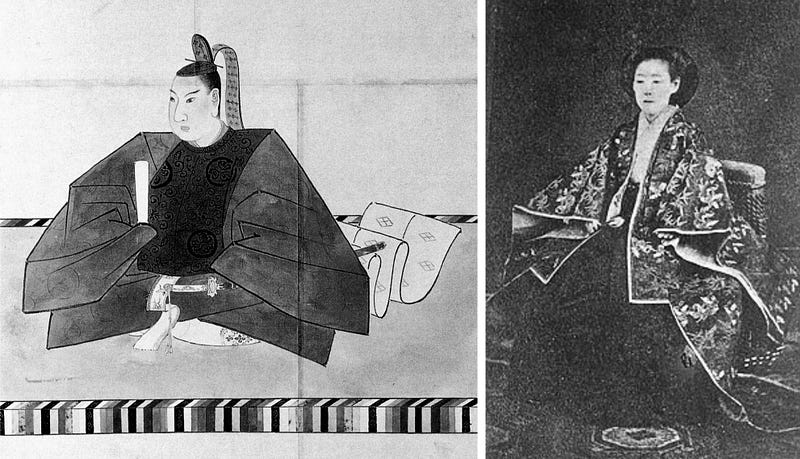
Tokugawa Iemochi sitting for his portrait in formal kimono. Princess Kazunomiya photographed wearing royal attire.
Tokugawa Iemochi and Princess Kazunomiya. (Both the painter and the photographer are unknown. Public Domain)

Remarkably, Princess Kazu and the young shogun had a happy, though brief, life together. Iemochi, who suffered from ill health, died when he was 20, after only four years of marriage. Kazunomiya then became a Buddhist nun and went on to quietly influence events leading to the Meiji Restoration.

But I digress.

History of the Nakasendo Way

Porters carry baskets on wooden poles in the foreground, while others carry boxes on their backs before a daimyo procession that is coming over the arched wooden bridge of Nihonbashi.
Nihonbashi, “The Bridge of Japan,” was the starting point for each of the five main roads during the Edo era. Daimyo procession coming over the bridge. Woodblock print by Utagawa Hiroshige. (Public Domain)

Although much of the Nakasendo Way dates from the 7th century, it rose to importance some 1,000 years later during the Edo Era. 

To keep a close eye on the daimyos, and keep their wealth in check by imposing extra expenses upon them, the Tokugawa shoguns required each lord to maintain a second estate in Edo where his wife and children would live. Lords were to alternate spending one year in Edo and one year in their domain.

Daimyo processions were a common sight along the five roads, and a chance for the lords to demonstrate their prestige. They were fantastic parades with banners held high, porters carrying boxes, pack animals, and decorated palanquins.

To expedite travel, the Tokugawa shoguns made sure the five roads were well maintained. There were distance markers, tea houses, statues of deities for the protection of travelers and their animals, and importantly, post towns. These towns, separated by an easy day’s walk, provided travelers with lodging, meals, straw sandals, horses, and porters.
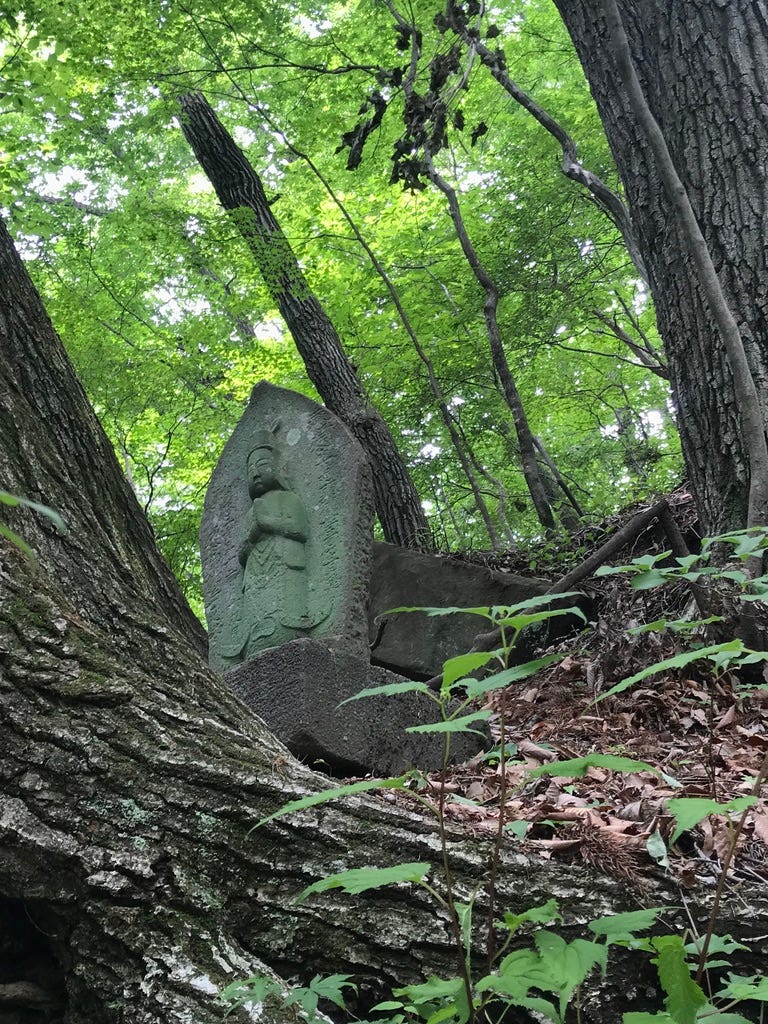
Buddhist statue among trees on hillside.
Statue of Buddhist guardian deity, along the Nakasendo Way, Nagano.

“Barrier stations” along the road were staffed by intimidating samurai officials who searched travelers to ensure that no noblewomen were traveling away from Edo in disguise and that no weapons passed through. If women were caught leaving the capital, the shogun would assume that her husband was sending her away before attempting a rebellion.

Today, much of the Nakasendo is laid over with highways, but there are still beautiful and walkable sections, most notably “The Kiso Road.”

The Kiso Road
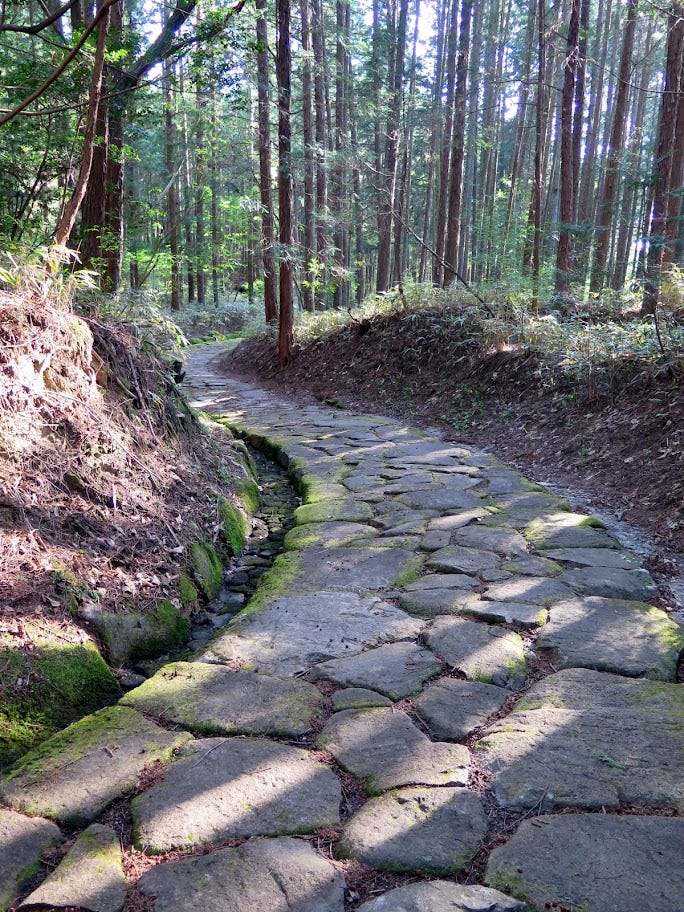
Winding cobblestone section of the Nakasendo Way.
The Nakasendo Way as it approaches the start of the Kiso Road.

The Kiso Road is the portion of the Nakasendo roughly halfway between Tokyo and Kyoto. It generally follows the Kiso River as it winds between the steep mountains of southwestern Nagano Prefecture.

90% of the Kiso Valley is covered in forest. The area is well-known for its magnificent Hinoki cypress trees. So valuable is the aromatic, water and insect-resistant wood of these Hinoki trees that cutting one down during the Edo Era was punished by death. The peasantry knew all too well the slogan:

枝一本、腕一つ

木一本、首一つ

Cut a branch, lose an arm.

Cut a tree, lose a head.

The forests are still protected, but, thankfully, today’s laws are less draconian.

Walking the Kiso Road

Old wooden building with lush vines growing up the front.
Shinchaya Inn with a healthy kabocha squash plant growing up its front.

Heading towards Tokyo, the Kiso Road begins in front of the rustic Shinchaya inn, outside of the post town of Magome, in Gifu Prefecture. A stone marker in front of the inn is engraved with the words, 是より北 木曽路, “North from here is the Kiso Road.”

Walking along the Kiso Road, we pass by old farmhouses, rice fields, forests, and gardens. The only sounds are the cheerful chatter of birds, the creaking of bamboo against bamboo, and the rustling of the leaves overhead.

Our journey takes us through many post towns. Allow me to introduce you to a few.

Onion hanging from two poles in an old wooden building.
Onions drying along the Nakasendo Way.

Magome

Our path from Shinchaya soon climbs a steep hill and we enter Magome, a carefully preserved post town nestled on a slope overlooking a vast panorama of mountain peaks. Its friendly shopkeepers sell traditional snacks, locally made products, and souvenirs.
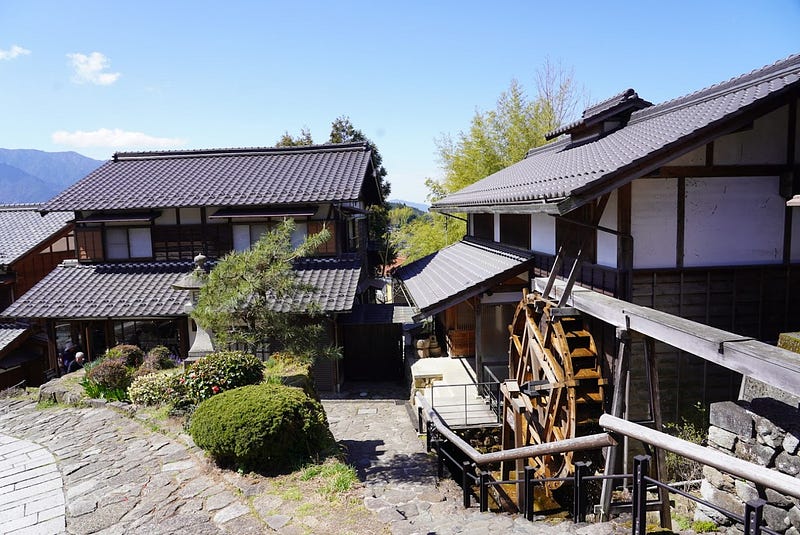
Waterwheel and buildings beside a sloping stone walkway overlooking mountains in the distance.
Magome. (Photo courtesy of Herbert.)

From there, the trail takes us through forests and over the 801-meter Magome Pass, where we enter Nagano Prefecture. 

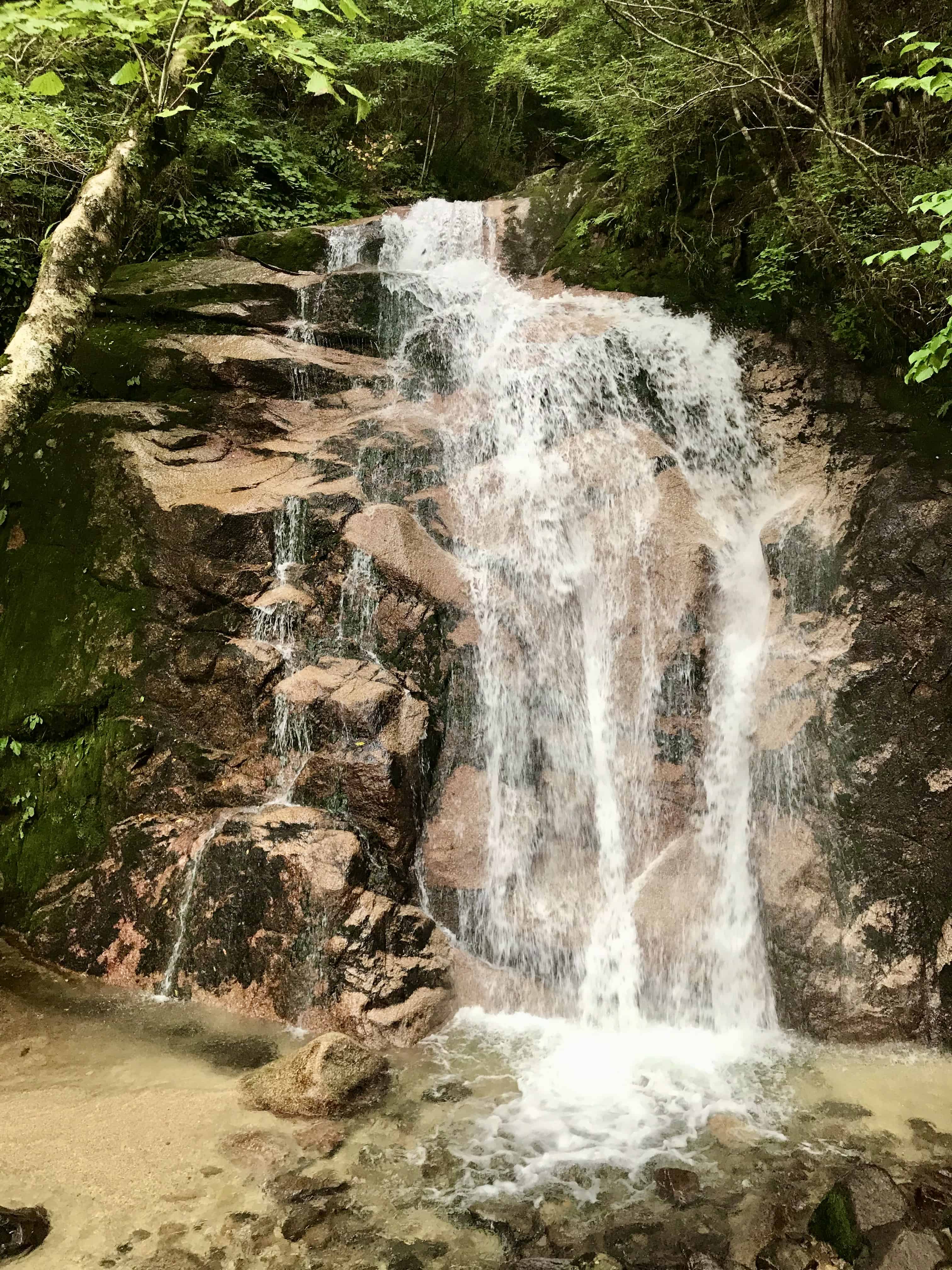
Our descent brings us by two waterfalls, Odake and Medake, the Male and Female waterfalls, under which the legendary ronin swordsman, Miyamoto Musashi, cooled his ardor for his love and rededicated himself solely to the way of the sword. 
7B881E5C F9AC 4A1E BB2C C493E609CEF7 1 201 a
Odake, the male waterfall, Nagano.

Tsumago

The next post town is Tsumago. This is one of many towns that was bypassed by highways and train lines and subsequently fell into poverty in the mid-20th century.

Luckily, in 1968, the residents realized that they possessed a treasure. They agreed to renovate buildings using only traditional materials. They removed electric wires and vending machines from the streets. The community leaders agreed that none of the buildings in the town would be “sold, rented out, or destroyed.”

Thanks to the efforts of those residents, in 1971, Tsumago was the first town in the country to be recognized as an “Important Preservation District for Historic Buildings.” Today, there are 126 such districts throughout Japan.

Persimmons tied with string are hung on a bamboo pole.
Persimmons drying in Tsumago.

Each evening along our journey is spent at a traditional inn. We arrive in time to bathe and dress in yukata robes before enjoying a feast of local vegetables, fish, meat, tofu, and sake.

Many small disihes of attractive foods.
The first course of many, inn along the Nakasendo Way.

Nagiso

From Tsumago, our route continues to take us through peaceful countryside, terraced rice fields, and forests. We get our first sight of the crystal clear waters of the Kiso River as we approach the town of Nagiso.

We stop by a wooden suspension bridge, originally built in 1912 by the wealthy businessman, Fukuzawa Momosuke. He was the first to bring hydroelectric power to the region, harnessing the swift waters of the Kiso River. Some of the original power plants he built remain.

Wooden suspension bridge against a blue sky and green mountains.
Momosuke Bridge, Nagiso, Nagano.

Our days continue to take us over undulating hills and through forests, visiting more pleasant post towns and relaxing inns. Our muscles haven’t felt sore at all, perhaps due to the rejuvenating waters of our pre-dinner baths and the long, comfortable nights of sleep between soft futons.

Narai 
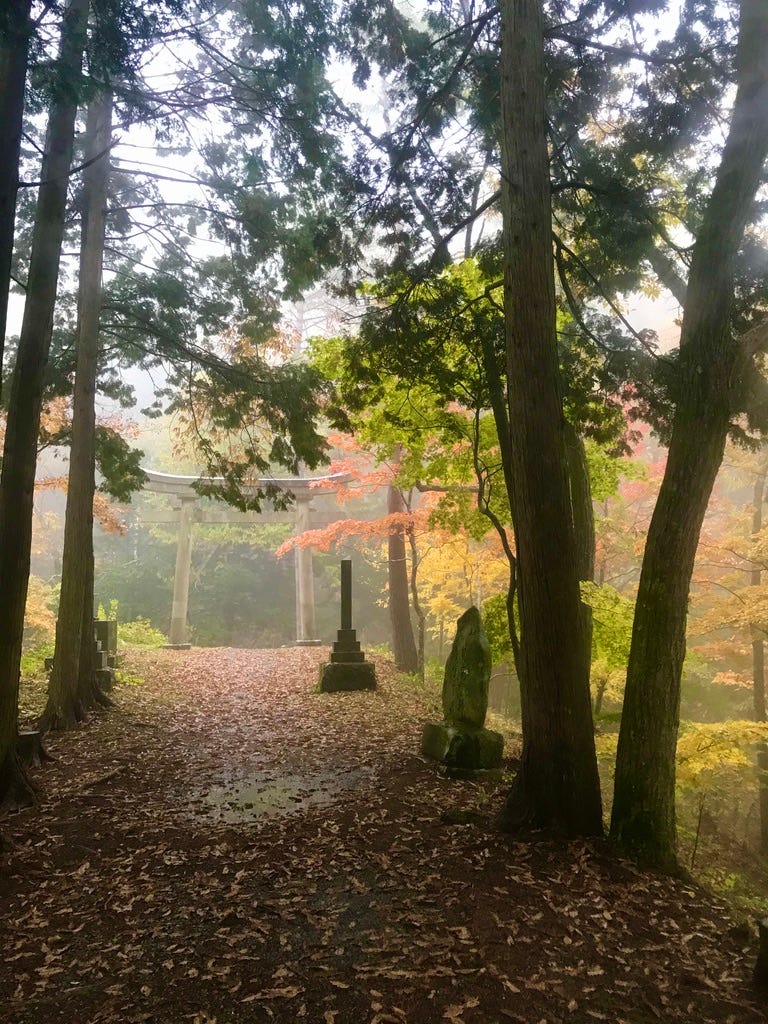
Torii gate behind autumn leaves in the mist.
Torii Pass, along the Nakasendo Way, Nagano.

We pass through the post town of Yabuhara, once renowned for its wooden handicrafts. There are still a couple of old shops left selling handmade combs and other treasures from bygone days. 

From there, we hike up through beautiful forests till we reach a small shrine and large Torii gate which give the pass its name, Torii Pass. For travelers coming from Edo, this was their first view of the sacred Mount Ontake, which we can just make out in the distance. 

We head down to the post town of Narai, famous for its fresh spring water, where we enjoy a lunch of soba noodles, the local specialty. 

Tempura, soba noodle soup, and Japanese pickles.
Soba noodles and tempura, Narai, Nagano.

Our journey ends there, although we are still 10 km from the stone that marks the northern end of the Kiso Road. Soon after Narai, the old Nakasendo Way becomes Highway 19.

It is time for us to change out of our hiking boots and head to Tokyo before making our way home. 


I hope that each one of you will have the opportunity to walk the ancient roads of rural Japan someday. It is a different world, and one well worth savoring.


If you have questions about Japan or suggestions for articles, please add them in the comments. For more photos and information on Japan, follow me on instagram at: https://www.instagram.com/more_than_tokyo/

Hiking Japan Japan travel Japanese culture Japanese History Nakasendo Nakasendo Way Nature Rural Japan
Share
2 Comments
  1. Mike

    June 8, 2022 7:05 am

    I would SO very much like to hike this: please keep me posted if you think the powers that be might allow it sometime soon.

    Also so far this is my favorite article on your website: gorgeous writing and intriguing photos – well done.

    Reply
    1. Diane Tincher

      June 8, 2022 9:47 am

      Thank you for your kind words! Here’s to hoping Japan opens to tourism again soon.

      Reply
Leave a Reply Cancel reply

Your email address will not be published. Required fields are marked *

This site uses Akismet to reduce spam. Learn how your comment data is processed.

Previous Post

A Japanese Proverb—When the wind blows, the barrel makers profit

Next Post

The Jizo Statues of Nashi-no-Ki—1,000s of Unique Offerings of Thanks

If you enjoy my work and would like to help me continue creating, consider supporting me.

Thank you!
PayPal - The safer, easier way to pay online!
Newsletter

Subscribe

Enter your email for notifications of our latest posts

Tags
architecture Buddhism Christianity Edo Era elderly festivals folklore Food Ghosts gratitude Haunting Hiking history holidays honesty Japan Japanese Japanese cuisine Japanese culture Japanese Customs Japanese Food Japanese History Japanese Language Japanese words that English needs Japan Tips Japan travel Japan Travel Tips Jizō Kagoshima Kōyō Living in Japan longevity Manners Nature New Year Ninja Samurai Shinto shogun Shrine Tips Trade Travel volcano Washoku
Featured Posts
History Religion

The Shimabara Rebellion—The Last Stand of Japan’s Christians

July 8, 2026
History

The Okamoto Daihachi Affair—The Scandal That Turned the Tide Against Christianity in Japan

July 6, 2026
History

The 47 Ronin—Disgrace, Revenge, and Death

June 23, 2026
Destinations Folklore Ghosts

Omatsu Daigongen—The Amazing Cat Temple of Shikoku

June 1, 2026
History

Oura Kei—Unstoppable Pioneering Tea Merchant

January 19, 2026
Most Popular

Shinto — The Peaceful Spiritual Heart of Japan

Shinto gate Lake Biwa

Komorebi—A Beautiful Japanese Word that English Needs

Nakasendo Way

Dondoyaki—Burning New Year’s Decorations to Send off the God of the New Year

Dondoyaki fire

The Jizo Statues of Nashi-no-Ki—1,000s of Unique Offerings of Thanks

Jizo statues at Nashi no Jizo, Sado.

Sugawara no Michizane —Japan’s Three Most Infamous Vengeful Ghosts, part 3

Sugawara Michizane
You might also like
Nakasendo Way
Nature Language

Komorebi—A Beautiful Japanese Word that English Needs

1 Min read
November 11, 2021
temple pagoda
Culture Living in Japan

Death in Japan

8 Mins read
March 22, 2022
Japanese traditional play
Language Culture History Living in Japan

Why is Learning Japanese So Hard?

6 Mins read
January 29, 2022
Exploring the wonders of rural Japan
Exploring the Wonders of Rural Japan
  • Home
  • About
  • Recommended Books
  • Interview
  • Privacy Policy
Exploring the Wonders of Rural Japan
  • Home
  • About
  • Discover
    • History
    • Culture
    • Nature
    • Food
    • Living in Japan
    • Destinations
    • Language
    • Tips
  • Interview
  • Recommended Books
We use cookies on our website to give you the most relevant experience by remembering your preferences and repeat visits. By clicking “Accept”, you consent to the use of ALL the cookies.
Do not sell my personal information.
Cookie SettingsAccept
Manage consent

Privacy Overview

This website uses cookies to improve your experience while you navigate through the website. Out of these, the cookies that are categorized as necessary are stored on your browser as they are essential for the working of basic functionalities of the website. We also use third-party cookies that help us analyze and understand how you use this website. These cookies will be stored in your browser only with your consent. You also have the option to opt-out of these cookies. But opting out of some of these cookies may affect your browsing experience.
Necessary
Always Enabled
Necessary cookies are absolutely essential for the website to function properly. These cookies ensure basic functionalities and security features of the website, anonymously.
CookieDurationDescription
cookielawinfo-checkbox-analytics11 monthsThis cookie is set by GDPR Cookie Consent plugin. The cookie is used to store the user consent for the cookies in the category "Analytics".
cookielawinfo-checkbox-functional11 monthsThe cookie is set by GDPR cookie consent to record the user consent for the cookies in the category "Functional".
cookielawinfo-checkbox-necessary11 monthsThis cookie is set by GDPR Cookie Consent plugin. The cookies is used to store the user consent for the cookies in the category "Necessary".
cookielawinfo-checkbox-others11 monthsThis cookie is set by GDPR Cookie Consent plugin. The cookie is used to store the user consent for the cookies in the category "Other.
cookielawinfo-checkbox-performance11 monthsThis cookie is set by GDPR Cookie Consent plugin. The cookie is used to store the user consent for the cookies in the category "Performance".
viewed_cookie_policy11 monthsThe cookie is set by the GDPR Cookie Consent plugin and is used to store whether or not user has consented to the use of cookies. It does not store any personal data.
Functional
Functional cookies help to perform certain functionalities like sharing the content of the website on social media platforms, collect feedbacks, and other third-party features.
Performance
Performance cookies are used to understand and analyze the key performance indexes of the website which helps in delivering a better user experience for the visitors.
Analytics
Analytical cookies are used to understand how visitors interact with the website. These cookies help provide information on metrics the number of visitors, bounce rate, traffic source, etc.
Advertisement
Advertisement cookies are used to provide visitors with relevant ads and marketing campaigns. These cookies track visitors across websites and collect information to provide customized ads.
Others
Other uncategorized cookies are those that are being analyzed and have not been classified into a category as yet.
SAVE & ACCEPT