

After surviving centuries of persecution, the Hidden Christians are quietly disappearing
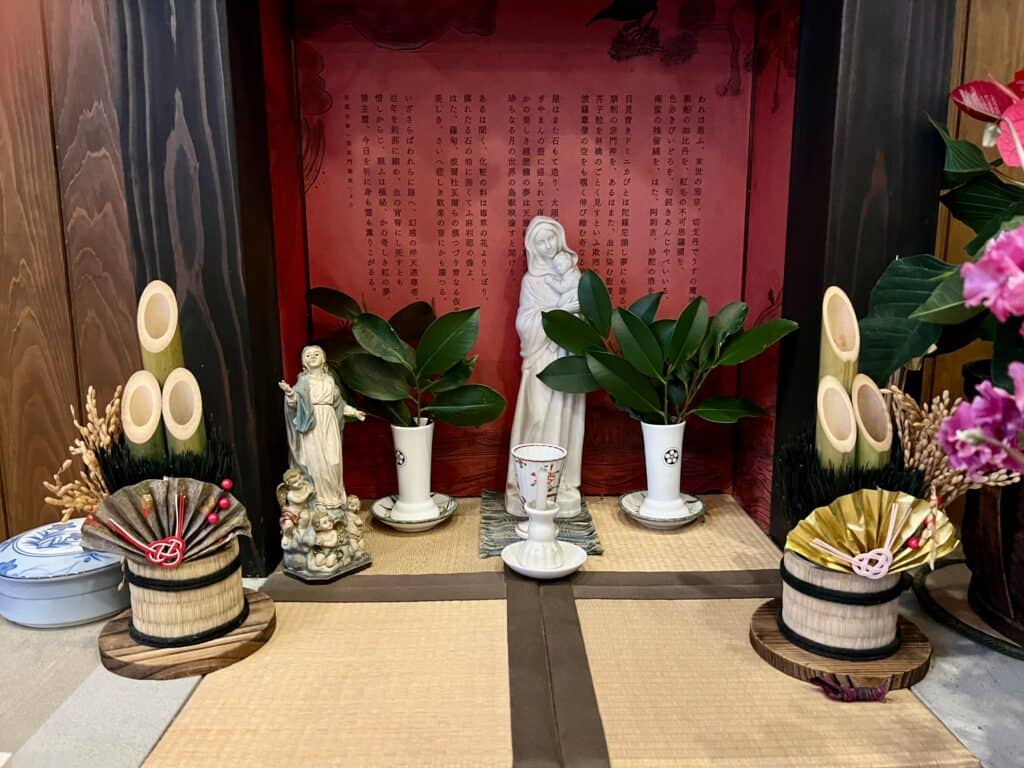
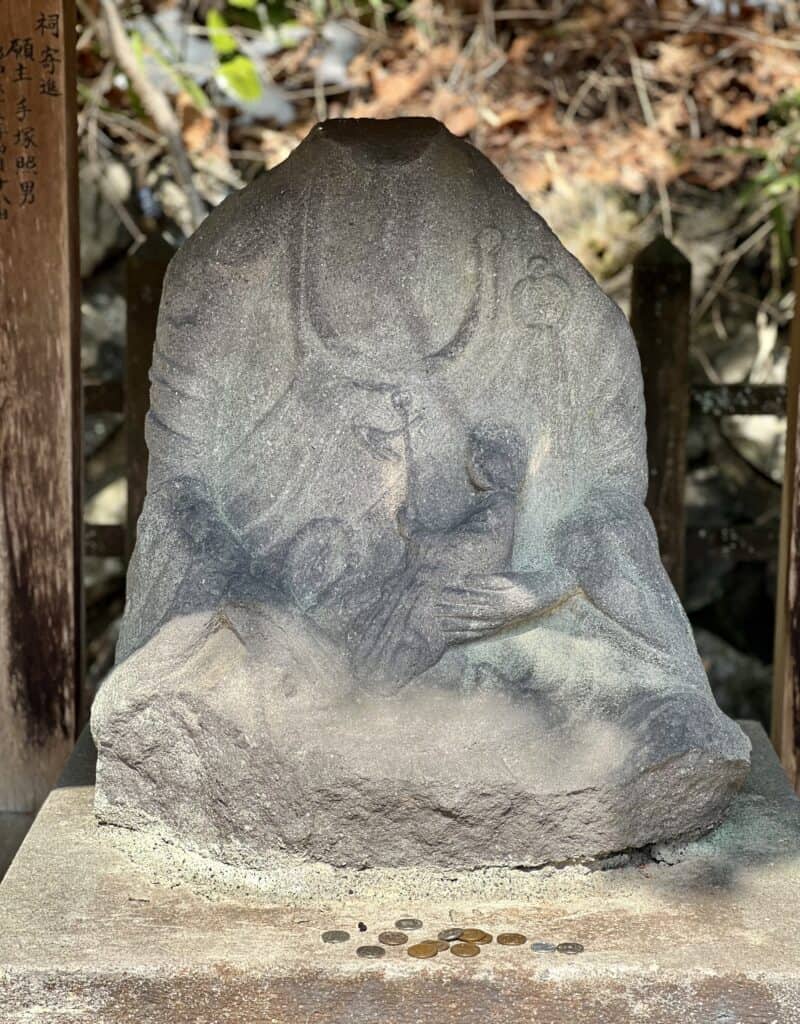
Traveling around Japan, I’ve come upon some unusual statues, testaments to the years Christianity was deemed a crime punishable by death. From the Maria Jizo of Narai in Nagano, to the Maria Kannon’s of Nagasaki, Christians made do with what they could contrive to keep their faith fresh.
A Little History of Christianity in Japan
Christianity reached Japan in 1549, when the Jesuit missionary Francis Xavier stepped ashore on southern Kyushu. Getting permission from the local daimyo, feudal lord, he began to preach. The new religion spread rapidly through Kyushu, accelerated by the conversion of several daimyo, most notably Omura Sumitada of the Omura domain (in present-day Nagasaki), Otomo Sōrin of Bungo (present-day Oita), and Arima Harunobu of the Shimabara domain (also in Nagasaki). Their embrace of Christianity gave the religion a measure of protection and prestige, but their zealousness and eagerness to please the missionaries resulted in the destruction of Buddhist temples and Shinto shrines in their domains, as well as the forced conversion of their subjects.
Nevertheless, sincere Christian communities sprang up throughout Kyushu, centered in Nagasaki. Under Jesuit influence, the port developed into both a haven for believers and a thriving hub of Portuguese trade.
The Jesuits were followed by Spanish Franciscans, who also proved successful.. By the late 1500s, an estimated 300,000 Japanese had converted to Christianity, out of a nationwide population of roughly 15-22 million. In 2024, by contrast, about 1.2 million Japanese reported being Christian, less than 1% of a population of 123.8 million.
The climate of tolerance did not last. Toyotomi Hideyoshi’s 1587 Bateren Edict expelled missionaries, and a decade later, the crucifixion of 26 Christians in Nagasaki set a grim precedent. The Tokugawa shogunate outright banned Christianity in 1614. By the 1620s, missionaries had been expelled, and believers faced torture, execution, or forced apostasy.
The 1637–1638 Shimabara Rebellion of mostly Christian peasants, desperate from heavy taxation and famine, culminated in the expulsion of all the Portuguese and Spanish, as well as the 1641 confinement of the Dutch to Dejima, severing any possible Christian ties to the outside world. Christianity became punishable by death, with believers either killed or driven underground. Many became Kakure Kirishitan, Hidden Christians.
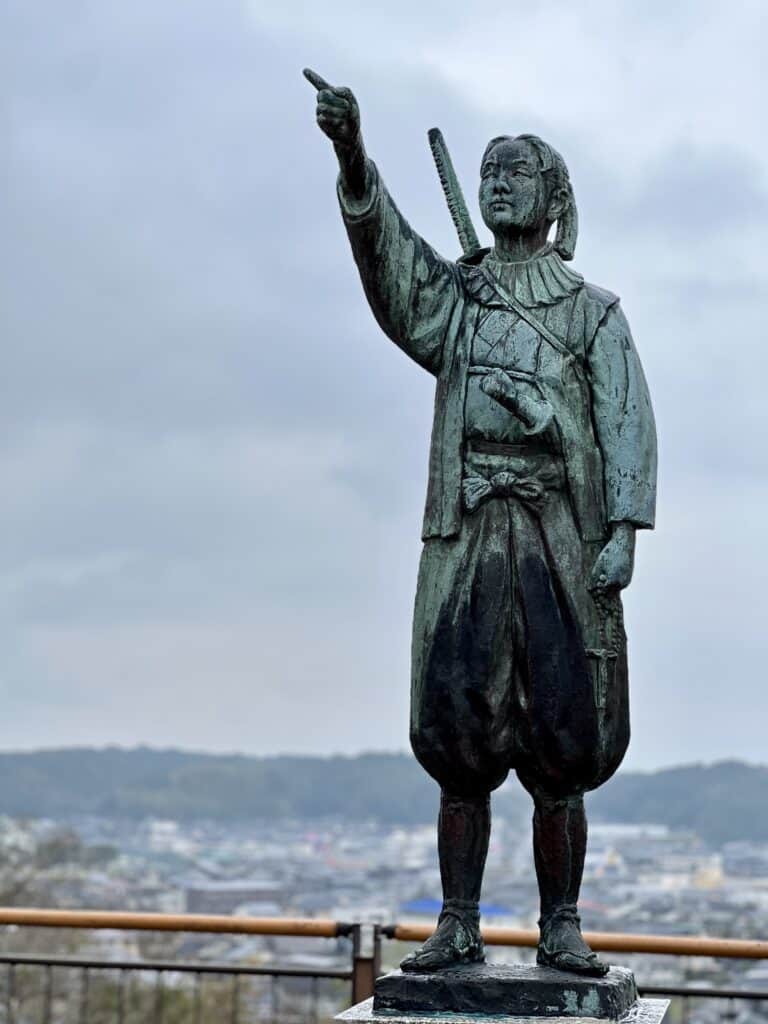
Life in Hiding (1640s–1850s)
The Hidden Christians developed ingenious ways to preserve their religion, adapting symbols and rituals to blend into Buddhist practice. Statues of the Virgin Mary were disguised as Kannon, the Buddhist bodhisattva of mercy, and crosses and rosaries were hidden inside Buddhist icons.
Central to the continuation of their faith were prayers called orasho, in a mix of Latin and 16th-century Portuguese and Japanese, chanted in rhythms resembling Buddhist liturgy. Passed down from generation to generation, reciting the orasho eventually became more of a ritual in itself rather than fully understood words.
Remote islands such as Goto and Ikitsuki became Christian refuges. There, believers organized into kumi, groups of ten to twenty families that doubled as fishing cooperatives and covert congregations. Under the guise of maritime customs, they disguised baptisms as blessings for new boats and orasho as chants for good fortune at sea. Crosses were hidden in nets and gear, while stones arranged into a cross on ancestors’ graves offered a secret moment of prayer before being scattered.
With few priests, lay leaders took on spiritual roles. The mizukata performed baptisms, and the chokata kept the calendar of holy days, ensuring the community continued its liturgical traditions. The most important was Otaiya, a Christmas mass held on December 23. The bread and wine of the Eucharist were replaced with rice, dried fish, and sake. The officiant placed a bit of the sanctified fish and rice on his upturned palms before eating, reflecting the Catholic sacrament.
Yet even with such careful adaptations and secrecy, persecution never ceased. Under the Tokugawa-mandated terauke seido system, every household was required to register with a Buddhist temple, and annual fumi-e tests forced suspected Christians to trample images of Christ or the Virgin Mary. Refusal meant torture and execution.
Still, hidden enclaves endured. By the 1790s, the rugged coastline of Sotome and the isolated Goto Islands are said to have sheltered as many as 3,000 Hidden Christians, who lived as farmers and fishermen while gathering in caves or homes to pray.
Rediscovery in the Meiji Era (1868-1912)
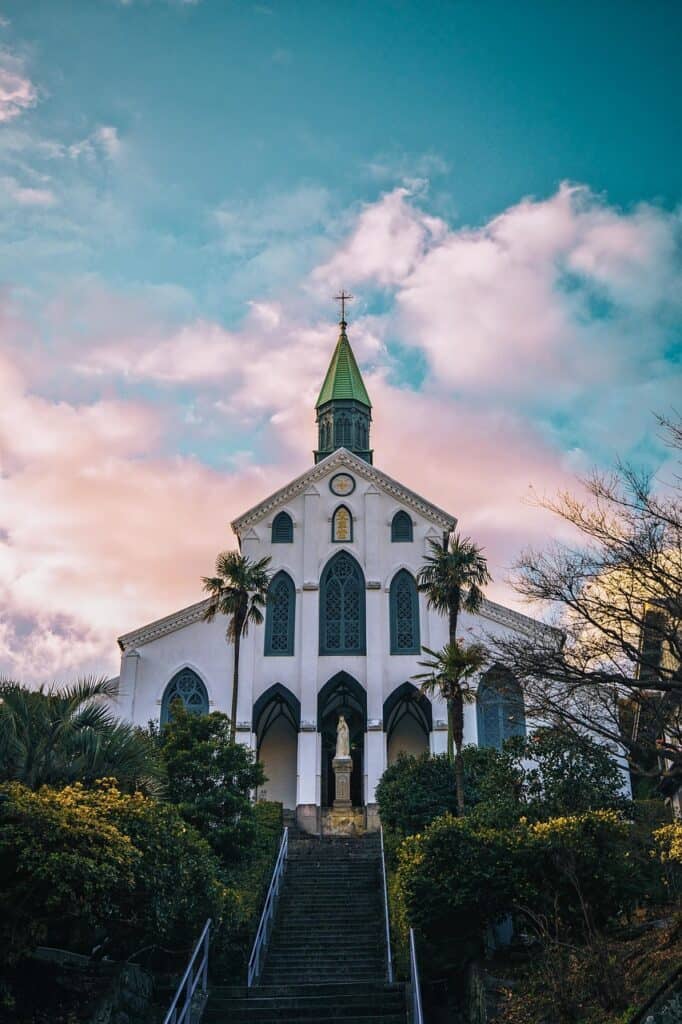
In 1863, French priest Bernard Petitjean of the Paris Foreign Missions Society arrived in Nagasaki and oversaw the construction of Oura Cathedral, which was completed the following year for foreign residents.
On March 17, 1865, Petitjean was astonished when 15 timid visitors from nearby Urakami quietly entered his church. They asked to see the statue of the Virgin Mary and to be assured of his ties to the Pope, explaining that they had preserved the sacraments and liturgy in secret for 250 years. Petitjean’s report to Rome stunned the Christian world, and Pope Pius IX hailed the moment as the “Miracle of the Orient.”
This “Discovery of the Hidden Christians” encouraged secret believers in Nagasaki, Sotome, and the Goto Islands to reveal themselves, though some paid a heavy price. On Hisaka Island, newly emboldened Christians openly declared their faith, only to face arrest in what became known as the Goto Kuzure, the Goto Collapse. About 200 Christians were imprisoned in a 20-square-meter cell (215 square feet), where 43 of the weakest, mostly children and the elderly, perished. When Father Petitjean learned of their confinement, he publicized their plight, which led to international calls for Japan to end the persecution.
Legacy of Resilience
True freedom for Christians came in 1873, when the Meiji government, under foreign pressure, lifted the ban on Christianity. Roughly 30,000 Hidden Christians emerged, many rejoining the Catholic Church. Others, particularly in the Goto Islands and on Ikitsuki, chose to continue the syncretic traditions of their ancestors. These communities hold the few Hidden Christians who survive today.
Through their generations, the prayers and rituals of the Hidden Christians evolved into customs unlike any other Christians in the world. No longer Japanese, Portuguese, or Latin, their prayers have been passed down written in the phonetic syllabary of katakana, their meaning all but lost. Even so, the faith carried on through the heartfelt sincerity of the believers.
The Hidden Christians’ survival across two and a half centuries of persecution, from Nagasaki’s hillsides to Goto’s remote caves, is nothing short of extraordinary. Yet in recent decades, as younger generations leave rural villages for the cities, few remain to carry on the traditions. The faith that once survived in secrecy under harsh persecution is now quietly disappearing.
Those Hidden Christians who rejoined the Catholics went on to build churches, such as Sakitsu Church in Amakusa in 1888, and Egami Church in Goto in 1918. In 2018, these and other related locations were recognized collectively as UNESCO World Heritage: Hidden Christian Sites in the Nagasaki Region.
If you have questions about Japan or suggestions for articles, please add them in the comments. For more photos and information on Japan, follow me on instagram at: https://www.instagram.com/more_than_tokyo/


