

A mighty warrior race disappeared from history
Many people have heard of the Ainu, the indigenous people of northern Honshu and Hokkaido, but very few know of the Hayato who lived in southern Kyushu. Yet strong Hayato warriors guarded emperors and played crucial roles on the front lines of battles.
Who were the Hayato?
Very little is written about the Hayato, who appeared on the stage of Japanese history for just over a century overlapping the Nara era (710-794).
Some scholars believe they descended from the ancient tribes of the Kumaso, the Austronesian inhabitants of southern Kyushu who disappeared from historical records in the 2nd century.
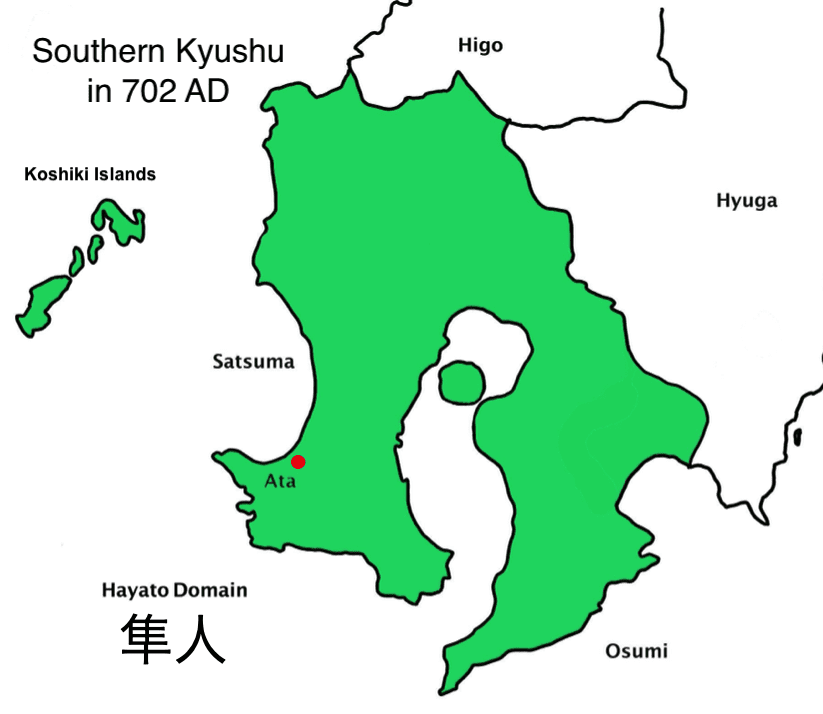
We know there were two main groups, named for their locations in what is today Kagoshima Prefecture. The Ata on the Satsuma peninsula, named after what is believed to have been their capital city, and those on the Osumi peninsula to the east. Smaller groups lived on the islands of Koshiki off the western coast of Satsuma, Tanegashima to the south of Osumi, and in southern Miyazaki to the east.
Barbarians
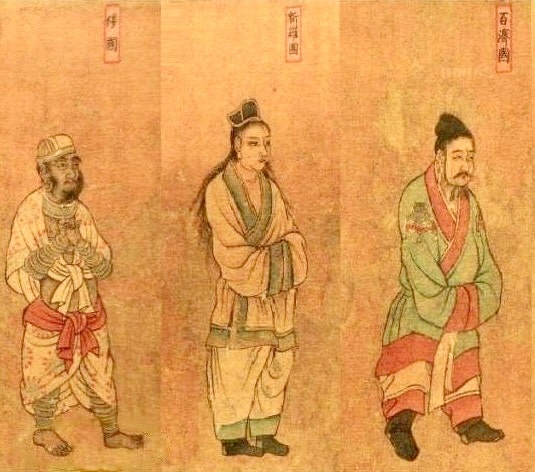
Japan’s ancient imperial court was heavily influenced by China and its tributary system. Under the Chinese system, rich countries sent emissaries to the emperor bringing gold and jade, and those from poor countries, like Japan, brought slaves.
The Yamato court adopted many things from the Chinese, including this concept of civilized and barbarian. They, the civilized, labeled people living outside their territory as barbarians. Because of his lofty power and status, the Yamato emperor required the barbarians living on the edges of his realm to bring him tribute.
These barbarians were the southern islanders of Yakushima and Amami-Oshima, the Hayato, and the Emishi, or Ainu, of northern Honshu and Hokkaido.
Bringing tribute to the Yamato court
The typical currency of Yamato tribute was rice, which was difficult to grow in the volcanic soil of southern Kyushu. So, the Hayato brought other offerings: cloth, the pelts of cows and deer, and a sweetener made from ivy sap called ama-zura-sen. Little is known today of this sweetener outside of its description in Sei Shoganon’s Heian-era book of essays, The Pillow Book.
Hundreds of young Hayato men brought tribute first to Dazaifu, the “Western Capital” in northern Kyushu, and then went on to the imperial court in Nara. These young men had to pay for their own travel, and they were required to stay and work in the capital for six years.
This put their families back home under a lot of strain. Not only did they have to bear the expense of travel and tribute, but they were left to work the fields on their own. They struggled to grow water potatoes, taro, millet, and what rice they could. By and by, the Hayato in Kyushu fell into poverty.

In the Imperial Capital
Records reveal a few ways the Hayato were put to work in the capital.
The Nihon Shoki, one of the oldest histories of Japan, tells us that in the 11th year of the reign of Emperor Tenmu (684), a sumo match was held before the court between the Ata and Osumi Hayato. The Osumi wrestler won.
Some years later, crowds gathered to watch another Hayato bout on the grounds of the Asukadera, a temple that still stands in Nara.
But the Hayato did more than sumo to entertain aristocrats. When the imperial court would hold a banquet, the versatile Hayato were called upon to sing, dance, and perform.
Their legendary dance is lost to time, but it was said to have illustrated the Hayato subservience to the emperor through a humorous reenactment of a story from the Kojiki, the ancient book of Japan’s mythical origins.
The story tells of a quarrel between two sibling gods, forefathers of the Yamato people and the Hayato people. At its culmination, the ancestor of the Yamato people raises the seawater level to drown the Hayato ancestor.
Some historians liken the Hayato dance to the Haka dance of the Māori, another Austronesian people. At any rate, the dance is said to have been fast, leading some to speculate that the name Hayato was derived from their speed. “Hayato” can be read as “falcon people” or “fast people.”
The Hayato mystique
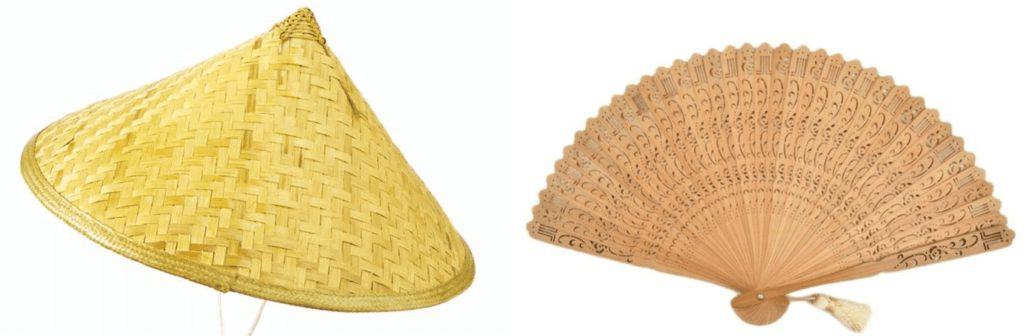
Kagoshima is an area rich in bamboo, so it is not surprising that the Hayato were specialists in bamboo crafts. The kasa hats and fans the Hayato made were considered precious. Everyone knew they were magical, as barbarian-made products often were.
This mystique served the Hayato well.
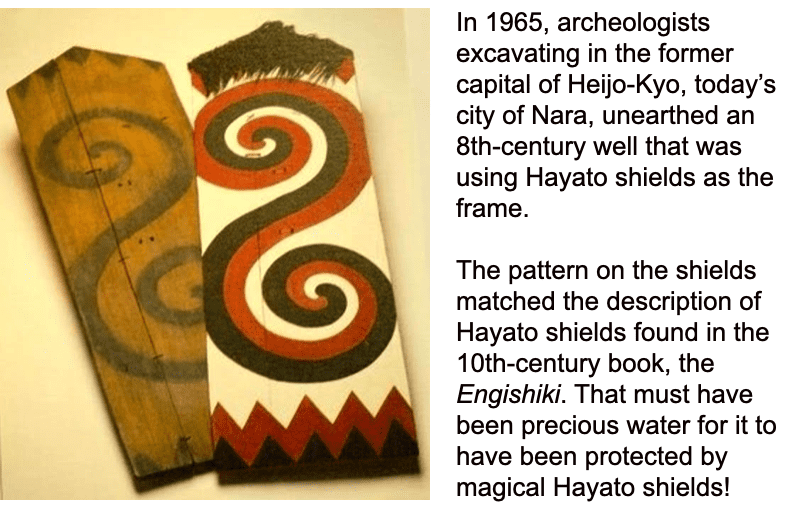
It gained them the prestigious job of imperial guards. Hayato warriors would stand with spears and shields in hand, outside the Otenmon gate of the royal palace. The symbols on their shields were also magical. They warded off evil spirits and purified the areas around them.
As well, the voices of barbarians repelled evil, and the Hayato were known far and wide for their powerful dog howls.
When the emperor would leave the palace on imperial visits, Hayato guards led the procession, shields in hand, howling at the top of their lungs. They wore red and white cotton wigs and scarlet shawls. Imagine the spectacle!
People must have shook in fear as they bowed with foreheads to the ground as the emperor passed. And not just out of respect for the “son of heaven”!
Hayato Rebellion
Meanwhile, back home in southern Kyushu, the Hayato were growing tired of the poverty and the onerous tribute system. When the central government started setting up local governments, enforcing registration, and allocating the land they had been freely sharing, the Hayato rebelled.
To suppress the rebels, troops were sent from Dazaifu in northern Kyushu, and central government control was strengthened through the establishment of Hyuga province (Miyazaki Prefecture) in the late 7th century, followed by Satsuma province in 702.
Yamato aristocrats were sent from the capital to rule these provinces set up on Hayato land.
In 713, the year Osumi province was established, another, more violent, uprising occurred. This left the Osumi-Kuni no Kami, the governor of Osumi who had been sent from Nara, dead.
The emperor was not happy.
He appointed Otomo-no-Tabito, the aristocratic leader of Dazaifu, to be the “Shogun Defeater of the Hayato,” 征隼人持節大将軍. Otomo traveled south with over 10,000 soldiers.
The Hayato would not be easily defeated. Using the volcanic geography of southern Kyushu to their advantage, they had built their castles on mountaintops surrounded by sheer cliffs.
The Hayato held off the Yamato troops for a full 18 months. But by mid-721, they had been beaten. 1,400 Hayato were killed or taken prisoner.
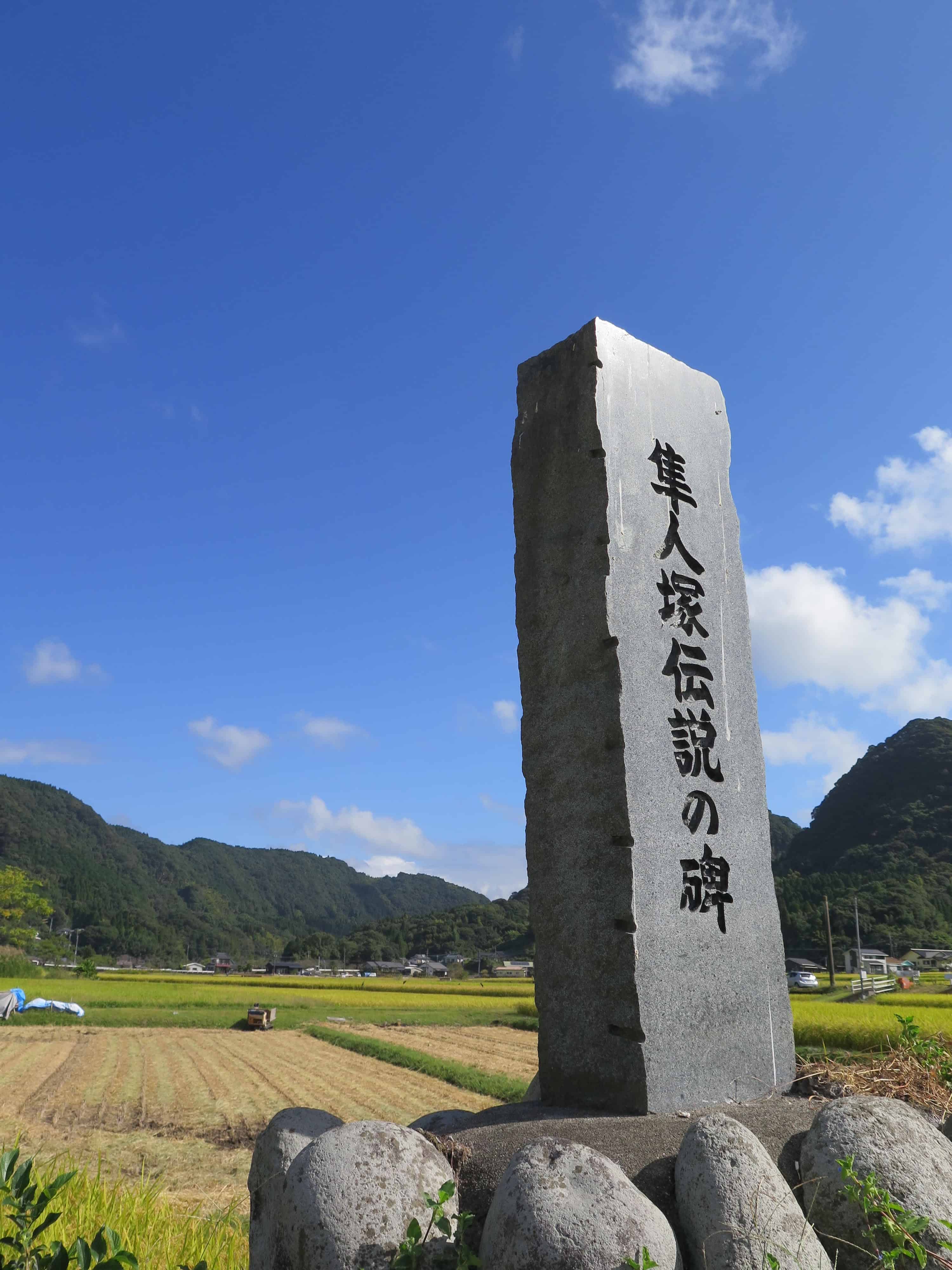
In customary fashion, the heads of the enemy were displayed before the conquering general, and then piled into a mound.
Assimilation
To complete the work of subjugation and to dilute their bloodline, the government forced many Hayato to relocate to Kyoto and serve the court. Today, the name of the Osumi district in southern Kyoto is a quiet reminder of the Osumi Hayato who lived there so long ago.
About 9,000 people from around Kyushu were sent to live in Satsuma and Osumi. The population of the Hayato at that time was about 54,000, so 1 in 7 residents were outsiders who carried with them the customs and language of the Yamato state.
Final glory
Although a defeated people, Hayato warriors were still respected for their courage and skill. One more mention in the Nihon Shoki describes how they were central players in the defeat of Fujiwara no Hirotsugu during his 740 AD rebellion against the Nara court.
Hayato were advance guards in both the government and rebel armies at a decisive battle in northern Kyushu. Through their cunning — and use of their own language, unintelligible to others — they brought about a speedy victory for the imperial forces.
Vanished
In 800 AD, the tribute paid by the Hayato was officially halted, and the name “Hayato” disappeared from all further records.
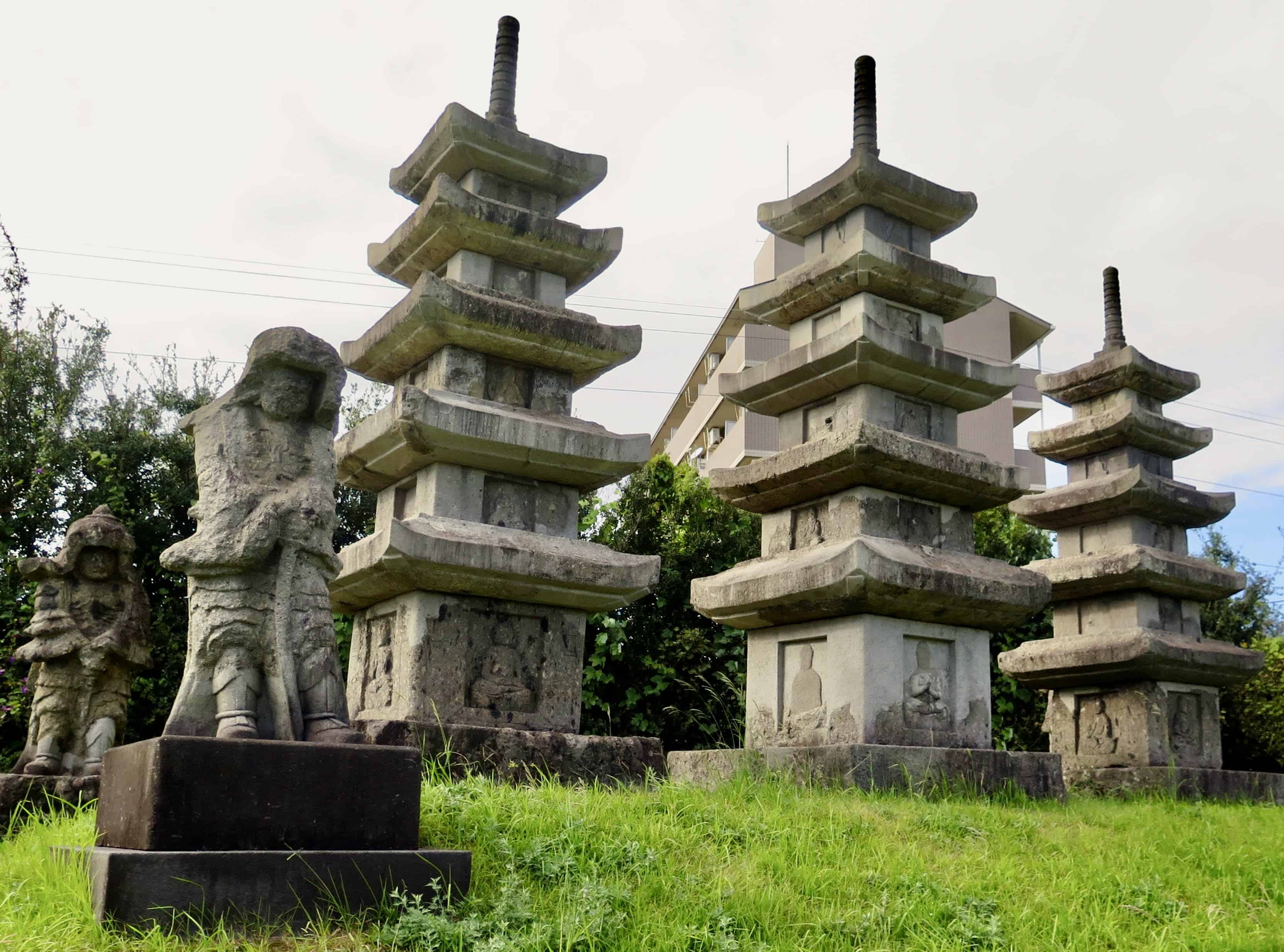
Today, there is little left to remember this amazing people, save a monument and tiny museum in Hayato Town, Kagoshima.
References
Hayatozuka Historical Museum, Nihon Shoki, Professor N. Nakamura.
If you have questions about Japan or suggestions for articles, please add them in the comments. For more photos and information on Japan, follow me on instagram at: https://www.instagram.com/more_than_tokyo/


