

• Home
  • About
  • Discover
    • History
    • Culture
    • Nature
    • Food
    • Living in Japan
    • Destinations
    • Language
    • Tips
  • Interview
  • Recommended Books
Exploring the Wonders of Rural Japan
History Destinations

Takkoku Seikoji Temple, One of Iwate Prefecture’s Hidden Treasures

A former battleground, now a sanctuary of peace
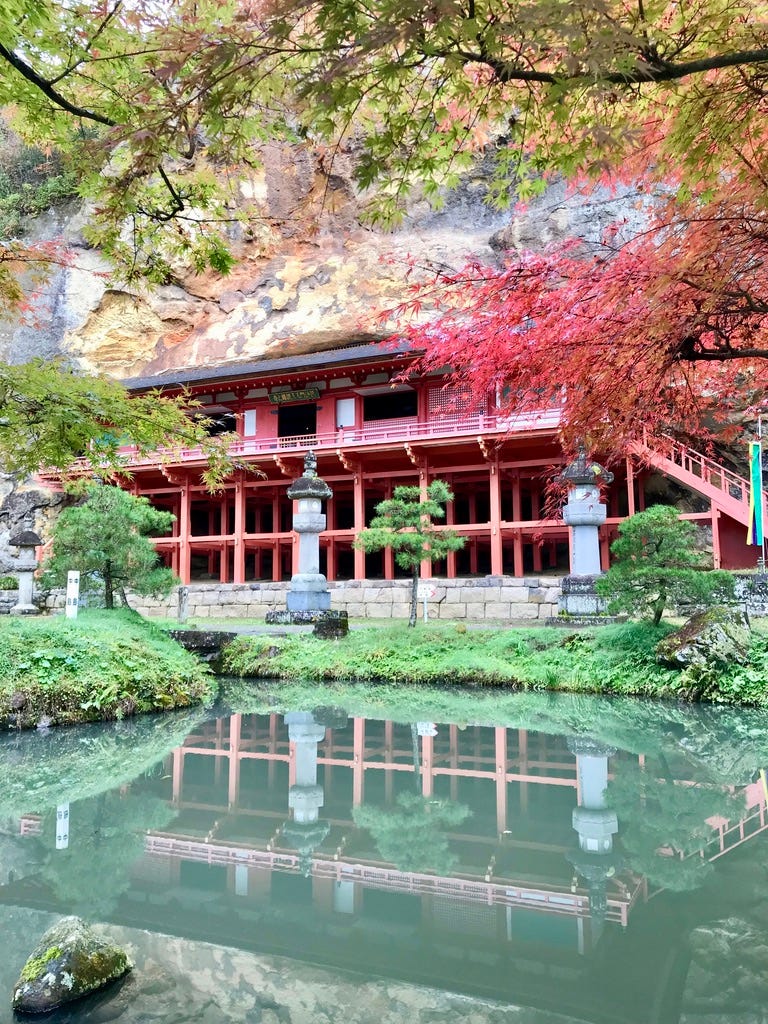
Takkoku Seikōji Temple reflects in its pond.
Takkoku Saikōji Bishamondo, Hiraizumi, Iwate. (©Diane Tincher)

I had arrived in Hiraizumi, Iwate, in the early evening, checked into the humble inn where I was to stay, and ate some hot bibimbap while chatting with the elderly Korean proprietor of the small, cluttered restaurant next door.

Eating bibimbap at a local restaurant.
Delicious bibimbap at the Korean restaurant next door to the inn. (©Diane Tincher)

After a good night’s sleep on comfortable futons, I borrowed a bicycle from the innkeeper and was on the road before 7:00 AM, riding west to visit the Takkoku Saikōji Temple. Along the way I passed harvested rice drying in the fields in a manner I learned was common in Iwate and Miyagi. The drying rice looked like characters from a Studio Ghibli film.
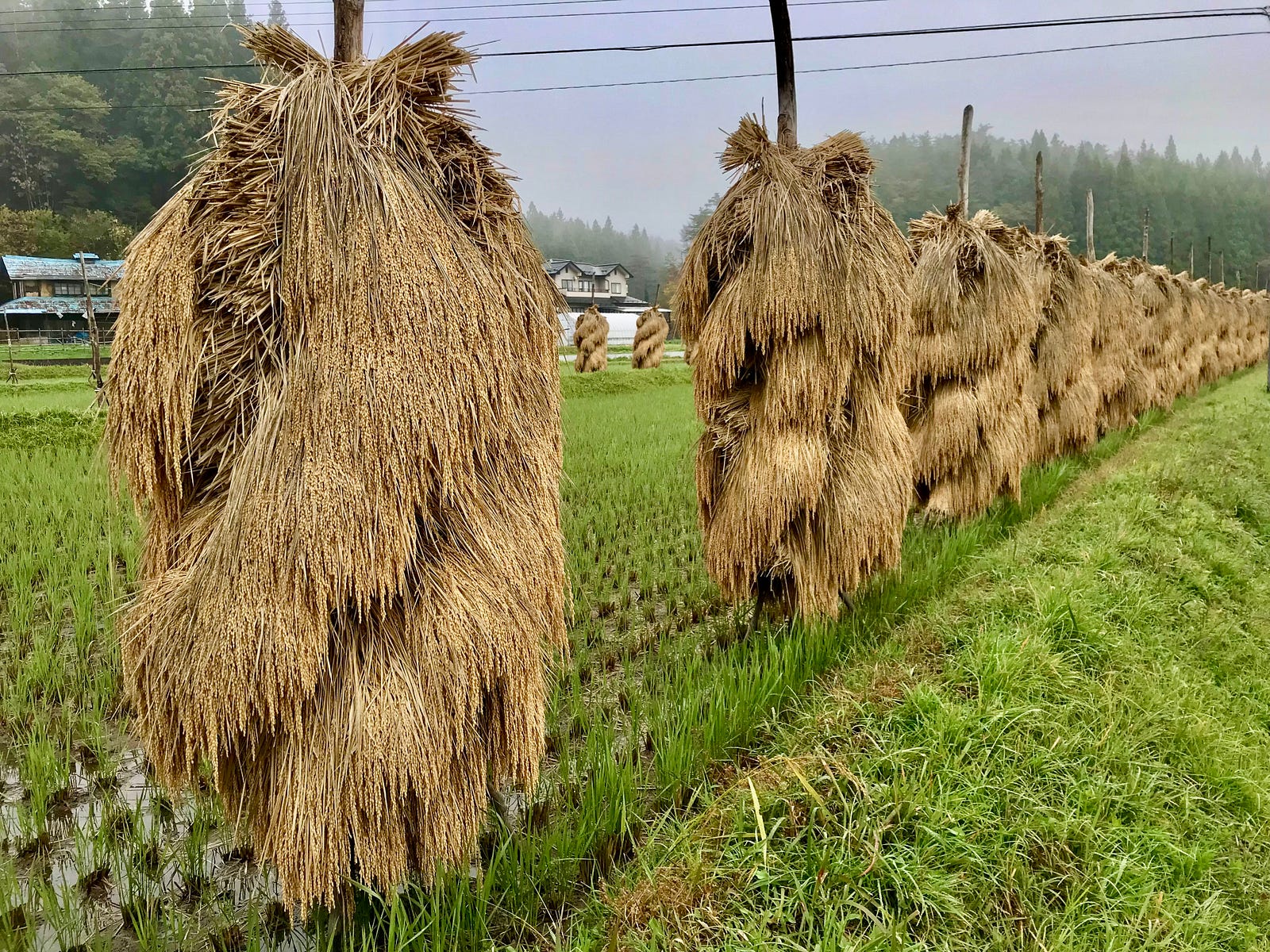
Rice drying in rural Iwate.
Rice hanging to dry in the mist of early morning. (©Diane Tincher)

Or like rows of the old-style straw raincoats worn in Japan in yesteryear. They were nothing like the straightly hung rice I was used to seeing in other parts of Japan.
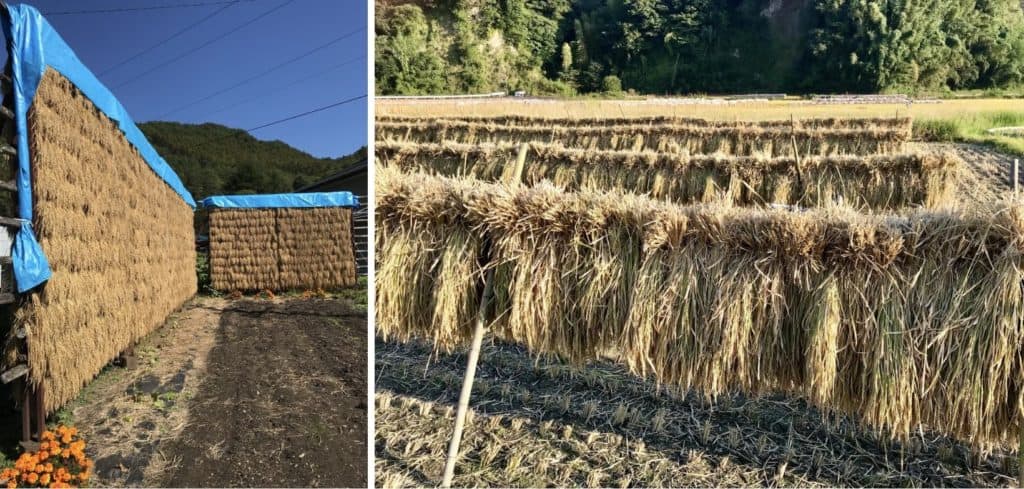
Rice drying.
Rice drying. Left: in Nagano. Right: near my house in Kagoshima. (©Diane Tincher)

After stopping to take photos of the rice and chat with a farmer, I rode a bit further and arrived at the temple, six kilometers east of Hiraizumi. I expected to find a Buddhist temple, yet before me stood Shinto torii gates. 

Takkoku Seikōji Temple’s origin
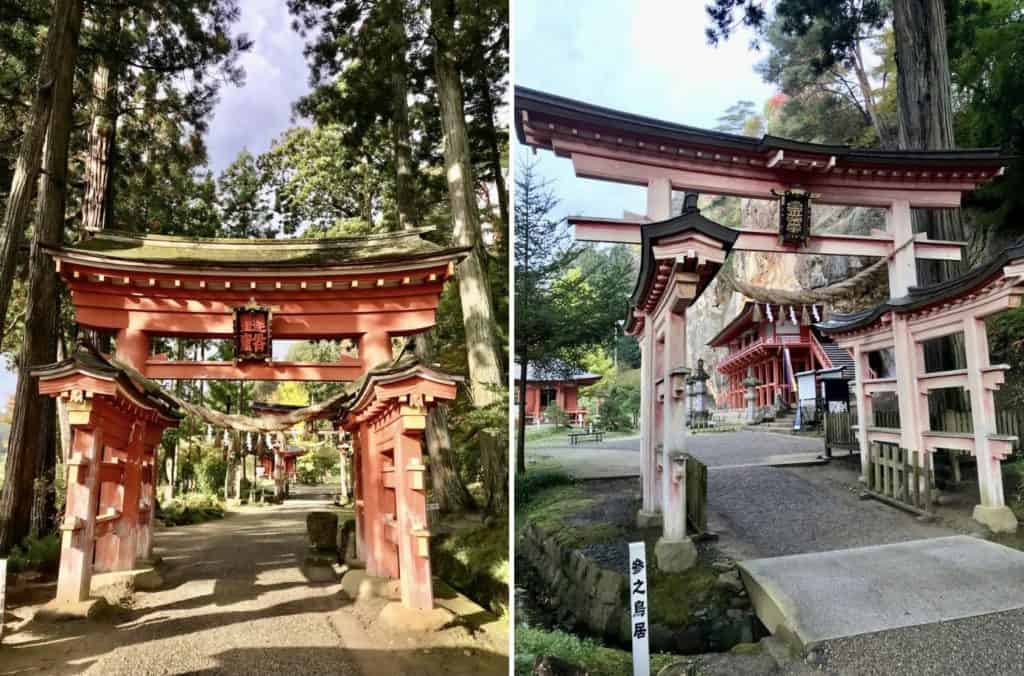
Two of three Shinto torii gates at Takkoku Temple.
Two of three Shinto torii gates leading to the Buddhist temple. (©Diane tincher)

In the late 8th century, Sakanoue no Tamuramaro was appointed as Seiitai-Shōgun, 征夷大将軍, Supreme Commander Against the Barbarians, by Emperor Kanmu. 

The “barbarians” he was sent to subjugate were the Emishi, tribes who inhabited northern Honshu and Hokkaido — the wilderness “beyond the road,” or Michinoku. These people, considered by some to be the ancestors of the Ainu, had resisted the rule of the Japanese state. 

Takkoku Seikōji Temple is built in a cave.
Takkoku Seikōji Temple built into the cave where the Emishi leaders had their headquarters. (©Diane Tincher)

Unfortunately for the Emishi, Sakanoue no Tamuramaro succeeded in subjugating them.

In 801, to give thanks to Bishamon, the god of war, Sakanoue built the Bishamon Hall in what is now the Takkoku Seikōji Temple in the very cave that had been the Emishi leaders’ headquarters. Henceforth, it was to be a place to pray for peace.

Takkoku Seikōji Temple through the years

In the 11th century, Minamoto no Yoriyoshi visited the temple to give thanks for his victory over the powerful Emishi Abe clan and their ally, Fujiwara no Tsunekiyo. 

Other luminaries of Japanese history had contact with this now quiet and somewhat forgotten temple. In the 12th century, the first of the Northern Fujiwara, Kiyohira, and his son Motohira, endowed buildings. Not long after, the first shogun, Minamoto no Yoritomo, stopped by to give thanks after his army defeated his half-brother Yoshitsune in the nearby battle of Koromogawa. 

Originally, the Takkoku Seikōji Temple complex held 108 statues of Bishamon, one for each worldly desire according to Buddhist teaching. But in the 15th century, as a result of fires — the bane of Japanese structures made of paper, straw, and wood — many of the statues, as well as the temple itself, were destroyed.

The temple that stands today was built in 1961, modeled after the famed Kiyomizu Temple in Kyoto which was also founded by Sakanoue no Tamuramaro before he set off on his journey to the north to conquer the Emishi.

Twenty of the original 108 statues of Bishamon remain at the Takkoku Seikōji Temple, as does the main object of worship, kept safely in the deep recesses of the cave within a cabinet donated by the famous 17th century warlord, Date Masamune.
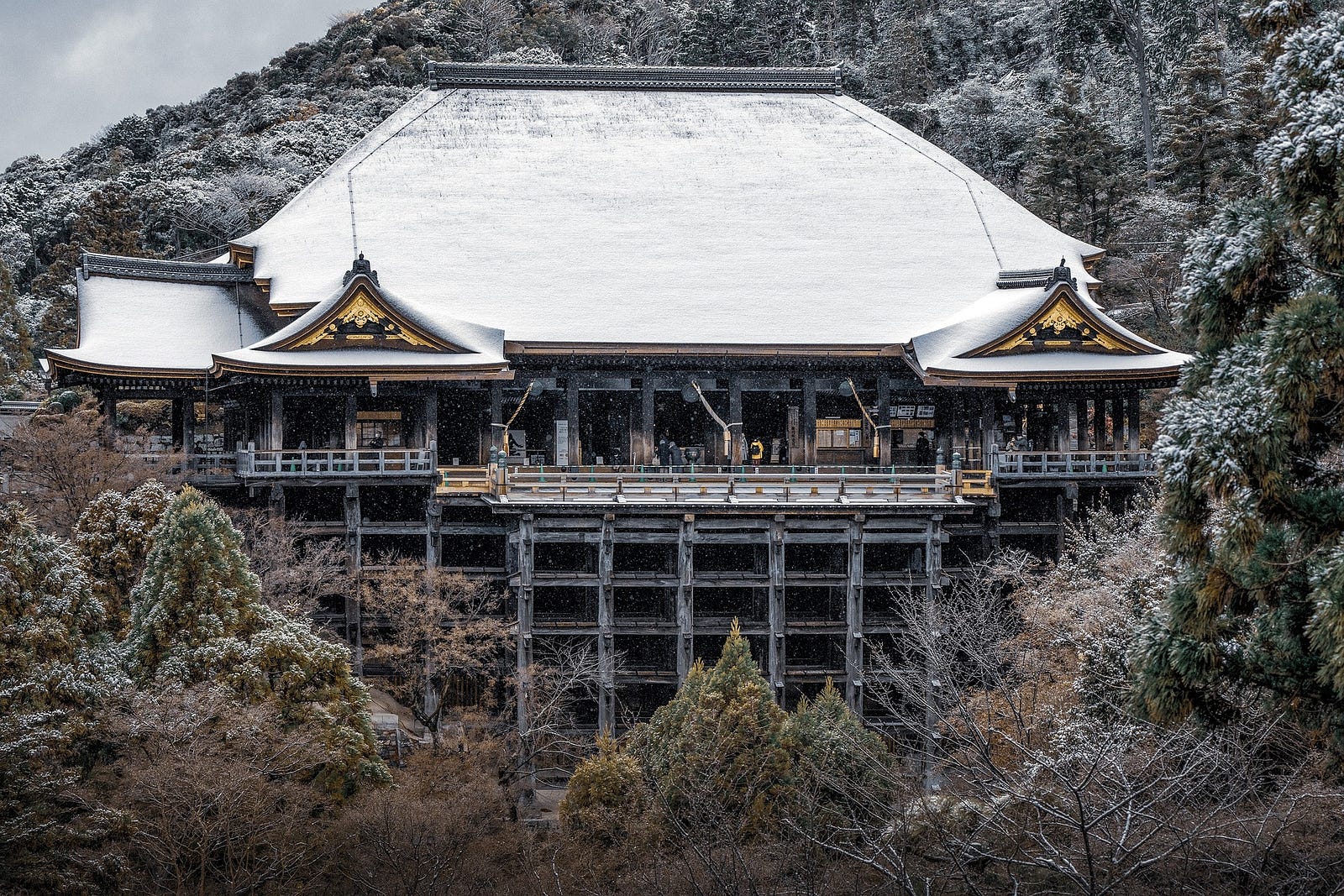
Takkoku Seikōji Temple is modeled after the Kiyomizu temple in Kyoto.
Kiyomizu Temple, Kyoto. (Photo by Kanenori. Pixabay. No attribution required.)

There are smaller buildings in this temple complex, among them a temple to Benten, the goddess of intelligence, happiness, and skillfulness. She is depicted through a beautiful Heian-era statue.

Beside the main hall, a 16.5 meter statue of a seated Buddha is carved into a sandstone cliff. Called the Ganmen Daibutsu, this thousand-year-old image of Amida Nyōrai, the Buddha of the Pure Land, was created to remember the souls of those who died during local wars of the 11th century.

Only the face and part of one shoulder remain, as much of the image was destroyed by an earthquake in 1896. 

Takkoku Seikōji Temple's Ganmen Daibutsu is carved into a rockface.
The Ganmen Daibutsu, carved rock face, at Takkoku Seikoji Temple. (©Diane Tincher)

And what about the Shinto torii gates at the temple’s entrance? They are a legacy of the centuries that Buddhism and Shinto had a syncretic relationship, both existing in harmony. A situation we enjoy again today.

Takkoku Seikōji Temple, surrounded by rice fields and forests, is a short drive — or bicycle ride — from Hiraizumi station.


If you have questions about Japan or suggestions for articles, please add them in the comments. For more photos and information on Japan, follow me on instagram at: https://www.instagram.com/more_than_tokyo/

Hiraizumi Iwate Japan Japan travel Japanese History Takkoku Temple
Share
2 Comments
  1. Mike

    December 3, 2022 9:55 am

    Another remarkable adventure into a world few will ever be privileged to comprehend – thanks for sharing and please keep up your good work.

    Reply
    1. Diane Tincher

      December 9, 2022 7:23 am

      Takkoku Seikōji Temple is amazing. I was privileged to be able to visit it.
      Thank you for reading and for your kind comment. I appreciate your support and interest.

      Reply
Leave a Reply Cancel reply

Your email address will not be published. Required fields are marked *

This site uses Akismet to reduce spam. Learn how your comment data is processed.

Previous Post

10 Things Visitors to Japan Think are Completely Awesome

Next Post

For a Healthy Happy Year, Dream of Mount Fuji, Hawks, or Eggplants

If you enjoy my work and would like to help me continue creating, consider supporting me.

Thank you!
PayPal - The safer, easier way to pay online!
Newsletter

Subscribe

Enter your email for notifications of our latest posts

Tags
architecture Buddhism Christianity Edo Era elderly festivals folklore Food Ghosts gratitude Haunting Hiking history holidays honesty Japan Japanese Japanese cuisine Japanese culture Japanese Customs Japanese Food Japanese History Japanese Language Japanese words that English needs Japan Tips Japan travel Japan Travel Tips Jizō Kagoshima Kōyō Living in Japan longevity Manners Nature New Year Ninja Samurai Shinto shogun Shrine Tips Trade Travel volcano Washoku
Featured Posts
History Religion

The Shimabara Rebellion—The Last Stand of Japan’s Christians

July 8, 2026
History

The Okamoto Daihachi Affair—The Scandal That Turned the Tide Against Christianity in Japan

July 6, 2026
History

The 47 Ronin—Disgrace, Revenge, and Death

June 23, 2026
Destinations Folklore Ghosts

Omatsu Daigongen—The Amazing Cat Temple of Shikoku

June 1, 2026
History

Oura Kei—Unstoppable Pioneering Tea Merchant

January 19, 2026
Most Popular

Shinto — The Peaceful Spiritual Heart of Japan

Shinto gate Lake Biwa

Komorebi—A Beautiful Japanese Word that English Needs

Nakasendo Way

Dondoyaki—Burning New Year’s Decorations to Send off the God of the New Year

Dondoyaki fire

The Jizo Statues of Nashi-no-Ki—1,000s of Unique Offerings of Thanks

Jizo statues at Nashi no Jizo, Sado.

Sugawara no Michizane —Japan’s Three Most Infamous Vengeful Ghosts, part 3

Sugawara Michizane
You might also like
Nakasendo Way
Nature Language

Komorebi—A Beautiful Japanese Word that English Needs

1 Min read
November 11, 2021
temple pagoda
Culture Living in Japan

Death in Japan

8 Mins read
March 22, 2022
Japanese traditional play
Language Culture History Living in Japan

Why is Learning Japanese So Hard?

6 Mins read
January 29, 2022
Exploring the wonders of rural Japan
Exploring the Wonders of Rural Japan
  • Home
  • About
  • Recommended Books
  • Interview
  • Privacy Policy
Exploring the Wonders of Rural Japan
  • Home
  • About
  • Discover
    • History
    • Culture
    • Nature
    • Food
    • Living in Japan
    • Destinations
    • Language
    • Tips
  • Interview
  • Recommended Books
We use cookies on our website to give you the most relevant experience by remembering your preferences and repeat visits. By clicking “Accept”, you consent to the use of ALL the cookies.
Do not sell my personal information.
Cookie SettingsAccept
Manage consent

Privacy Overview

This website uses cookies to improve your experience while you navigate through the website. Out of these, the cookies that are categorized as necessary are stored on your browser as they are essential for the working of basic functionalities of the website. We also use third-party cookies that help us analyze and understand how you use this website. These cookies will be stored in your browser only with your consent. You also have the option to opt-out of these cookies. But opting out of some of these cookies may affect your browsing experience.
Necessary
Always Enabled
Necessary cookies are absolutely essential for the website to function properly. These cookies ensure basic functionalities and security features of the website, anonymously.
CookieDurationDescription
cookielawinfo-checkbox-analytics11 monthsThis cookie is set by GDPR Cookie Consent plugin. The cookie is used to store the user consent for the cookies in the category "Analytics".
cookielawinfo-checkbox-functional11 monthsThe cookie is set by GDPR cookie consent to record the user consent for the cookies in the category "Functional".
cookielawinfo-checkbox-necessary11 monthsThis cookie is set by GDPR Cookie Consent plugin. The cookies is used to store the user consent for the cookies in the category "Necessary".
cookielawinfo-checkbox-others11 monthsThis cookie is set by GDPR Cookie Consent plugin. The cookie is used to store the user consent for the cookies in the category "Other.
cookielawinfo-checkbox-performance11 monthsThis cookie is set by GDPR Cookie Consent plugin. The cookie is used to store the user consent for the cookies in the category "Performance".
viewed_cookie_policy11 monthsThe cookie is set by the GDPR Cookie Consent plugin and is used to store whether or not user has consented to the use of cookies. It does not store any personal data.
Functional
Functional cookies help to perform certain functionalities like sharing the content of the website on social media platforms, collect feedbacks, and other third-party features.
Performance
Performance cookies are used to understand and analyze the key performance indexes of the website which helps in delivering a better user experience for the visitors.
Analytics
Analytical cookies are used to understand how visitors interact with the website. These cookies help provide information on metrics the number of visitors, bounce rate, traffic source, etc.
Advertisement
Advertisement cookies are used to provide visitors with relevant ads and marketing campaigns. These cookies track visitors across websites and collect information to provide customized ads.
Others
Other uncategorized cookies are those that are being analyzed and have not been classified into a category as yet.
SAVE & ACCEPT