

• Home
  • About
  • Discover
    • History
    • Culture
    • Nature
    • Food
    • Living in Japan
    • Destinations
    • Language
    • Tips
  • Interview
  • Recommended Books
Exploring the Wonders of Rural Japan
Culture Destinations

Shukubo—Tranquil Temple Stay in Japan

A night spent with monks on Mount Kōya
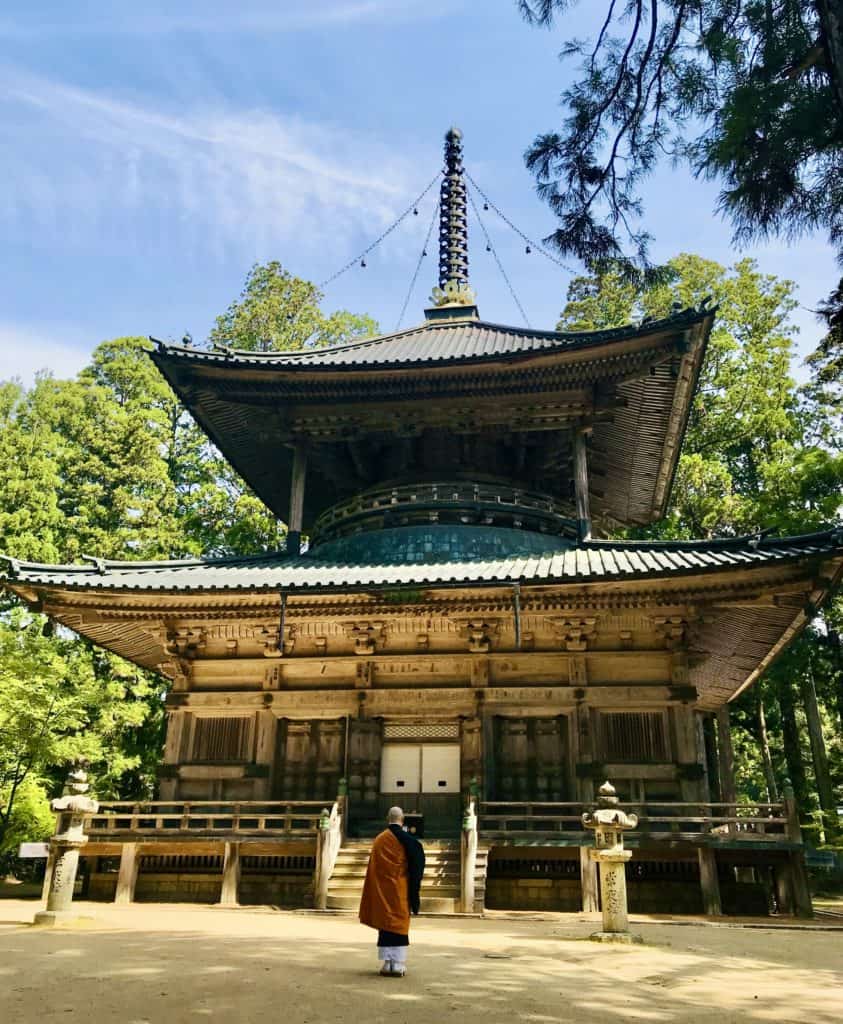
Monk in front of Seito, Mount Koya.
Monk in front of seito, the western tower. Mount Kōya. (©diane Tincher)

Shukubō on Mount Kōya

Mount Kōya in Wakayama Prefecture is the center of Shingon Buddhism. It is located on a plateau surrounded by eight forested peaks and connected by ancient pilgrimage routes to the Kumano Sanzan — Hongu Grand Shrine, Hayatama Grand Shrine, and Nachi Grand Shrine — the three sacred sites of the Kumano region. These sites are a quintessential example of the synchronicity of Buddhism and Shinto, with each location’s deity having both a Buddhist and a Shinto embodiment.

In 819, after first requesting the blessing of the local Shinto deities, the founder of Shingon consecrated Mount Kōya as a mountain retreat and the headquarters of his esoteric branch of Buddhism. This monk, Kukai, posthumously named Kōbō Daishi, rests in a mausoleum deep within Okunoin, the largest graveyard in Japan, atop Mount Kōya.

Today, there are over one hundred temples on Mount Kōya, many of which offer lodging to visitors. I was lucky enough to stay at such a temple several times in recent years.

Staying at a temple
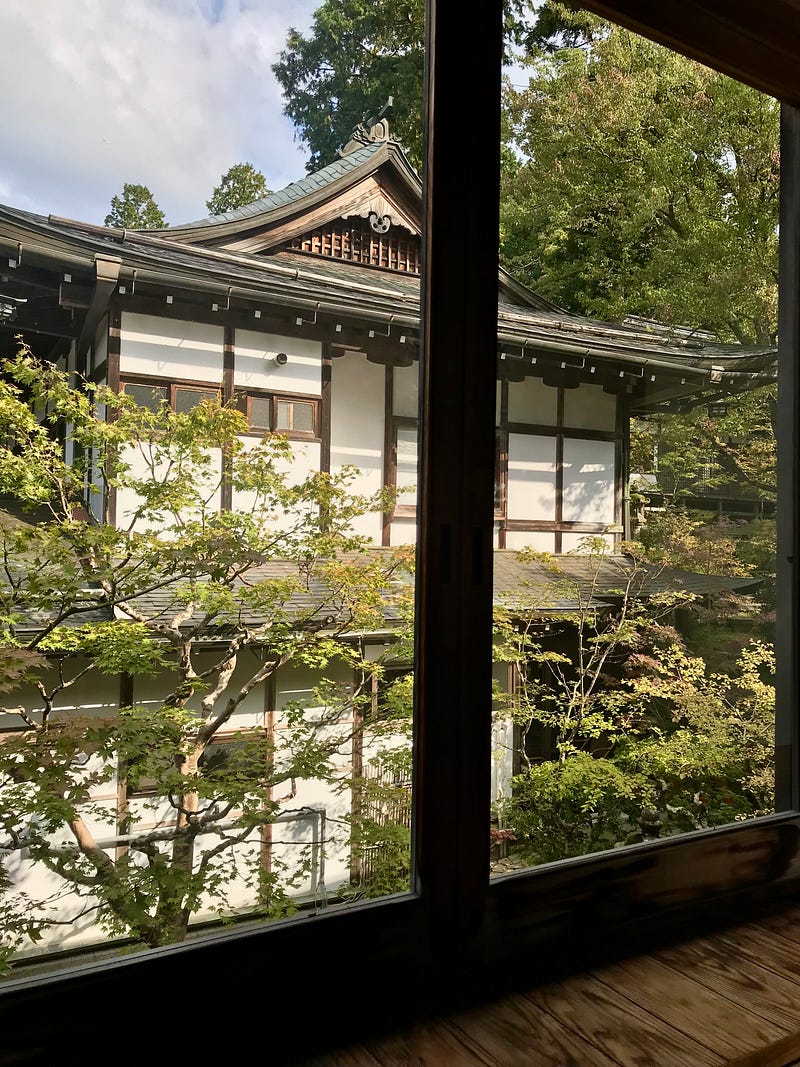
During my shukubō temple stay, my quiet room had a view of the courtyard and temple buildings.
The view from my room in the temple. (©diane tincher)

Arriving at the temple, we first take off our shoes, step up onto the raised floor of the building, and put on inside slippers. We are greeted by a monk, who gives us a tour, explaining about the onsen bath and where the dining room, restrooms, and prayer rooms are located. 

It is an old wooden temple building, with squeaky, yet shiny wooden floors. After walking along the engawa hallway between the outside walls with sliding windows and the raised interior rooms, we are shown into tatami mat rooms. This is where we will spend the night. Futons will be laid out for us on the floor while we eat our dinner.

Our tatami rooms are basic and separated by sliding paper fusuma doors. There will be no secrets among us this night! The toilets down the hall are shared communally — one room for men and one for women.

We settle into our rooms, and some of us take time to relax, enjoy the atmosphere, and have the tea and simple snacks left for us on a low table in the center of each room.

In small groups, or one by one, we head to the onsen to wash, soak, and relax before dinner. We are provided with yukatas to wear after our bath, which become our evening wear. No need to worry about what to put on for dinner. We all wear yukatas. Wearing another layer underneath can help with warmth and modesty.
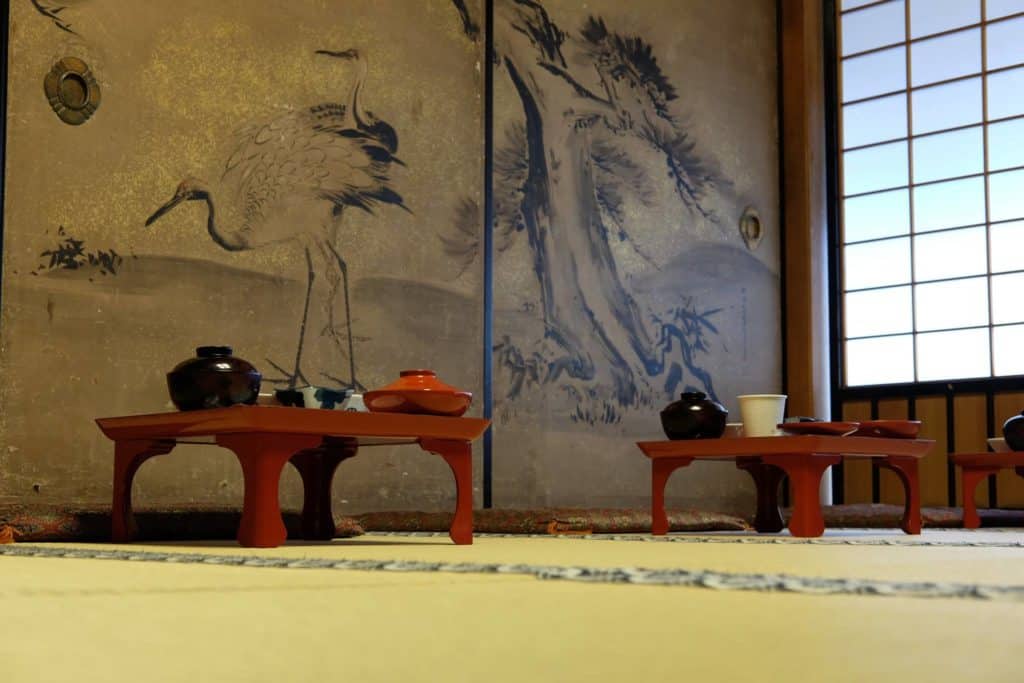
Dinner is served on individual low tables at the shukubō.
Meals are set out on individual low tables. (Photo courtesy of walk Japan)

Dinner is traditional Buddhist fare called shōjin ryōri. It is vegetarian and features various types of tofu, local vegetables, and konnyaku — a rubber-like food made from the corm of the konjac plant.

Afterward, those who want to, change into warm clothing and join one of the monks for a nighttime tour of the graveyard. He explains a little about the Shingon religion, its symbolism, and points out some of the more famous graves. We walk by the 200,000 tombstones that line the nearly 2 km walkway to the mausoleum of Kōbō Daishi, at the far end of the cemetery.
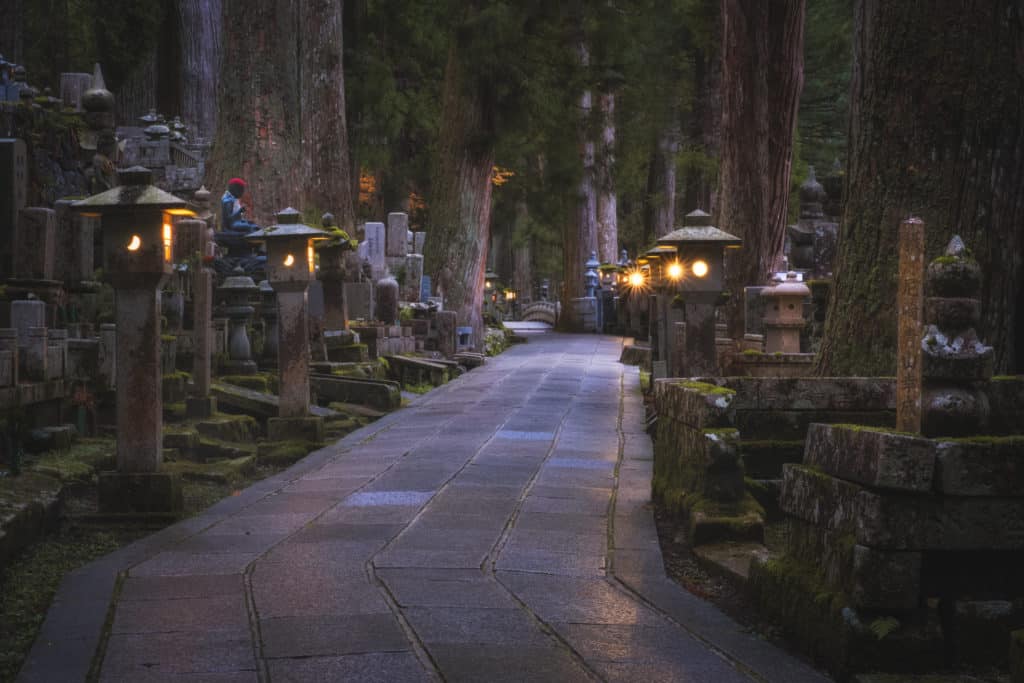
Okunoin cemetery at night.
Okunoin Cemetery. (Depositphotos)

Although I realize it is a high honor to be entombed in this magnificent cemetery — sharing holy ground with the likes of Oda Nobunaga and other greats of Japanese history — I can’t help but wonder about all those souls resting so far away from their ancestral homes. The monk explains to me that, in general, the graves of Okunoin contain only the hyoid, called the “Buddha bone” in Japanese due to its shape. The remaining bones are indeed interred in their families’ graves.
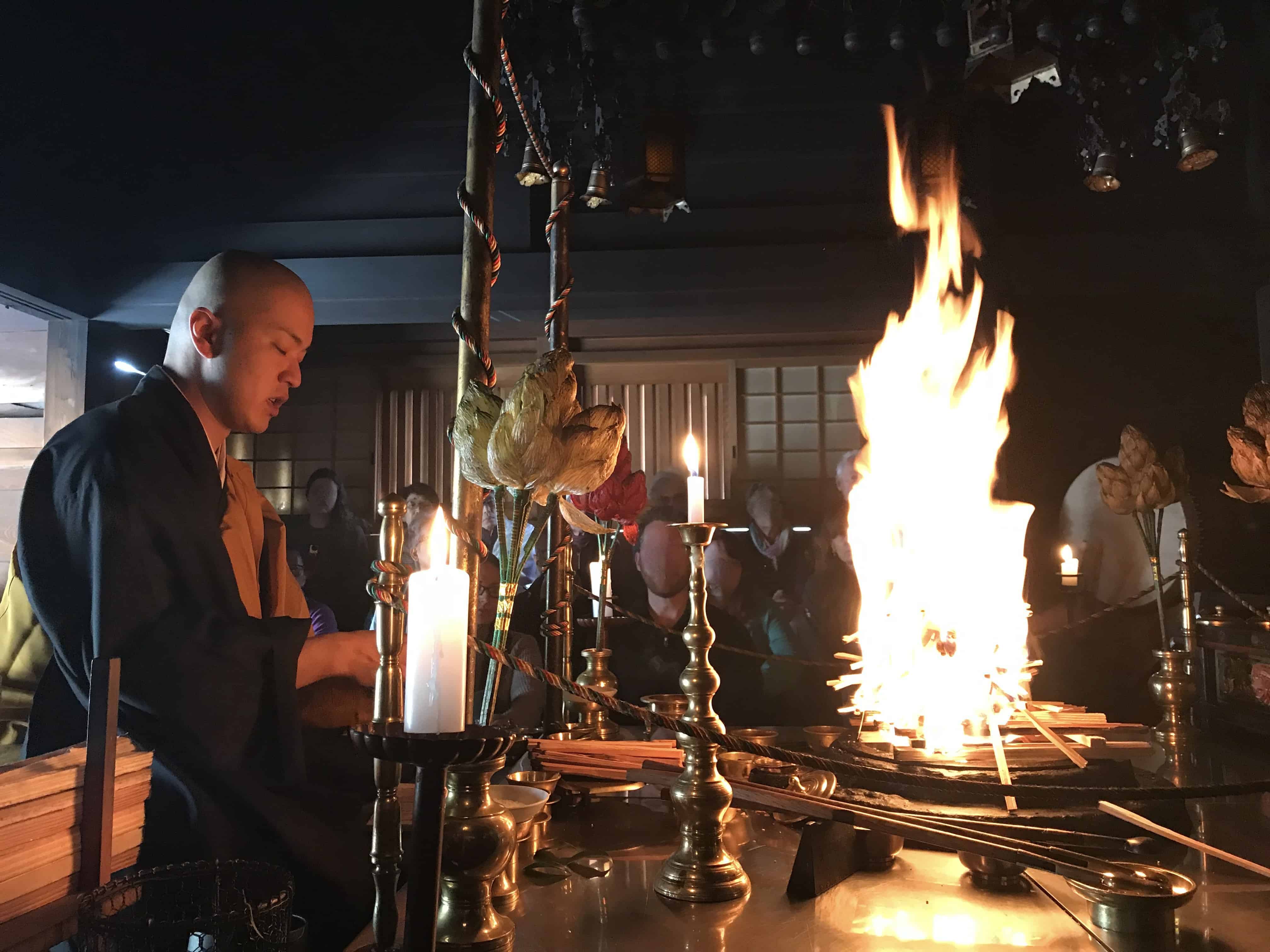
At some temples, visitors are invited to join the early morning goma fire ceremony.
goma fire ceremony. (©diane tincher)

After a comfortable night’s sleep, we awaken early, dress in our regular attire, and walk down the long hallway to the prayer room. There we sit respectfully as monks perform their morning chanting service.

Next, we go outside to a separate building where the Goma fire ceremony is held. Buddhists hold that the root of all suffering is desire. In the fire ceremony, a monk burns wooden sticks upon which are written various human desires. The fire symbolizes the compassion of Fudō Myōō, the destroyer of evil, which cleanses us of those desires.
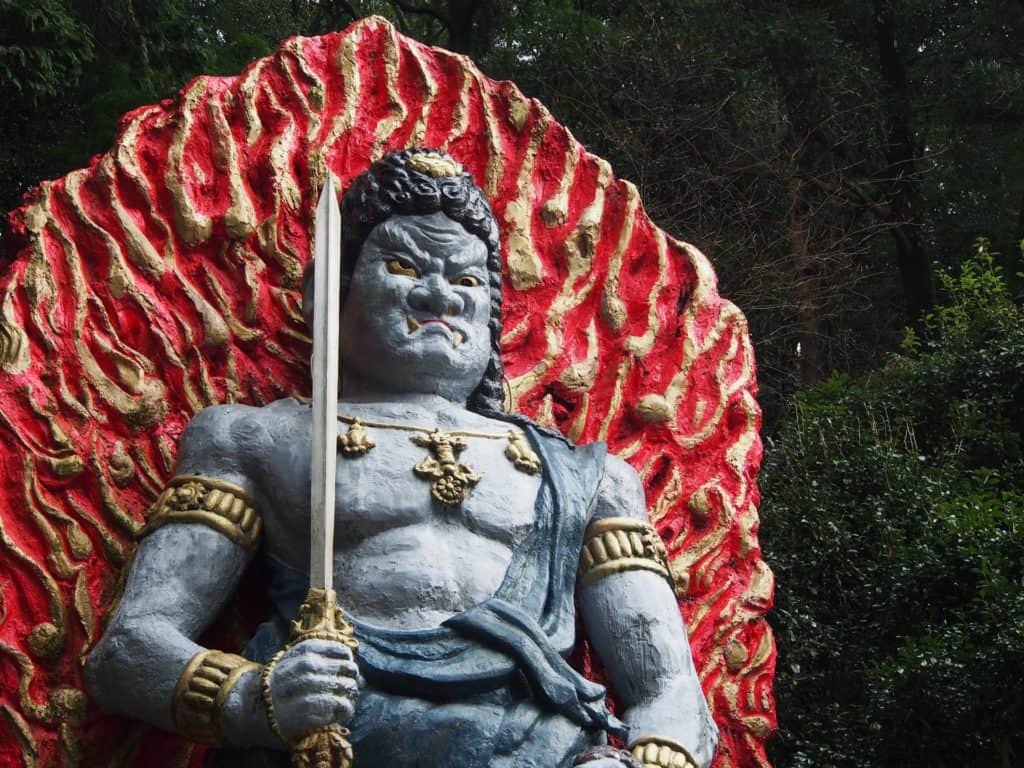
Statue of Fudō Myōō holding a sword in front of flames.
Fudō Myōō, the remover of obstacles and destroyer of evil. (Kohji Asakawa via pixabay)

After the ceremony, we pay our respects to Fudō Myōō and his companion deities, then return to the main temple building.

A delicious vegetarian breakfast has been prepared for us. We make ourselves comfortable on cushions on the dining room floor and eat from our low tables.
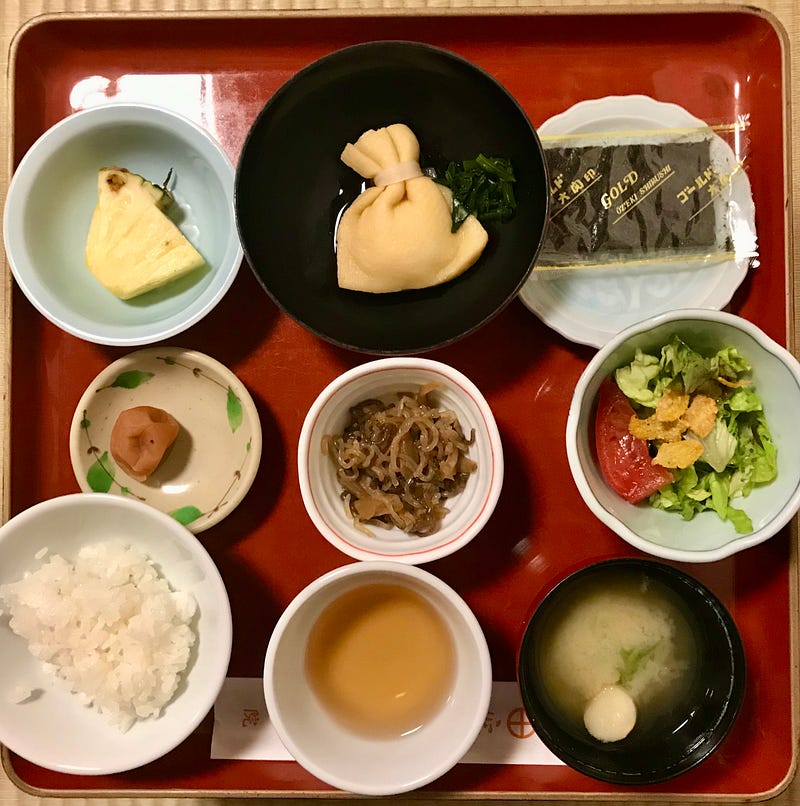
Vegetarian breakfast is served during a shukubo temple stay.
shojin ryori vegetarian breakfast. (©diane tincher)

After breakfast, we bid farewell to our hosts and head out to explore the wonders of Mount Kōya.


Mount Kōya, as well as much of the Kii Peninsula of Wakayama, has been designated “Sacred Sites and Pilgrimage Routes in the Kii Mountain Range,” a UNESCO World Heritage Site. It is well worth a visit.


If you have questions about Japan or suggestions for articles, please add them in the comments. For more photos and information on Japan, follow me on instagram at: https://www.instagram.com/more_than_tokyo/

Buddhism Japan Japan travel Japanese cuisine Japanese culture Japanese Customs
Share
Write Comment
Leave a Reply Cancel reply

Your email address will not be published. Required fields are marked *

This site uses Akismet to reduce spam. Learn how your comment data is processed.

Previous Post

Death in Japan

Next Post

A Japanese Rural Innkeeper Served Me the Most Exotic Food I Have Ever Eaten

If you enjoy my work and would like to help me continue creating, consider supporting me.

Thank you!
PayPal - The safer, easier way to pay online!
Newsletter

Subscribe

Enter your email for notifications of our latest posts

Tags
architecture Buddhism Christianity Edo Era elderly festivals folklore Food Ghosts gratitude Haunting Hiking history holidays honesty Japan Japanese Japanese cuisine Japanese culture Japanese Customs Japanese Food Japanese History Japanese Language Japanese words that English needs Japan Tips Japan travel Japan Travel Tips Jizō Kagoshima Kōyō Living in Japan longevity Manners Nature New Year Ninja Samurai Shinto shogun Shrine Tips Trade Travel volcano Washoku
Featured Posts
History Religion

The Shimabara Rebellion—The Last Stand of Japan’s Christians

July 8, 2026
History

The Okamoto Daihachi Affair—The Scandal That Turned the Tide Against Christianity in Japan

July 6, 2026
History

The 47 Ronin—Disgrace, Revenge, and Death

June 23, 2026
Destinations Folklore Ghosts

Omatsu Daigongen—The Amazing Cat Temple of Shikoku

June 1, 2026
History

Oura Kei—Unstoppable Pioneering Tea Merchant

January 19, 2026
Most Popular

Shinto — The Peaceful Spiritual Heart of Japan

Shinto gate Lake Biwa

Komorebi—A Beautiful Japanese Word that English Needs

Nakasendo Way

Dondoyaki—Burning New Year’s Decorations to Send off the God of the New Year

Dondoyaki fire

The Jizo Statues of Nashi-no-Ki—1,000s of Unique Offerings of Thanks

Jizo statues at Nashi no Jizo, Sado.

Sugawara no Michizane —Japan’s Three Most Infamous Vengeful Ghosts, part 3

Sugawara Michizane
You might also like
Nakasendo Way
Nature Language

Komorebi—A Beautiful Japanese Word that English Needs

1 Min read
November 11, 2021
temple pagoda
Culture Living in Japan

Death in Japan

8 Mins read
March 22, 2022
Elephant by Kano Furunobu
History

The Incredible Tale of the Elephant Who Had an Audience with the Japanese Emperor

7 Mins read
April 6, 2022
Exploring the wonders of rural Japan
Exploring the Wonders of Rural Japan
  • Home
  • About
  • Recommended Books
  • Interview
  • Privacy Policy
Exploring the Wonders of Rural Japan
  • Home
  • About
  • Discover
    • History
    • Culture
    • Nature
    • Food
    • Living in Japan
    • Destinations
    • Language
    • Tips
  • Interview
  • Recommended Books
We use cookies on our website to give you the most relevant experience by remembering your preferences and repeat visits. By clicking “Accept”, you consent to the use of ALL the cookies.
Do not sell my personal information.
Cookie SettingsAccept
Manage consent

Privacy Overview

This website uses cookies to improve your experience while you navigate through the website. Out of these, the cookies that are categorized as necessary are stored on your browser as they are essential for the working of basic functionalities of the website. We also use third-party cookies that help us analyze and understand how you use this website. These cookies will be stored in your browser only with your consent. You also have the option to opt-out of these cookies. But opting out of some of these cookies may affect your browsing experience.
Necessary
Always Enabled
Necessary cookies are absolutely essential for the website to function properly. These cookies ensure basic functionalities and security features of the website, anonymously.
CookieDurationDescription
cookielawinfo-checkbox-analytics11 monthsThis cookie is set by GDPR Cookie Consent plugin. The cookie is used to store the user consent for the cookies in the category "Analytics".
cookielawinfo-checkbox-functional11 monthsThe cookie is set by GDPR cookie consent to record the user consent for the cookies in the category "Functional".
cookielawinfo-checkbox-necessary11 monthsThis cookie is set by GDPR Cookie Consent plugin. The cookies is used to store the user consent for the cookies in the category "Necessary".
cookielawinfo-checkbox-others11 monthsThis cookie is set by GDPR Cookie Consent plugin. The cookie is used to store the user consent for the cookies in the category "Other.
cookielawinfo-checkbox-performance11 monthsThis cookie is set by GDPR Cookie Consent plugin. The cookie is used to store the user consent for the cookies in the category "Performance".
viewed_cookie_policy11 monthsThe cookie is set by the GDPR Cookie Consent plugin and is used to store whether or not user has consented to the use of cookies. It does not store any personal data.
Functional
Functional cookies help to perform certain functionalities like sharing the content of the website on social media platforms, collect feedbacks, and other third-party features.
Performance
Performance cookies are used to understand and analyze the key performance indexes of the website which helps in delivering a better user experience for the visitors.
Analytics
Analytical cookies are used to understand how visitors interact with the website. These cookies help provide information on metrics the number of visitors, bounce rate, traffic source, etc.
Advertisement
Advertisement cookies are used to provide visitors with relevant ads and marketing campaigns. These cookies track visitors across websites and collect information to provide customized ads.
Others
Other uncategorized cookies are those that are being analyzed and have not been classified into a category as yet.
SAVE & ACCEPT