

• Home
  • About
  • Discover
    • History
    • Culture
    • Nature
    • Food
    • Living in Japan
    • Destinations
    • Language
    • Tips
  • Interview
  • Recommended Books
Exploring the Wonders of Rural Japan
History Destinations

Sazaedō—The Strikingly Unique Spiral Temple of Aizu, Japan

The only double-helix wooden structure in the world
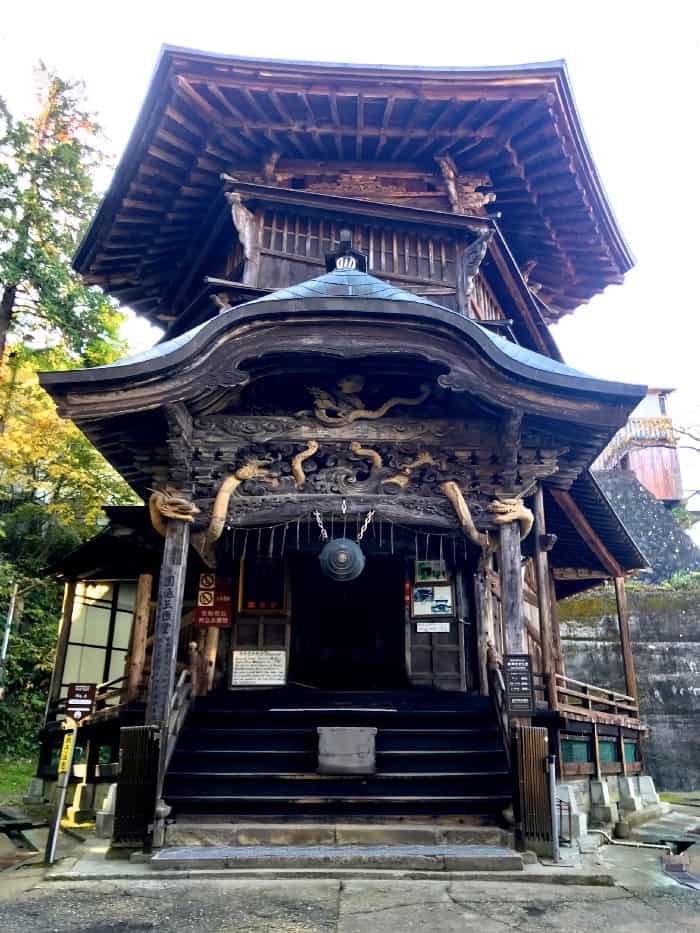
Sazaedō temple
Entrance to the Sazaedō. (All photos ©Diane Tincher)

Nestled on a hillside overlooking the small city of Aizuwakamatsu in Fukushima Prefecture is an extraordinary shrine. Constructed in 1796, this architectural marvel bears the official name Entsu Sansōdō, 円通三匝堂, which translates to “the temple of three turns around.”

Above the entrance of this entirely wooden structure, an intricately carved dark wood lintel showcases two lighter-colored dragons entwined as protectors of this sacred space. But that remarkable sight pales in comparison to the building itself.

Sazaedō’s Unique architecture

Upon entering the building, visitors turn left and begin an uphill climb. The interior reveals a continuous ramp winding its way up, before passing over an arched bridge, and then descending back down. This unique double-helix design earned the shrine its popular name, Sazaedō. Sazae means spiral turban shell, and dō refers to temple or shrine.
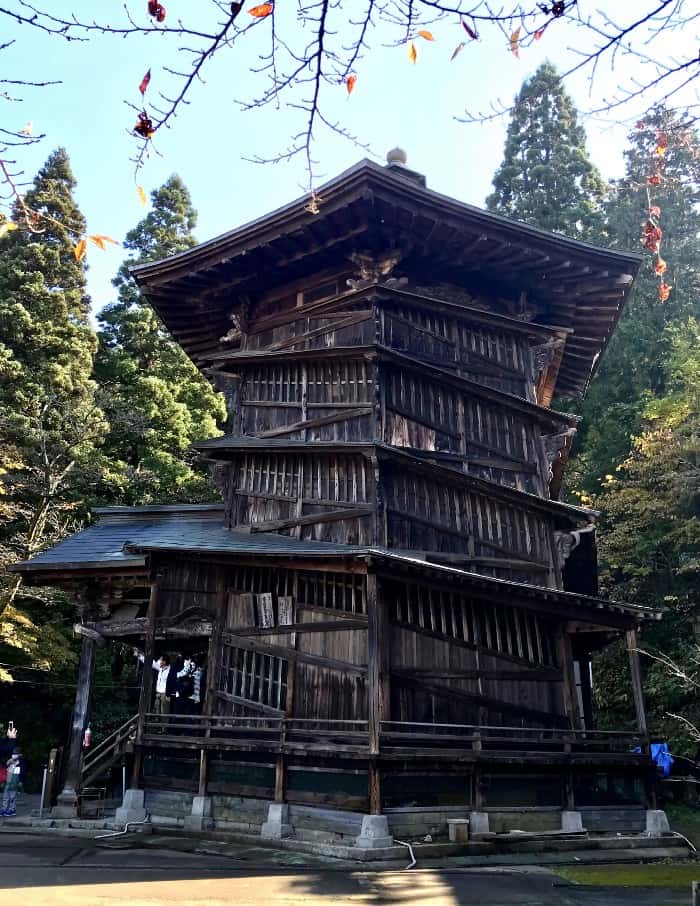
Sazaedo as viewed from the side.
Sazaedō with its tilted windows and eaves.

The windows and eaves follow the incline of the ramps, tracing the spiraling path upwards and downwards. The sloping walkway maintains an unbroken course without any overlaps.

Remarkably, Sazaedō’s design did not come from the genius of an architect but rather from the ingenuity of the head priest of the nearby Shōsōji Temple, Ikudō, whose statue graces the entrance of the shrine. 
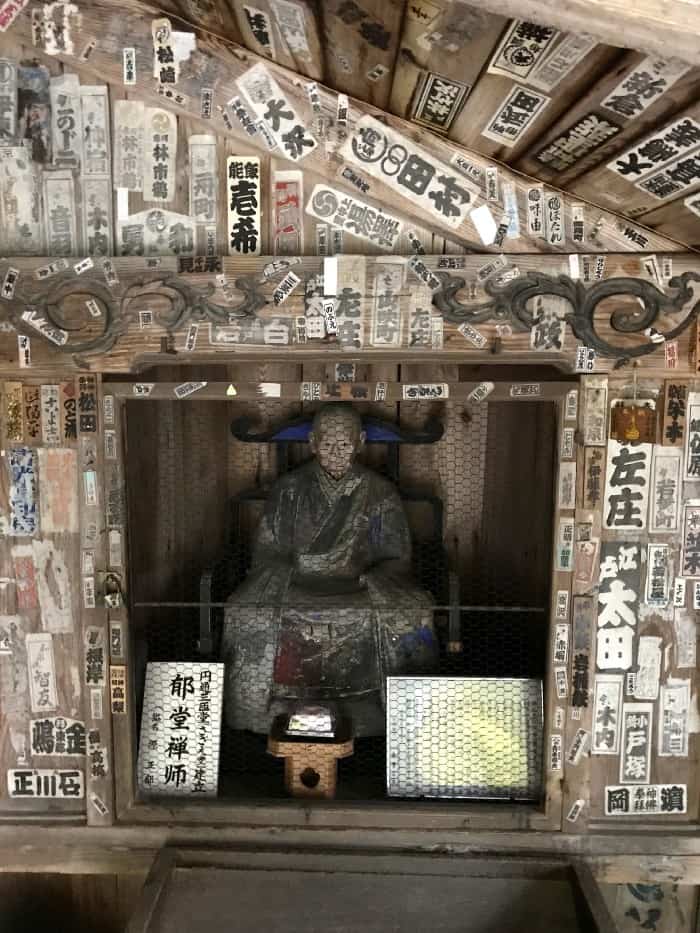
Name stickers cover the inside of Sazaedo.
Inside the entrance to the Sazaedō. Statue of the Zen monk, Ikudō.

The exact source of his inspiration remains a mystery. Yet, it is believed that renewed access to Western books in 1720, thanks to Tokugawa Yoshimune lifting a long-standing ban, provided Ikudō with valuable scientific knowledge that likely influenced his design. Some speculate that he may have seen drawings of Leonardo da Vinci’s double-helix staircase at Château de Chambord in France, but there is no way to know.
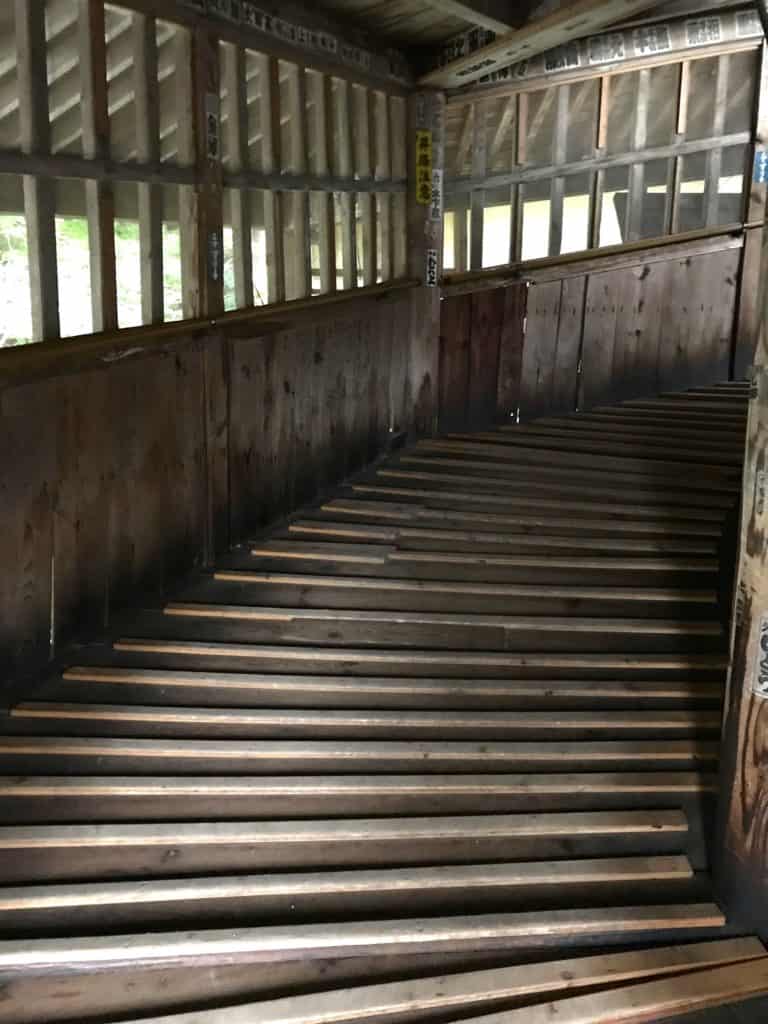
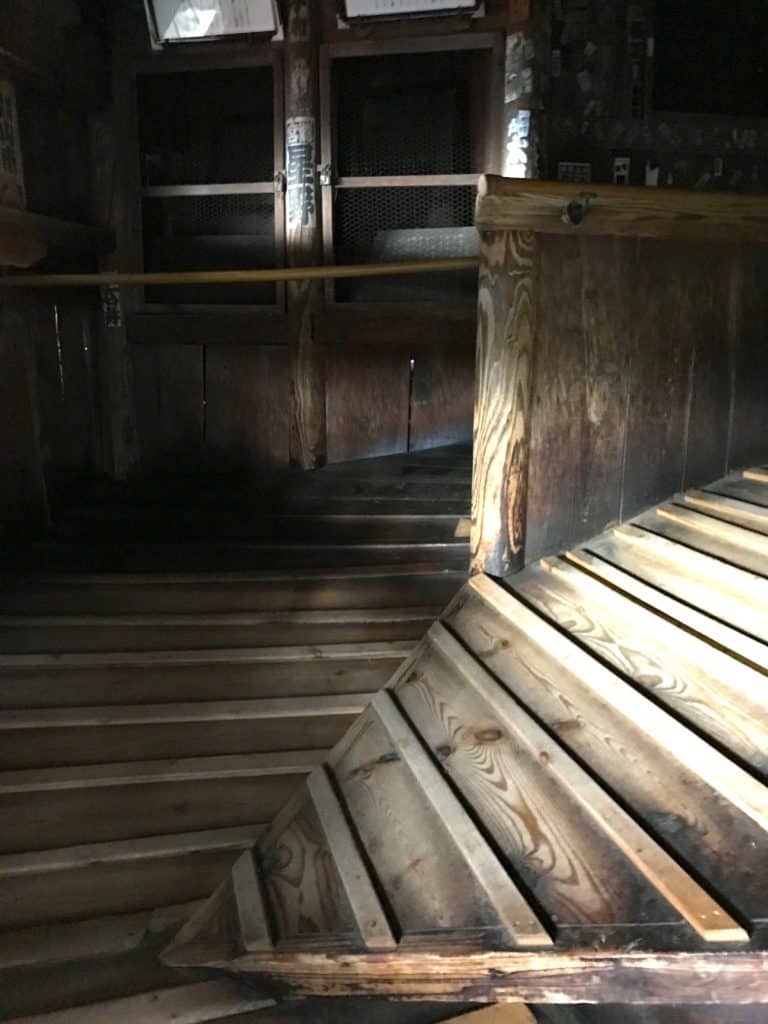
Wooden ramps lead up and down through Sazaedo's double helix structure.
Slope leading up
Sazaedo bridge between hallways
Part of the bridge between the hallways at the top

One-stop pilgrimage

Sazaedō was built at a time when pilgrims undertook journeys across western Japan to visit 33 temples dedicated to Kannon, the Buddhist goddess of mercy. These pilgrimages required a significant investment in time and money. Nevertheless, people were driven by their piety to visit all the temples, offering prayers and purchasing protective amulets at each one. Sazaedō offered a revolutionary alternative.

Within its walls, all 33 Kannon statues were placed in alcoves along Sazaedō’s one-way spiral hallway, condensing the entire pilgrimage into one temple. This innovative idea made Sazaedō immensely popular, transforming it into a convenient one-stop pilgrimage destination. The success of this design inspired the construction of other spiral temples throughout Japan, although none rivaled the impressive three stories of Sazaedō.

Its official name, Entsu Sansōdō, not only alludes to its “three turns around” design but also refers to the Buddhist etiquette of walking three times clockwise around an image of the Buddha, a practice observed by all pilgrims who visit Sazaedō.
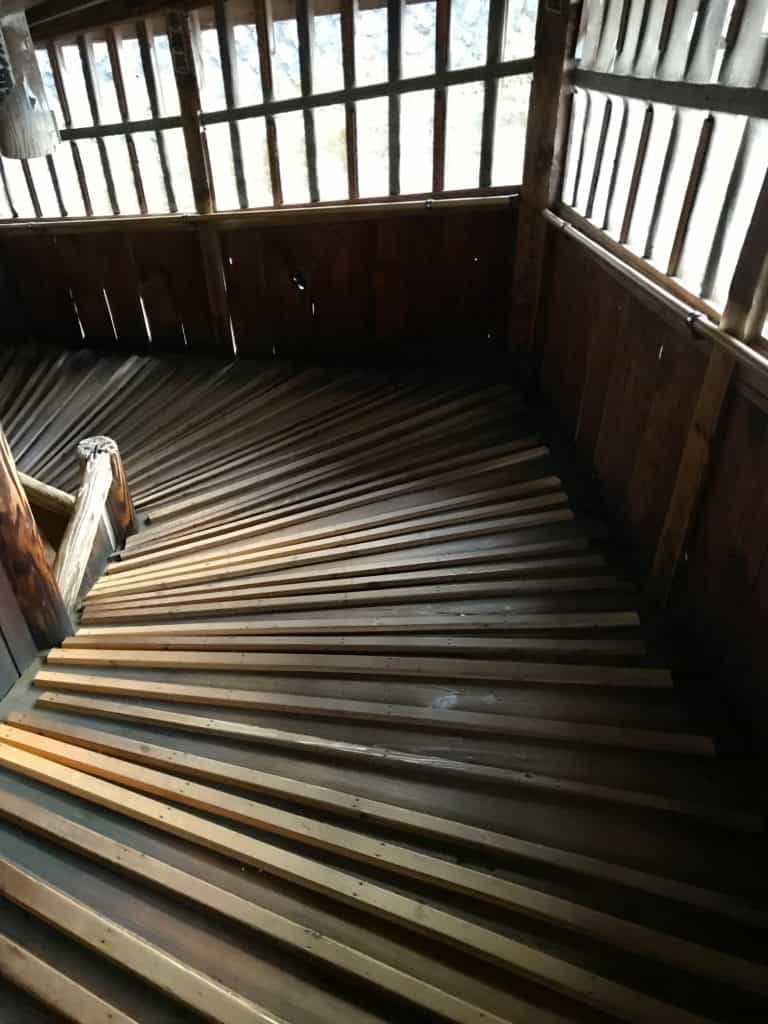
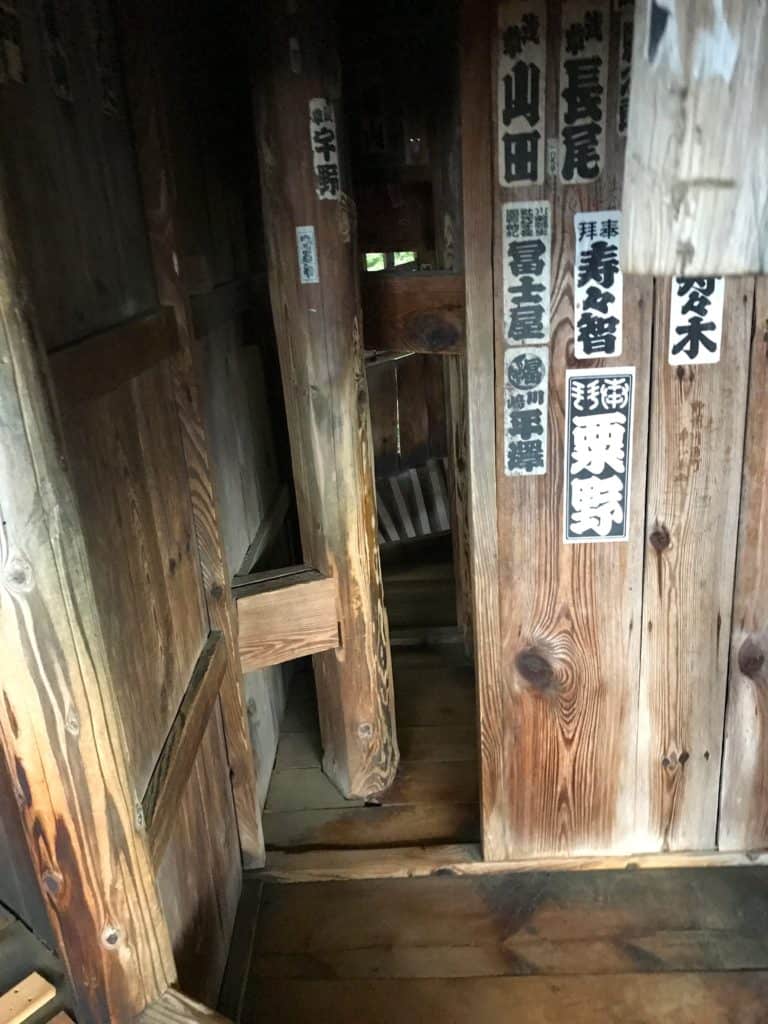
The spiral wooden ramps within Sazaedo do not overlap.
Slope leading down
Sazaedo center
You can see through the center to the slope leading up on the other side

The building’s ceiling and interior walls are covered with thousands of paper stickers called senjafuda, which pilgrims used to affix to mark their visit to shrines and temples. These stickers typically display the person’s name and sometimes their place of residence. The multitude of senjafuda in Sazaedō provides a window into bygone days when visiting temples was not only a spiritual endeavor but also a popular recreational activity.
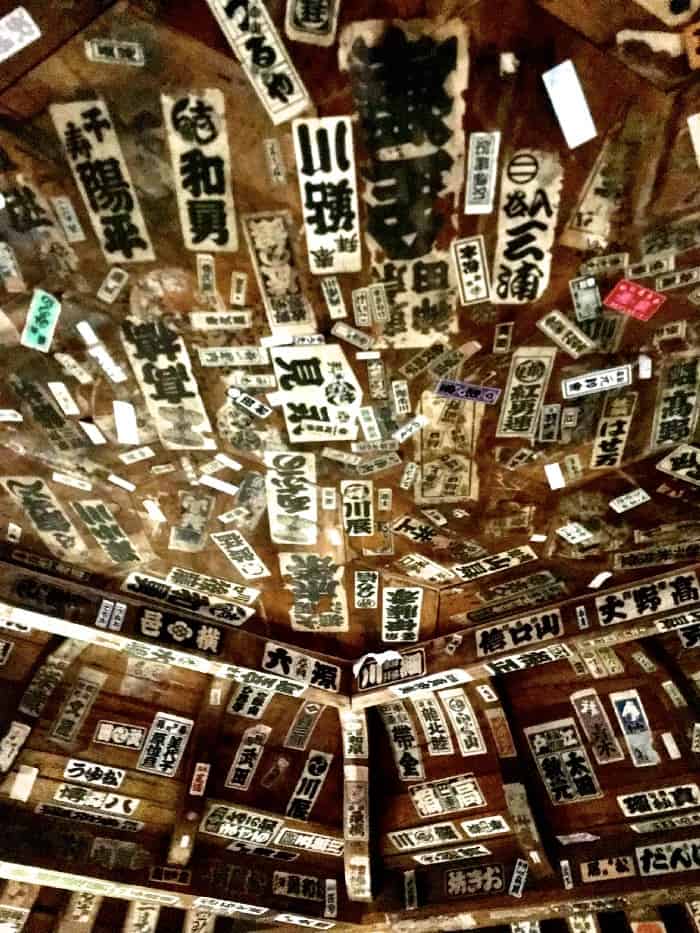
The ceiling of Sazaedo is covered with name stickers.
The ceiling of the Sazaedō, covered with senjafuda name stickers.

In 1868, the Meiji government ordered the separation of Buddhism and Shinto. This decree triggered the widespread destruction of Buddhist temples and statuary. During this difficult time, the 33 Kannon statues were removed from Sazaedō, and the building was redefined as a Shinto shrine.

Today, Sazaedō stands as a testament to its rich history and remains the only double-helix wooden structure in the world. Instead of statues of Kannon, the alcoves hold illustrations of moral teachings compiled by Matsudaira Katataka, the 8th lord of the Aizu clan, who ruled the area during the first half of the 19th century.
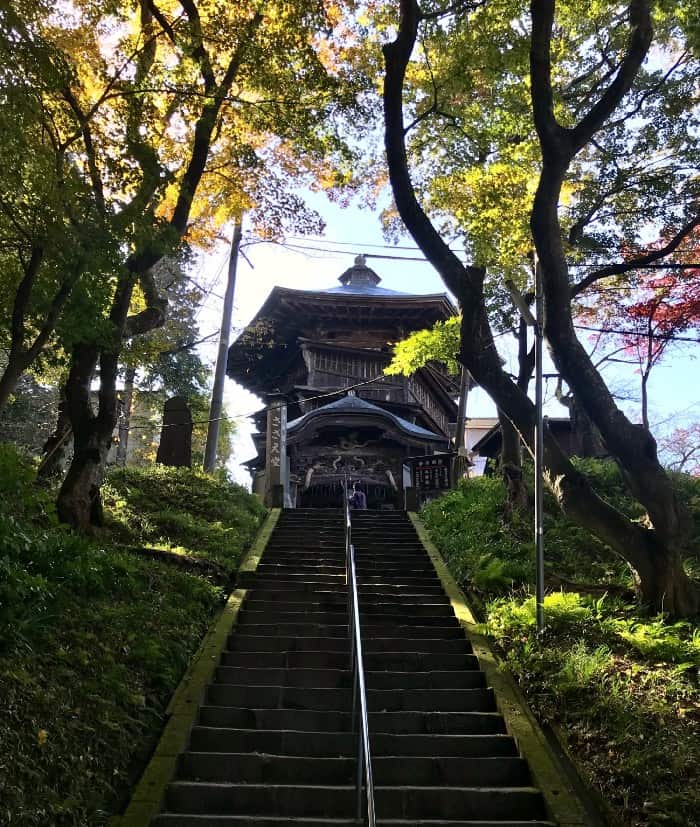
Looking up a steep staircase to Sazaedo.
Sazaedō from below.

Although Aizuwakamatsu is quite far off the beaten track, it’s well worth a visit to see the amazing Sazaedō for yourself.

And while you are there, take a moment to visit the nearby shrine to the young samurai who committed seppuku, ritual suicide, during the close of the Boshin civil war in 1868.

References:

http://www.sazaedo.jp/, 朝日新聞1972年11月20日, signs.


If you have questions about Japan or suggestions for articles, please add them in the comments. For more photos and information on Japan, follow me on instagram at: https://www.instagram.com/more_than_tokyo/

architecture history Japan Japan travel Japanese architecture Japanese culture Japanese History Sazaedō spiral temple
Share
3 Comments
  1. Mary M

    January 24, 2022 8:19 am

    Thank you for this amazing story. I wonder if that monk got his idea from reading about Leonardo da Vinci’s double-helix staircase at Château de Chambord in France?

    Reply
    1. Diane Tincher

      January 24, 2022 8:24 am

      I think there is no way to know what books the old monk had gotten his hands on. After nearly two centuries, in that monk’s day the restriction against importing Western books was partially lifted by Tokugawa Yoshimune, and I can only imagine how hungry people were for new learning.

      Reply
Leave a Reply Cancel reply

Your email address will not be published. Required fields are marked *

This site uses Akismet to reduce spam. Learn how your comment data is processed.

Previous Post

Hiraizumi — Once a Fabulous City of Gold, Now a Quiet Home of Mummies

Next Post

Mount Haguro—Experiencing its Rustic Magnificence

If you enjoy my work and would like to help me continue creating, consider supporting me.

Thank you!
PayPal - The safer, easier way to pay online!
Newsletter

Subscribe

Enter your email for notifications of our latest posts

Tags
architecture Buddhism Christianity Edo Era elderly festivals folklore Food Ghosts gratitude Haunting Hiking history holidays honesty Japan Japanese Japanese cuisine Japanese culture Japanese Customs Japanese Food Japanese History Japanese Language Japanese words that English needs Japan Tips Japan travel Japan Travel Tips Jizō Kagoshima Kōyō Living in Japan longevity Manners Nature New Year Ninja Samurai Shinto shogun Shrine Tips Trade Travel volcano Washoku
Featured Posts
History Religion

The Shimabara Rebellion—The Last Stand of Japan’s Christians

July 8, 2026
History

The Okamoto Daihachi Affair—The Scandal That Turned the Tide Against Christianity in Japan

July 6, 2026
History

The 47 Ronin—Disgrace, Revenge, and Death

June 23, 2026
Destinations Folklore Ghosts

Omatsu Daigongen—The Amazing Cat Temple of Shikoku

June 1, 2026
History

Oura Kei—Unstoppable Pioneering Tea Merchant

January 19, 2026
Most Popular

Shinto — The Peaceful Spiritual Heart of Japan

Shinto gate Lake Biwa

Komorebi—A Beautiful Japanese Word that English Needs

Nakasendo Way

Dondoyaki—Burning New Year’s Decorations to Send off the God of the New Year

Dondoyaki fire

The Jizo Statues of Nashi-no-Ki—1,000s of Unique Offerings of Thanks

Jizo statues at Nashi no Jizo, Sado.

Sugawara no Michizane —Japan’s Three Most Infamous Vengeful Ghosts, part 3

Sugawara Michizane
You might also like
Nakasendo Way
Nature Language

Komorebi—A Beautiful Japanese Word that English Needs

1 Min read
November 11, 2021
temple pagoda
Culture Living in Japan

Death in Japan

8 Mins read
March 22, 2022
Elephant by Kano Furunobu
History

The Incredible Tale of the Elephant Who Had an Audience with the Japanese Emperor

7 Mins read
April 6, 2022
Exploring the wonders of rural Japan
Exploring the Wonders of Rural Japan
  • Home
  • About
  • Recommended Books
  • Interview
  • Privacy Policy
Exploring the Wonders of Rural Japan
  • Home
  • About
  • Discover
    • History
    • Culture
    • Nature
    • Food
    • Living in Japan
    • Destinations
    • Language
    • Tips
  • Interview
  • Recommended Books
We use cookies on our website to give you the most relevant experience by remembering your preferences and repeat visits. By clicking “Accept”, you consent to the use of ALL the cookies.
Do not sell my personal information.
Cookie SettingsAccept
Manage consent

Privacy Overview

This website uses cookies to improve your experience while you navigate through the website. Out of these, the cookies that are categorized as necessary are stored on your browser as they are essential for the working of basic functionalities of the website. We also use third-party cookies that help us analyze and understand how you use this website. These cookies will be stored in your browser only with your consent. You also have the option to opt-out of these cookies. But opting out of some of these cookies may affect your browsing experience.
Necessary
Always Enabled
Necessary cookies are absolutely essential for the website to function properly. These cookies ensure basic functionalities and security features of the website, anonymously.
CookieDurationDescription
cookielawinfo-checkbox-analytics11 monthsThis cookie is set by GDPR Cookie Consent plugin. The cookie is used to store the user consent for the cookies in the category "Analytics".
cookielawinfo-checkbox-functional11 monthsThe cookie is set by GDPR cookie consent to record the user consent for the cookies in the category "Functional".
cookielawinfo-checkbox-necessary11 monthsThis cookie is set by GDPR Cookie Consent plugin. The cookies is used to store the user consent for the cookies in the category "Necessary".
cookielawinfo-checkbox-others11 monthsThis cookie is set by GDPR Cookie Consent plugin. The cookie is used to store the user consent for the cookies in the category "Other.
cookielawinfo-checkbox-performance11 monthsThis cookie is set by GDPR Cookie Consent plugin. The cookie is used to store the user consent for the cookies in the category "Performance".
viewed_cookie_policy11 monthsThe cookie is set by the GDPR Cookie Consent plugin and is used to store whether or not user has consented to the use of cookies. It does not store any personal data.
Functional
Functional cookies help to perform certain functionalities like sharing the content of the website on social media platforms, collect feedbacks, and other third-party features.
Performance
Performance cookies are used to understand and analyze the key performance indexes of the website which helps in delivering a better user experience for the visitors.
Analytics
Analytical cookies are used to understand how visitors interact with the website. These cookies help provide information on metrics the number of visitors, bounce rate, traffic source, etc.
Advertisement
Advertisement cookies are used to provide visitors with relevant ads and marketing campaigns. These cookies track visitors across websites and collect information to provide customized ads.
Others
Other uncategorized cookies are those that are being analyzed and have not been classified into a category as yet.
SAVE & ACCEPT