

The Exploits of Hattori Hanzō Masanari
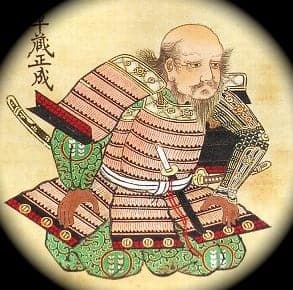
Hattori Hanzō Masanari’s life is shrouded in mystery, as one would expect of a master ninja. After scouring many and varied Japanese sources, I’ve pieced together bits and pieces of what seems to be the most agreed-on version of his amazing story.
Background
By the mid-16th century, Japan was reeling from 100 years of internal wars and strife caused by lords fighting for power, land, and wealth. As the years passed, Oda Nobunaga, the lord of Owari (Gifu Prefecture) emerged as the strongest, conquering one domain after another with an eye to uniting the entire country. He was joined by his former sandal-bearer, Toyotomi Hideyoshi, who advanced to become one of his top retainers, as well as Tokugawa Ieyasu of Mikawa (eastern Aichi Prefecture), who would eventually become the most powerful shogun Japan has ever known.
It was during this turbulent time that Hattori Hanzō Masanari was born, the son of the first Hattori Hanzō and the grandson of a ninja.
Like many young lads of the warrior class, six-year-old Masanari was sent to live at a temple for education and moral training. This was a temple of the Jōdo Shinshū Buddhist sect (True Pure Land Buddhism), among whose adherents were fierce warrior monks known as ikko. While at the temple, Masanari quickly gained a reputation for being a strong and indefatigable boy, as well as a devout Jōdo Shinshū Buddhist.
So devout was he, in fact, that the monks encouraged him to enter the priesthood. But Masanari knew that his destiny lay elsewhere. He fled.
Although further events of Masanari’s childhood are not clear, we know that he grew up within the ranks of the mighty warlord, Tokugawa Ieyasu, becoming a formidable samurai famed for his ninja skills.
Growing in Renown
By the time Tokugawa Ieyasu faced his first battles on his way to unifying his province of Mikawa, Masanari had become one of his trusted retainers and a member of his personal guard. During this campaign, using stealth and secrecy, Masanari led a successful night attack on the Kaminogō Castle, gaining notoriety and winning high praise from Ieyasu, as well as the personal gifts of a sake cup and a fine lance. His cunning, fearlessness, and strength in battle earned him the nickname, “Demon Hattori.”*
A couple years later, the ikko warrior monks rose up against Ieyasu. Many close retainers of Ieyasu, who even his enemies considered to be “as loyal as dogs,” turned against their lord and sided with the ikko. Yet the devout Masanari cast off his religious loyalties and fought against the ikko to defend Ieyasu.
Loyal to his lord above all, Masanari used whatever means he could to defeat his enemies. At the Battle of Anegawa, fought between the allied forces of Oda Nobunaga and Ieyasu against the Asai and Asakura clans, Masanari fought on the front lines, made the first kill of the battle, and fought on.
As the enemy began to flee, Masanari followed in pursuit. He caught up with 30 or so soldiers and called out to them, “I’m one of you. Let’s retreat together!” After running for a while further into enemy territory, Masanari’s brother spotted him and joined him. This escapade ended with the Hattori brothers taking the head of the enemy leader and the lives of many of his followers.
Victory came to the Oda-Tokugawa allies.
Facing the “Tiger of Kai”
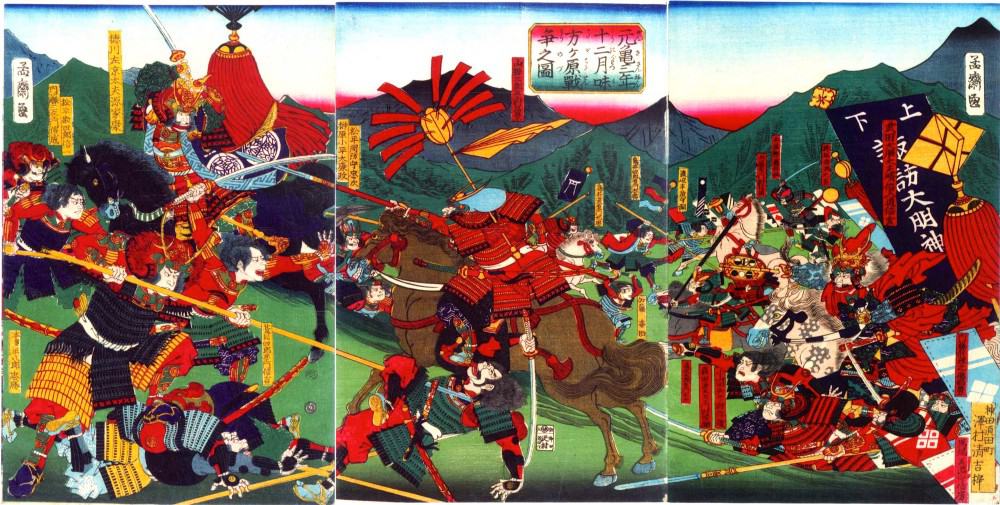
Next came the Battle of Mikatagahara. The Oda-Tokugawa forces faced the army of Takeda Shingen, “The Tiger of Kai,” (Kai, now Yamanashi Prefecture) famed for his cavalry and virtually undefeated in battle. Masanari again made the first kill, but the Tokugawa forces suffered badly, losing thousands of samurai to the spears of the Kai forces.
Masanari and his soldiers fought bravely to escort Ieyasu to the safe haven of Hamamatsu Castle. Although injured on one of his knees and his face, Masanari did not cease to fight off the enemy along the road, protecting his lord.
After this resounding defeat to the “The Tiger of Kai,” Masanari determined to raise the morale of Ieyasu’s army. He left the safety of the castle alone and challenged the leader of the pursuing forces to a duel with katanas, the famed razor-sharp swords of the samurai. He returned back to the castle holding aloft the head of the enemy. This grisly spectacle served to encourage the soldiers that victory could be won.
For his bravery in battle, Ieyasu rewarded him with two magnificent spears. Furthermore, Masanari was given command of 150 men from Iga (Mie Prefecture), the stronghold of the ninja.
Moral Dilemma
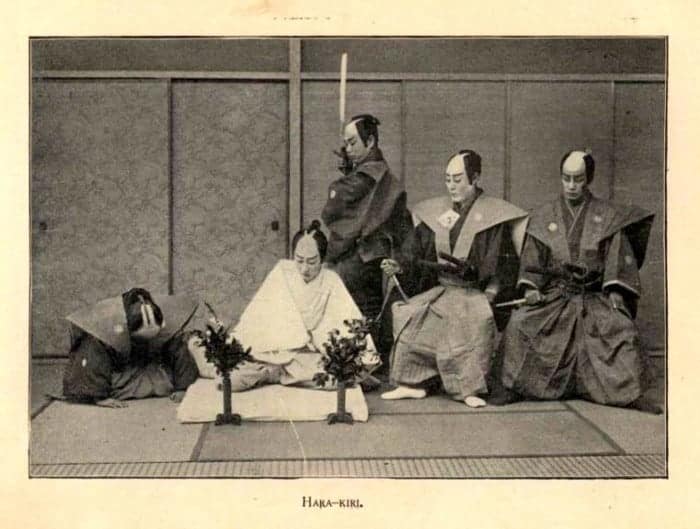
When Ieyasu’s oldest son, Nobuyasu, fell into disfavor and suspicion, his father ordered him to commit seppuku, the samurai’s noble suicide. During this act, a samurai follows a specific ritual culminating in thrusting a short sword into their abdomen and cutting up, across, and then down. Aside from the severe pain making it hard to complete all three strokes of the blade, this method did not immediately kill the samurai. For this, they would have a trusted “second,” another samurai in attendance, who would remove their head with one sweep of their sharp katana.
Masanari was ordered to be Nobuyasu’s second, an honor in itself. Yet, when faced with the pitiful sight of the kneeling Nobuyasu, the son of his beloved lord, he could not move his hand to strike him down. Masanari cast away his katana and fell to the floor in tears.
When word of this disobedience reached the ears of Ieyasu, he chuckled and said, “Even a demon cannot kill his lord’s son.” Rather than incurring anger, this event raised Masanari’s esteem even further in the eyes of Ieyasu.
From Ninja to Masterless Samurai
Oda and Tokugawa continued conquering one feudal lord after another. Meanwhile, Masanari was stationed in Hamamatsu (in Shizuoka Prefecture). A feud broke out between Ieyasu’s retainers and those of a rival lord, Uji-ie. Masanari joined the fray, resulting in many deaths. Seeking revenge for their lost comrades, the Uji-ie troop attacked Masanari’s house, threatening his wife and children.
Masanari, not one to easily give up, determined to fight to the death — until word came with a plan from Ieyasu.
Ieyasu had heard that Masanari was fighting with the Uji-ie, who he knew to be vassals of Oda Nobunaga. He devised a way for Masanari and his family to escape without harming anymore Uji-ie, avoiding invoking the attention and ire of the powerful Nobunaga.
Ieyasu convinced Masanari to fake his death and disappear. A head was prepared and delivered to the Uji-ie as if it were the head of Masanari. Receiving this proof of death was considered sufficient retribution. The conflict came to an end. Masanari’s family was saved.
Meanwhile, Masanari disappeared as a masterless samurai, a ronin. For the next two years, the whereabouts of Masanari was unknown.
The Ronin Returns
While on his way to unifying the country, the great warlord Oda Nobunaga was betrayed by his retainer, Akechi Mitsuhide. Penned in by the enemy with no way of escape, Nobunaga committed seppuku at the Honnōji Temple in Kyoto. This sent shockwaves through the country, and it put a target on the back of Nobunaga’s closest ally, Tokugawa Ieyasu.
Ieyasu was in Sakai (now Osaka) when he heard the news. Determined to follow his lord Nobunaga in death, he planned to go to Kyoto to commit seppuku at the main branch of his family’s temple. However, his vassals reasoned with him and convinced him to return to his hometown in Mikawa. Masanari was again at his side.
To get to Mikawa, Ieyasu would avoid the main roads and travel along narrow pathways through the steep and high mountains of Kōga and Iga, Masanari’s ancestral home, the famous stronghold of ninja.
With the help of a powerful merchant, Masanari negotiated with the local ninja leaders, who guaranteed Ieyasu’s safe passage and promised to accompany him to the Ise coast and then across the bay to Okazaki Castle in Mikawa.
All was well until they reached a mountain pass in Iga. There they were caught up in a riotous uprising. Masanari yelled for the rioters to make way, and a small gap in the mob opened up. Ieyasu, his ninja bodyguards, and some of his attendants fought their way through, but Masanari and the rearguard were overwhelmed.
Masanari was surrounded. Breaking through the rioters, he rode his horse up the steep bank. His horse faltered, and Masanari tumbled off into a ditch. The enemy from above fell upon him, attacking him with lances. His legs were injured in ten different places and he sank into unconsciousness. He was left for dead.
Masanari’s vassal searched out Ieyasu to tell him the sad news that Masanari had been killed. When they went back later to recover his body, to their amazement, he was alive. Ieyasu’s men nursed Masanari and brought him to Mikawa. Just two weeks later, he was back fighting for his lord on the front lines.
Conquering the Unconquerable Castle
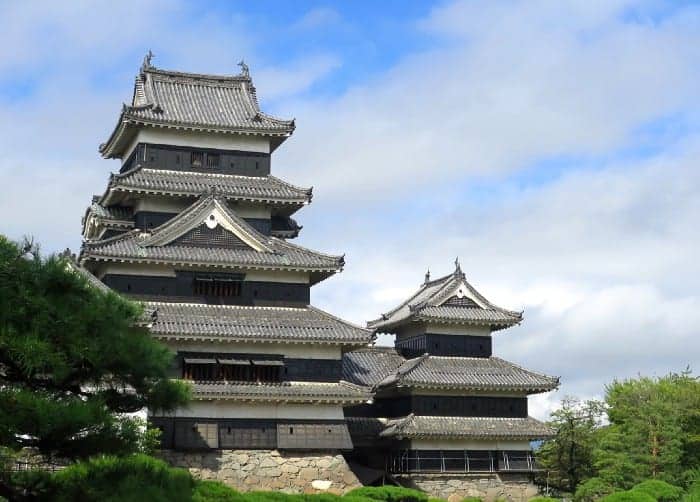
Masanari’s last great exploit came after he sent two of his ninja vassals to infiltrate the impregnable Sanokoya Castle. Under cover of darkness, they reconnoitered and brought back details of the castle’s defenses. With that knowledge to aid him, ninja in the front lines, and in the midst of heavy rainfall, Masanari conquered the castle that even “The Tiger of Kai” was unable to conquer. For this, he was richly rewarded.
It is said that the wealth given to Masanari by Ieyasu was greater than that possessed by lords of entire provinces.
In Memory
In 1593, Ieyasu granted funds to Masanari in order for him to oversee the construction of a temple for the repose of Ieyasu’s son, Nobuyasu. That temple now stands in Tokyo, Sainen-ji, completed after Masanari’s death from illness in 1597. Both Nobuyasu and Masanari’s graves can be visited there.
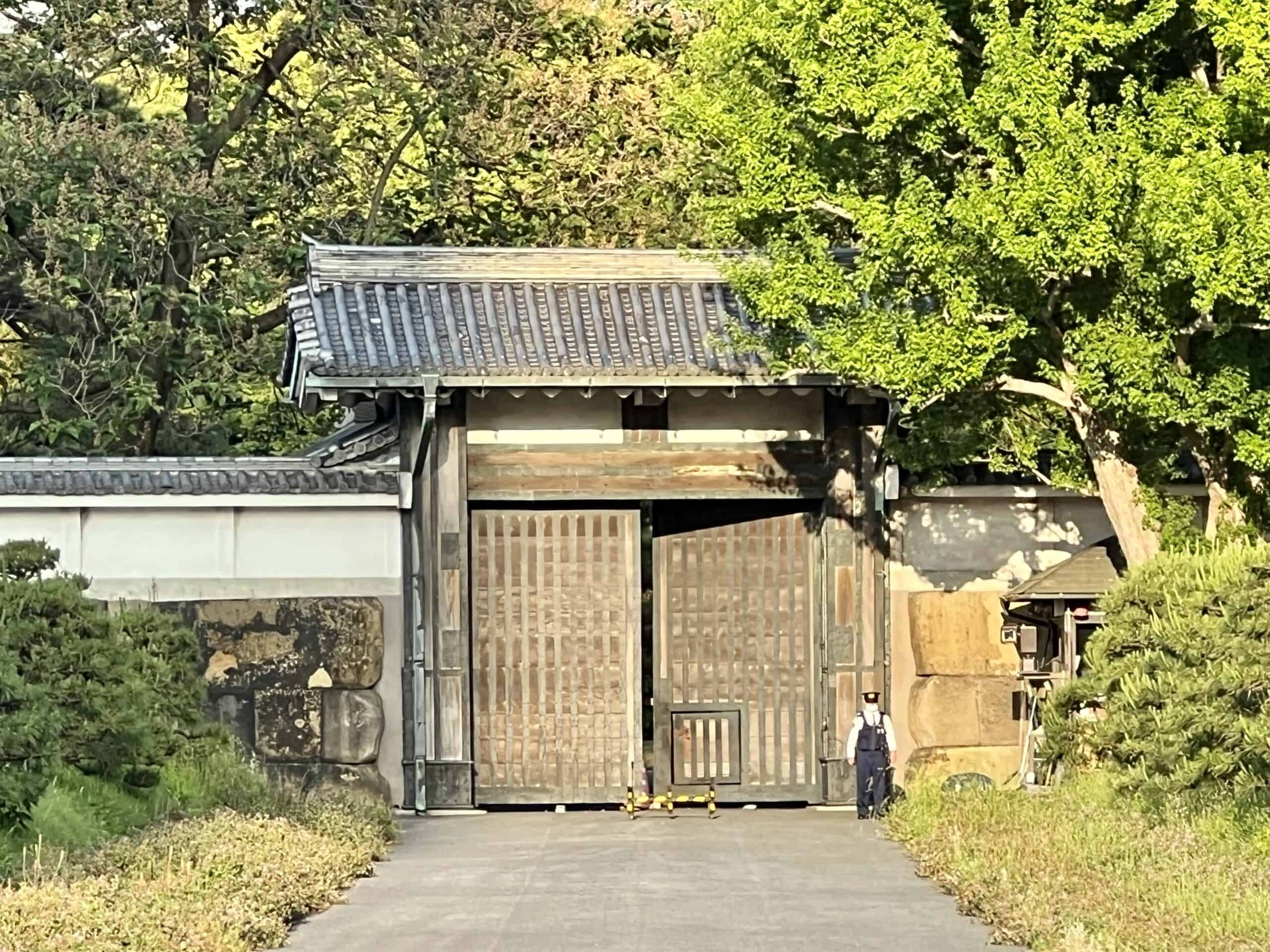
The Hanzō-mon gate of the Imperial Palace in Tokyo continues to bear his name. This was the area where Hattori Hanzō Masanari lived in Edo, and where his family lived on, performing their hereditary duty as police and guards of the Tokugawa Shoguns during the Edo Era (1603–1867), albeit none of his descendants achieved anything to rival the inimitable exploits of Masanari.
When Ieyasu established his Shogunate, he remembered the ninja who had served him loyally by guiding him safely over the mountains of Iga, and he rewarded them with elevated positions as his personal guards. They joined the Hattori family in the Hanzō ward of Edo.
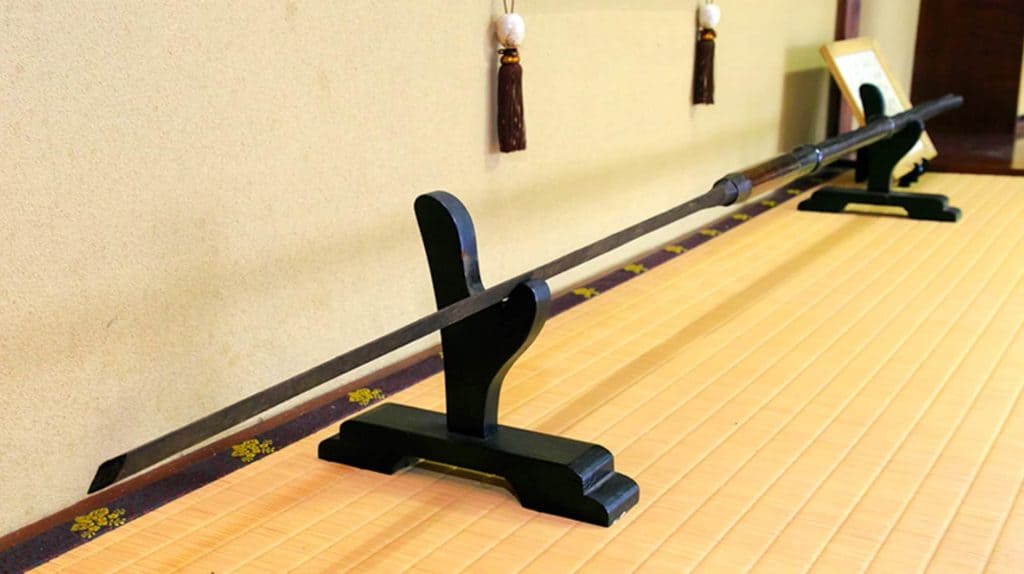
And remember that first fine lance that Tokugawa Ieyasu gave to Masanari? It can be seen at the Sainen-ji Temple today, weighing 7.5 kilos. Due to fires, only 2.58 meters of its original 4.2 meters remain.
* Demon is the most common translation for the Japanese word used here, oni, although it is not exactly accurate. Oni refers to a ferocious and strong mountain-dwelling giant. Unlike demon, oni does not have an evil or devilish nuance.
To read about another man who earned the moniker “Demon,” click here.
If you have questions about Japan or suggestions for articles, please add them in the comments. For more photos and information on Japan, follow me on instagram at: https://www.instagram.com/more_than_tokyo/


