

• Home
  • About
  • Discover
    • History
    • Culture
    • Nature
    • Food
    • Living in Japan
    • Destinations
    • Language
    • Tips
  • Interview
  • Recommended Books
Exploring the Wonders of Rural Japan
Culture

Respect for the Aged Day—Japan’s Unique Holiday for Honoring the Elderly

The Origins of Keirō no Hi

The third Sunday in September is a special holiday in Japan, Respect for the Aged Day, or Keirō no Hi. On this day, children and adults give flowers, cards, and various presents to their elders in a show of appreciation. Local communities stage performances, hold festivities, and provide special meals for their senior citizens. TV shows search out the oldest people to ask for longevity advice.
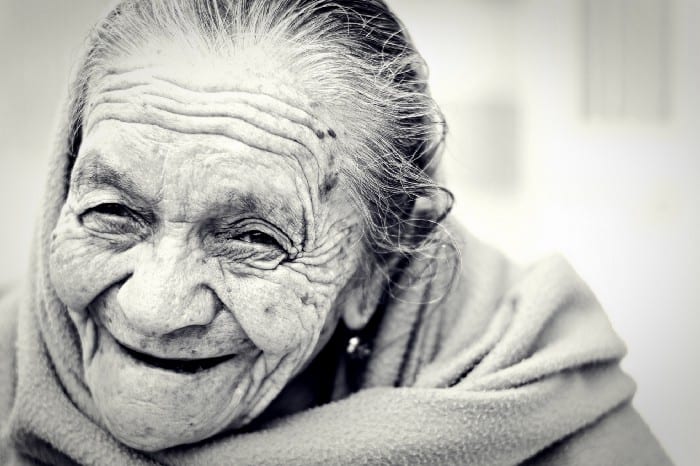
Respect for the Aged Day honors the elderly of Japan.
Photo by Danie Franco

How it all started

Respect for the Aged Day traces its roots to tiny Nomotani Village in the mountains of Hyogo Prefecture, to the west of Osaka and Kyoto. In 1947, the people of Nomotani christened September 15th as Old Folks’ Day. This was done to celebrate the elderly — defined as those over age 55 — for their endurance and fortitude in surviving the difficult years of the worldwide Great Depression and the enormous upheavals and tragedies of World War II.

At that time, there were 8.4 million people over the age of 55 in Japan, of which 3.7 million were over age 65. A mere 55 people were over age 100. Disease, poverty, and war were powerful obstacles to longevity in early 20th century Japan.

As the years passed, Old Folks’ Day gained in popularity, and the practice of honoring the elderly spread. In 1963, the national government began awarding centenarians solid, 10.5 cm diameter, sterling silver sake cups in thanks for their many years of contribution to society. That year, there were 153 people who were over the age of 100.

Elderly population growth

Old Folks’ Day became a national holiday in 1966, renamed Respect for the Aged Day. The number of elderly, now defined as those over age 65, continued to climb until today they make up 30% of the population. Because the population of Japan has been declining since 2009 and the number of elderly is continuing to rise, the over-65 population is expected to reach 40% of the total population by 2055.
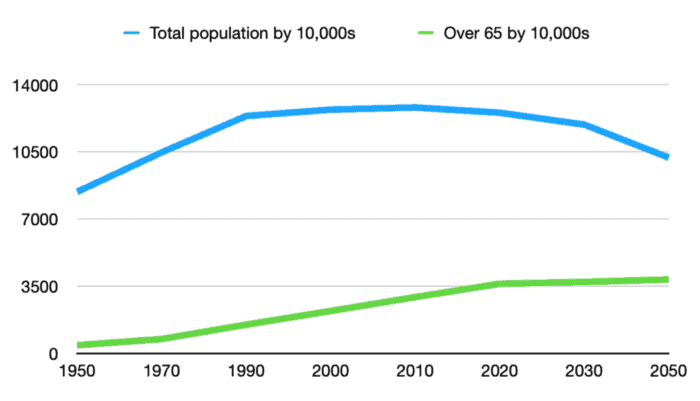
The number of elderly in Japan is increasing, even as the overall population declines.
As the Japanese population continues to decline, the percentage of those over 65 rises. (©Diane Tincher)

Due in part to the country’s extraordinary economic growth and improved healthcare, the number of centenarians has grown from the 55 identified in 1947 to 90,526 in 2022, and now 99,763 in 2025. That’s a lot of silver cups.

Apparently, the government thought so, too. In 2009, in order to cut costs, the diameter of the cups was decreased to 9 cm. Since 2016, the cups have been made from silver-plated nickel alloy.

Happy Monday

Following the passage of legislation to create Japan’s “Happy Monday System,” which moved holidays to Mondays to give workers more three-day weekends, Respect for the Aged Day was moved to the third Sunday in September beginning in 2003.

Longevity

As of 2021, the average life expectancy in Japan was the second highest in the world, being ever so slightly edged out of first place by Hong Kong. In Japan, women can expect to live 88.1 years, and men 81.9 years with an average of 85.03 years. In contrast, life expectancy in the UK is 81.77 years, and 79.11 years in the US.

780 660
Tanaka Kane of Fukuoka City, pictured in 2019 and 1923. Kane, the world’s oldest living person, was born ON January 2, 1903. She keeps active BY doing math problems, playing Othello, and dancing. (Photos courtesy of Guinness World Records.)

What explains this longevity?

Much research has been done into longevity, and so far the answer seems to be a mix of genetics, lifestyle, and luck. Not much can be done about genes and luck, so let’s take a look at some general characteristics found in the Japanese lifestyle.

Healthy diet

Japanese people generally eat fresh foods, enjoying the variety of vegetables and fish that each season brings. In fact, Washoku, traditional Japanese cuisine, was added to the UNESCO list of the Intangible Cultural Heritage of Humanity in 2013.

Low obesity rate

Japan boasts one of the lowest obesity rates in the world, at 4.6% of the population, the lowest among the developed nations. The UK rate is 27.8, and the US rate is 36.2.

National Healthcare

Hand in hand with the low obesity rate is Japan’s healthcare system, where discounted yearly health checks are provided to residents. Along with taking blood samples and administering various tests, waists are measured to check for metabo, or metabolic syndrome. If a woman’s waist is more than 90 cm, or a man’s is more than 85 cm, diet and exercise are prescribed and the patient must return for regular checkups until the desired measurement is reached.

An active brain

Research has shown that elderly people who exercise their brains through active challenges are more likely to retain full cognitive ability and stave off dementia than those who do not. Japanese elderly keep their brains active in a variety of ways—studying English or math, practicing calligraphy, writing poetry, or simply copying news articles from the paper to keep up with the intricacies of the Japanese kanji characters.

Activity and community

A Japanese senior’s life is often filled with activity. Growing vegetables, games of croquet, and club activities keep many elderly physically and socially active. With events to look forward to and friends and family nearby, there is a sense of meaning to their lives, providing them with ikigai, or a reason to live.
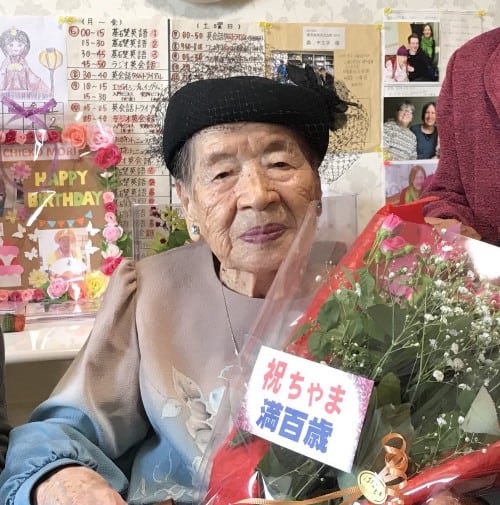
My elderly friend, Chieko, on her 100th birthday.
Mori Chieko of Kagoshima City, celebrating 100 years. She kept a busy schedule, her days filled with practicing the piano, studying English, and EXERCISING. Chieko passed away in 2020 at age 101. (©diane tincher)

Local Commendations

Prefectures across Japan have joined the national government in honoring their elderly. In Kagoshima Prefecture, in the south of Japan, newly minted 100-year-olds are visited by representatives of the city government who present them with 50,000 yen ($455 USD) and a large certificate. Kashiwa City, in Chiba Prefecture, gives 30,000 yen ($274 USD), while wealthy Tobishima Village, in Aichi Prefecture, awards each of its centenarians with 1 million yen ($9116 USD).

Could all this attention and respect be another contributing factor to the remarkable longevity of the Japanese? We’ll have to leave that one to the sociologists to figure out.

Sources:

https://nationaltoday.com/respect-aged-day/, government site on state of elderly, https://worldpopulationreview.com/, health checks, https://www.worldometers.info/demographics/life-expectancy/, https://population.un.org/, Kagoshima City homepage, Nikkei news, https://www.guinnessworldrecords.com/, https://www8.cao.go.jp/kourei/whitepaper/w-2017/zenbun/pdf/1s1s_01.pdf, http://demography.blog.fc2.com/blog-entry-6221.html


If you have questions about Japan or suggestions for articles, please add them in the comments. For more photos and information on Japan, follow me on instagram at: https://www.instagram.com/more_than_tokyo/

elderly holidays Japan Japanese culture longevity seniors
Share
1 Comment
Leave a Reply Cancel reply

Your email address will not be published. Required fields are marked *

This site uses Akismet to reduce spam. Learn how your comment data is processed.

Previous Post

Waterfalls in Japan—A Selection of its Most Magnificent

Next Post

Turtles, Longevity, and Strangely Hairy Tails

If you enjoy my work and would like to help me continue creating, consider supporting me.

Thank you!
PayPal - The safer, easier way to pay online!
Newsletter

Subscribe

Enter your email for notifications of our latest posts

Tags
architecture Buddhism Christianity Edo Era elderly festivals folklore Food Ghosts gratitude Haunting Hiking history holidays honesty Japan Japanese Japanese cuisine Japanese culture Japanese Customs Japanese Food Japanese History Japanese Language Japanese words that English needs Japan Tips Japan travel Japan Travel Tips Jizō Kagoshima Kōyō Living in Japan longevity Manners Nature New Year Ninja Samurai Shinto shogun Shrine Tips Trade Travel volcano Washoku
Featured Posts
History Religion

The Shimabara Rebellion—The Last Stand of Japan’s Christians

July 8, 2026
History

The Okamoto Daihachi Affair—The Scandal That Turned the Tide Against Christianity in Japan

July 6, 2026
History

The 47 Ronin—Disgrace, Revenge, and Death

June 23, 2026
Destinations Folklore Ghosts

Omatsu Daigongen—The Amazing Cat Temple of Shikoku

June 1, 2026
History

Oura Kei—Unstoppable Pioneering Tea Merchant

January 19, 2026
Most Popular

Shinto — The Peaceful Spiritual Heart of Japan

Shinto gate Lake Biwa

Komorebi—A Beautiful Japanese Word that English Needs

Nakasendo Way

Dondoyaki—Burning New Year’s Decorations to Send off the God of the New Year

Dondoyaki fire

The Jizo Statues of Nashi-no-Ki—1,000s of Unique Offerings of Thanks

Jizo statues at Nashi no Jizo, Sado.

Sugawara no Michizane —Japan’s Three Most Infamous Vengeful Ghosts, part 3

Sugawara Michizane
You might also like
Nakasendo Way
Nature Language

Komorebi—A Beautiful Japanese Word that English Needs

1 Min read
November 11, 2021
temple pagoda
Culture Living in Japan

Death in Japan

8 Mins read
March 22, 2022
Elephant by Kano Furunobu
History

The Incredible Tale of the Elephant Who Had an Audience with the Japanese Emperor

7 Mins read
April 6, 2022
Exploring the wonders of rural Japan
Exploring the Wonders of Rural Japan
  • Home
  • About
  • Recommended Books
  • Interview
  • Privacy Policy
Exploring the Wonders of Rural Japan
  • Home
  • About
  • Discover
    • History
    • Culture
    • Nature
    • Food
    • Living in Japan
    • Destinations
    • Language
    • Tips
  • Interview
  • Recommended Books
We use cookies on our website to give you the most relevant experience by remembering your preferences and repeat visits. By clicking “Accept”, you consent to the use of ALL the cookies.
Do not sell my personal information.
Cookie SettingsAccept
Manage consent

Privacy Overview

This website uses cookies to improve your experience while you navigate through the website. Out of these, the cookies that are categorized as necessary are stored on your browser as they are essential for the working of basic functionalities of the website. We also use third-party cookies that help us analyze and understand how you use this website. These cookies will be stored in your browser only with your consent. You also have the option to opt-out of these cookies. But opting out of some of these cookies may affect your browsing experience.
Necessary
Always Enabled
Necessary cookies are absolutely essential for the website to function properly. These cookies ensure basic functionalities and security features of the website, anonymously.
CookieDurationDescription
cookielawinfo-checkbox-analytics11 monthsThis cookie is set by GDPR Cookie Consent plugin. The cookie is used to store the user consent for the cookies in the category "Analytics".
cookielawinfo-checkbox-functional11 monthsThe cookie is set by GDPR cookie consent to record the user consent for the cookies in the category "Functional".
cookielawinfo-checkbox-necessary11 monthsThis cookie is set by GDPR Cookie Consent plugin. The cookies is used to store the user consent for the cookies in the category "Necessary".
cookielawinfo-checkbox-others11 monthsThis cookie is set by GDPR Cookie Consent plugin. The cookie is used to store the user consent for the cookies in the category "Other.
cookielawinfo-checkbox-performance11 monthsThis cookie is set by GDPR Cookie Consent plugin. The cookie is used to store the user consent for the cookies in the category "Performance".
viewed_cookie_policy11 monthsThe cookie is set by the GDPR Cookie Consent plugin and is used to store whether or not user has consented to the use of cookies. It does not store any personal data.
Functional
Functional cookies help to perform certain functionalities like sharing the content of the website on social media platforms, collect feedbacks, and other third-party features.
Performance
Performance cookies are used to understand and analyze the key performance indexes of the website which helps in delivering a better user experience for the visitors.
Analytics
Analytical cookies are used to understand how visitors interact with the website. These cookies help provide information on metrics the number of visitors, bounce rate, traffic source, etc.
Advertisement
Advertisement cookies are used to provide visitors with relevant ads and marketing campaigns. These cookies track visitors across websites and collect information to provide customized ads.
Others
Other uncategorized cookies are those that are being analyzed and have not been classified into a category as yet.
SAVE & ACCEPT