

• Home
  • About
  • Discover
    • History
    • Culture
    • Nature
    • Food
    • Living in Japan
    • Destinations
    • Language
    • Tips
  • Interview
  • Recommended Books
Exploring the Wonders of Rural Japan
Food Culture Travel

Heshiko—Japan’s (Almost) Forgotten Superfood

Once served to emperors, this traditional fermented fish is quietly making a comeback
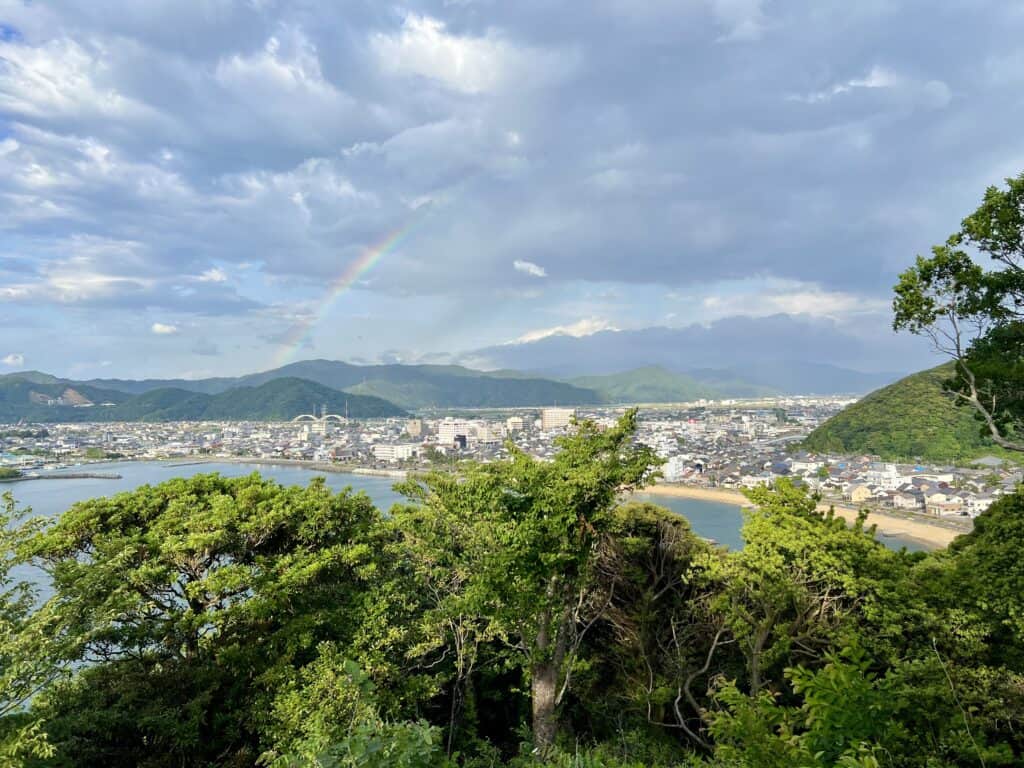
Overlooking the quiet bayside town of Obama in Fukui Prefecture, Japan. Clouds and a rainbow overhead.
Obama, Fukui Prefecture. (©Diane Tincher)

From the late 7th century, Wakasa was one of three Miketsukuni, areas designated by law to provide seafood to the emperor and imperial court. The port of Obama, nestled between mountains and the sheltered waters of Wakasa Bay on the Sea of Japan, was Wakasa’s center of supply. 

From this closest seaport to the capital, porters would carry salt, seaweed, and salted fish in baskets tied to their backs directly across the rugged mountains to Nara and Kyoto. This route, known as the Saba Kaidō, or Mackerel Highway, owes its name to the abundance of mackerel in Wakasa Bay. This bounty was due to the bay’s ideal environment, created by the convergence of the warm Tsushima Current from the south and the cool Liman Current from the north.
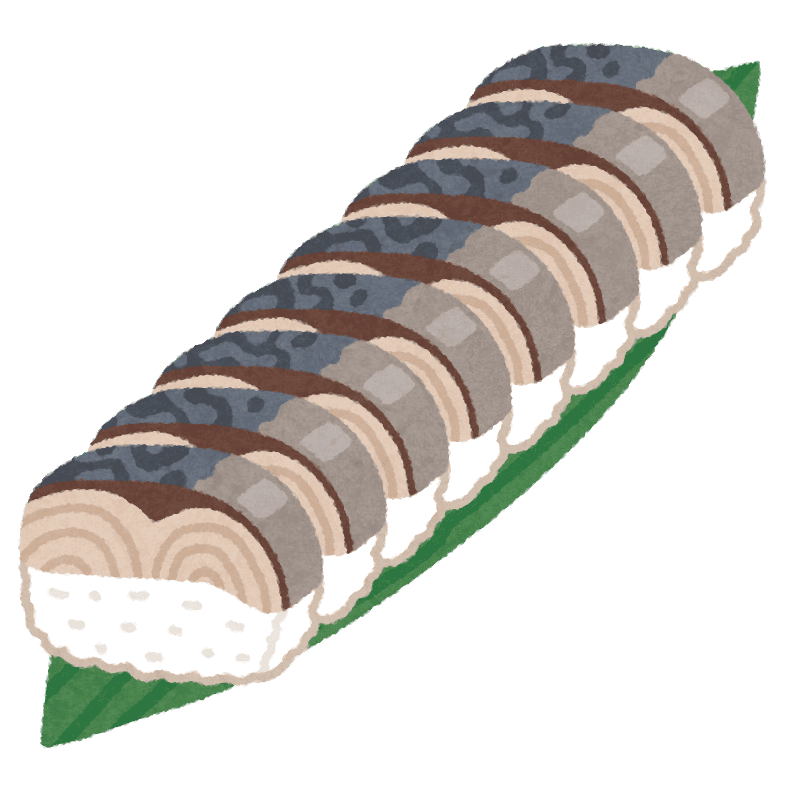
Mackerel sushi.
Saba-zushi. (Illustration courtesy of irasutoya.)

The 72-kilometer journey from Obama to Kyoto along the Mackerel Highway took just enough time for the preserved fish to reach its optimal flavor. Seafood from Obama was highly valued in Kyoto as “Wakasa food,” and one popular dish, saba-zushi—sushi rice pressed with a fillet of salted and pickled mackerel—is still a popular washoku today and a feature of Kyoto’s annual Gion festival.

Among the foods sent to Kyoto in bygone days, one stand-out is a unique type of preserved mackerel known as Heshiko.

Heshiko

Inland along the northern section of Obama lies the hamlet of Tagarasu, meaning “crows in the rice paddies.” In one of its quiet valleys, surrounded by green mountains and picturesque rice terraces, stands a disused elementary school. Once alive with the laughter and chatter of energetic children, its classrooms fell silent more than a decade ago. Today, its schoolyard is occasionally used by elderly locals who gather for a leisurely game of gateball.

But in recent years, the school building has gained a new purpose. Its once lively classrooms are now home to hundreds, yea, thousands, of silent inhabitants—mackerel.
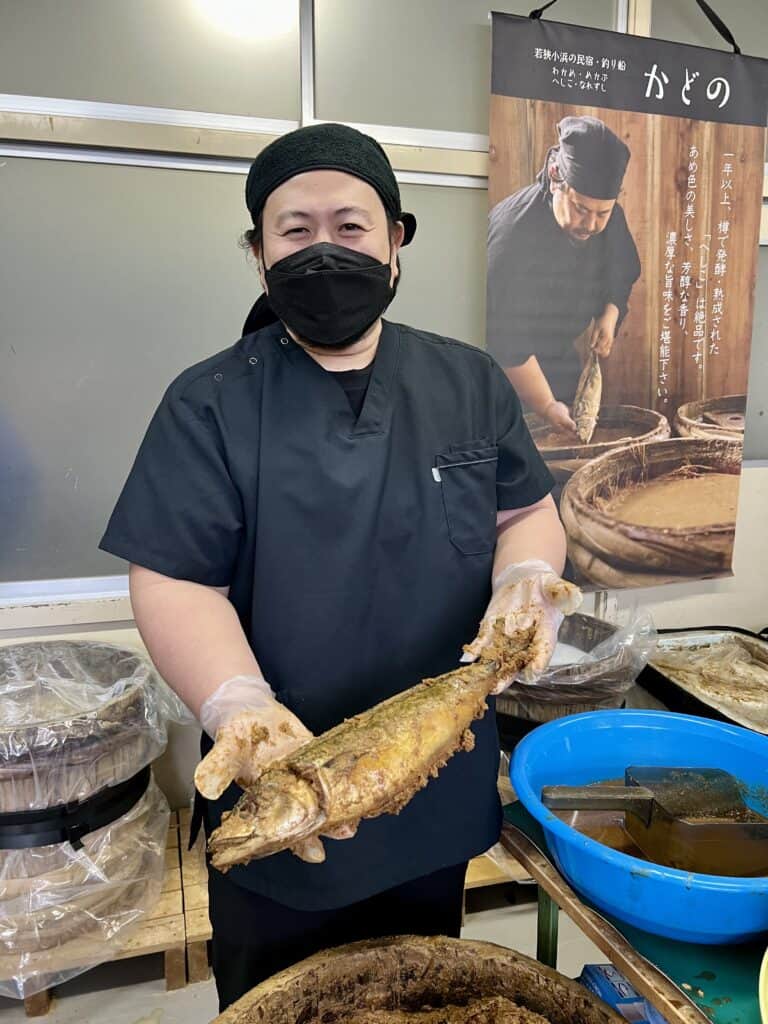
Kadono-san, who makes heshiko, holds a mackerel that is being fermented with rice bran and koji mold.
Kadono-san, holding heshiko in Tagarasu, Fukui Prefecture. (©Diane Tincher)

Tagarasu is where I was fortunate to learn about Heshiko, an ancient technique that uses salt and fermentation to preserve fish. Born out of necessity, this method helped Obama fulfill its role as a Miketsukuni, furnishing high-quality seafood from Wakasa Bay to the imperial cities of Nara and Kyoto along the “Mackerel Highway.” It also provided a vital source of protein for people living in the mountains, ensuring they had healthy food to carry them through the harsh winter months when deep snow made fresh supplies scarce.

Today, heshiko remains a local delicacy, rich in umami. Its preservation process involves salting and fermenting fish — usually mackerel, sometimes herring — for over a year.

The process begins in autumn with a fresh catch of mackerel. The fish are gutted and cleaned, their cavities filled with salt, and then they are packed into large cedar barrels.

Once a barrel is full, the fish are covered, and a two-kilogram weight is placed on top. A day or two later, the fish are removed, packed in fresh barrels, and pressed with a heavier weight. This process continues, with the weight gradually increasing, until excess liquids are removed from the fish.
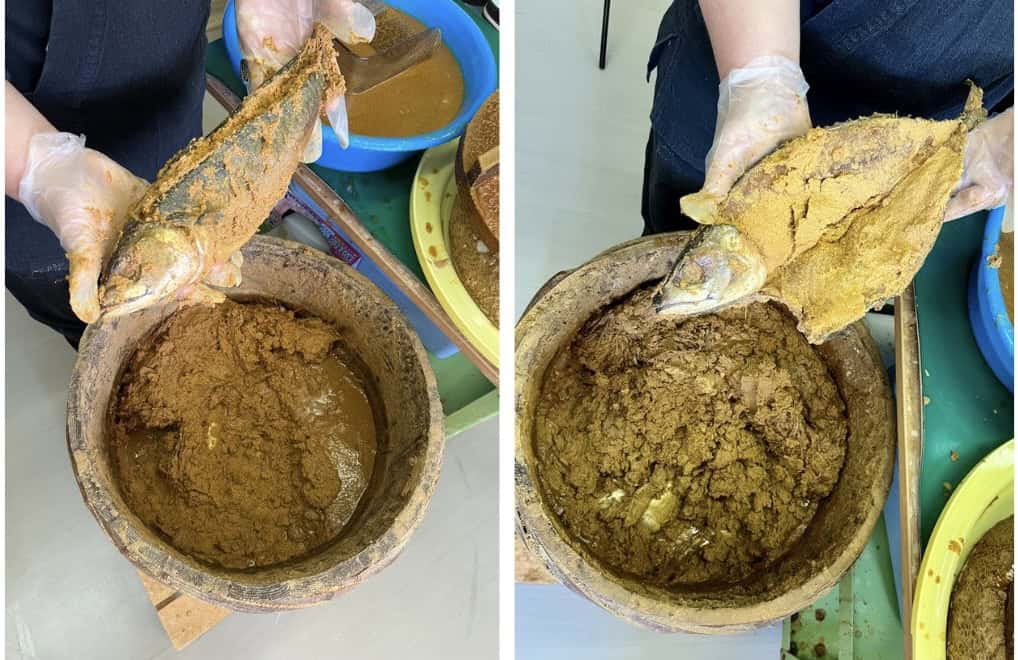
Heshiko in rice bran.
Mackerel stuffed and packed with rice bran. (©Diane Tincher)

When the fish are sufficiently moisture-free, they are repacked into barrels—this time filled and layered with rice bran instead of salt. Togarashi peppers are added to deter insects, and sturdy straw ropes are tied tightly around the barrel rims to seal the containers. 

Left undisturbed for about a year, the mackerel undergoes slow fermentation. The following winter, the fish have transformed into heshiko and are ready to be eaten.
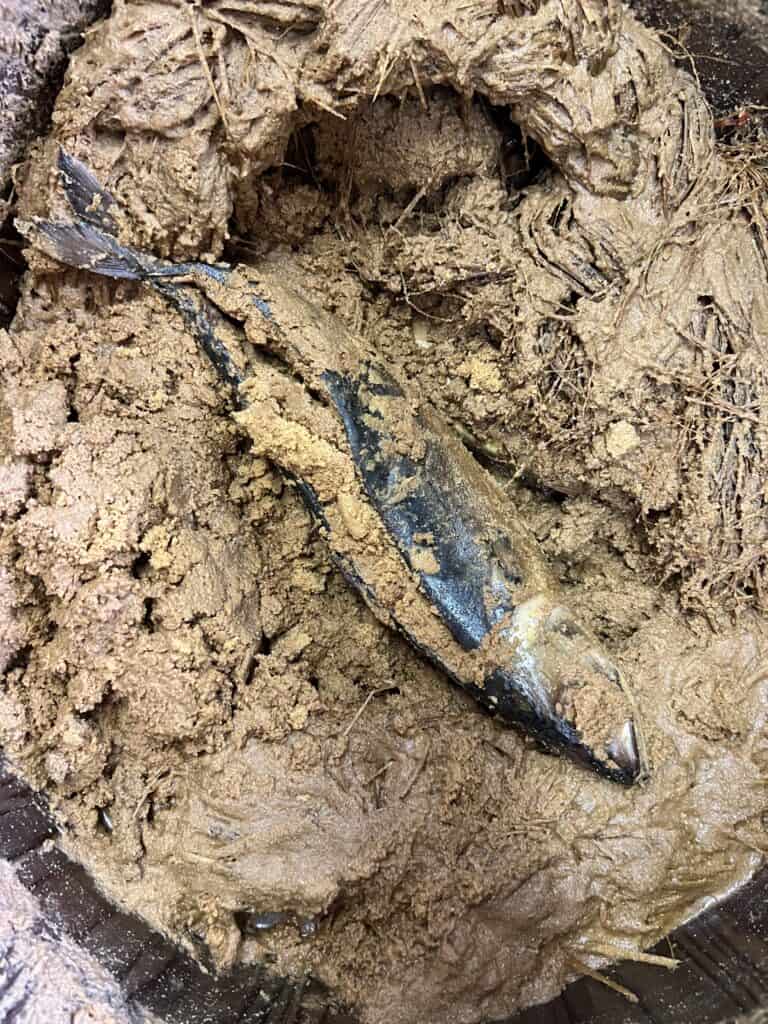
Heshiko in a barrel of rice bran.
Mackerel fermenting in rice bran. (©Diane Tincher)

Heshiko is packed with nutrition and is a rich source of protein, calcium, iron, dietary fiber, EPA, DHA, beneficial enzymes, and vitamins B and D. The family of heshiko producers I met hope that one day, heshiko will be recognized as the superfood it is and that Tagarasu’s heshiko will become a household name.

Heshiko goes well with a cup of dry sake or beer. It can be served in all kinds of ways—thinly sliced atop a wedge of daikon radish, grilled, as sushi, or in chazuke — topping on a bowl of rice with green tea poured over it.

Narezushi
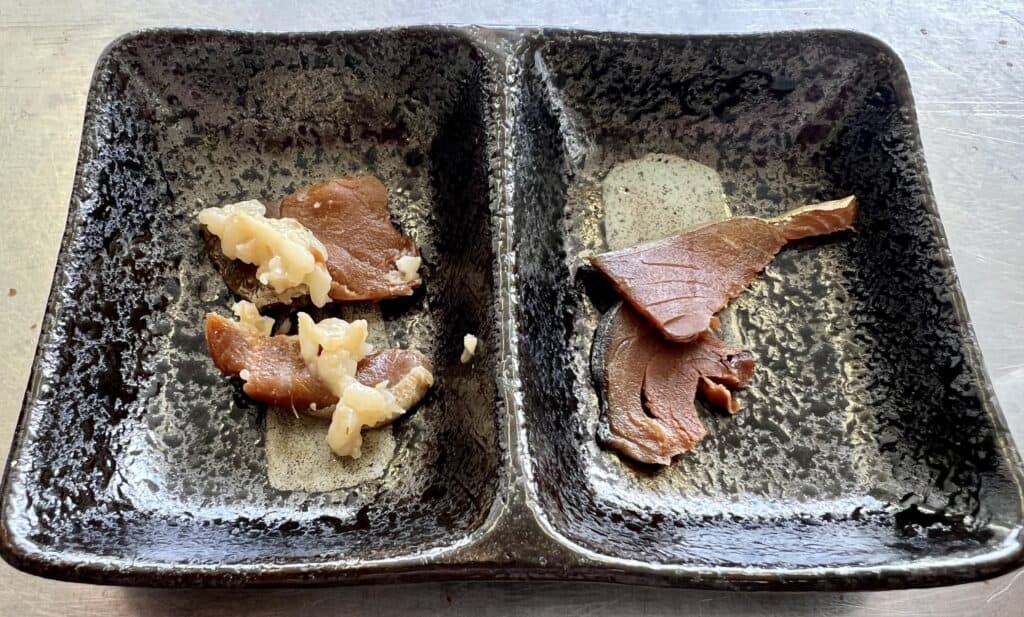
Thin slices of narezushi and heshiko.
Narezushi on the left, Heshiko on the right. (©Diane Tincher)

Some heshiko are fermented further and made into narezushi—the earliest form of sushi. To make this, the fish are first rinsed to remove the rice bran, then skinned and soaked in water to draw out excess salt. Next, they are filled with rice and koji mold — Aspergillus oryzae, the same spores used to make sake, soy sauce, and miso paste — and packed back into barrels with more rice and koji.

A weight is placed on top, and the mixture is left to ferment for a couple of weeks. After this, the narezushi is ready to eat.

Like many fermented foods, narezushi is an acquired taste and is best served in small portions. It is not nearly as salty as heshiko, and I can see how it would be a popular snack to nibble on with sake or beer.

If you’re in Japan but can’t make it up to Obama, you can order heshiko online from https://www.kadono-heshiko.com/. Unfortunately, Kadono-san cannot ship internationally.


If you have questions about Japan or suggestions for articles, please add them in the comments. For more photos and information on Japan, follow me on instagram at: https://www.instagram.com/more_than_tokyo/

Food Japan travel Japanese culture Japanese History
Share
3 Comments
  1. Perry Bulwer

    February 17, 2025 7:46 am

    My mouth was literally watering while reading this. I think I would love that fermented mackerel in either form. I’m a big fan of fermented food, the stronger tasting the better. When I lived in Japan I often surprised restaurant staff when ordering nato. I especially loved it for breakfast, mixed with a raw egg, then poured over a steaming bowl of rice. There goes my mouth again, just imaging it.

    Reply
    1. Diane Tincher

      February 17, 2025 7:56 am

      Thanks for stopping by, Perry! I hope you can find some natto where you live. That’s pretty hard-core, eating it with raw egg over rice.

      Reply
      1. Perry Bulwer

        February 19, 2025 10:34 am

        The first time I encountered that dish, while staying in a youth hostel during my first visit to Japan, I have to admit I gagged a bit, but I grew to really love it. I forgot to say that a dash of soy sauce is added to the scrambled raw egg and natto, and the dish is good with that condiment of bits of dried seaweed, egg and other items sprinkled over the bowl of rice, or those thin strips of nori seaweed. Also, the heat of the rice half cooks the egg, so it’s really not like eating a raw egg. When I lived in Vancouver I could easily get any Japanese food I wanted, including natto, at a Japanese supermarket that was walking distance from my home.

        Reply
Leave a Reply Cancel reply

Your email address will not be published. Required fields are marked *

This site uses Akismet to reduce spam. Learn how your comment data is processed.

Previous Post

Dondoyaki—Burning New Year’s Decorations to Send off the God of the New Year

Next Post

Sokushinbutsu—The Fascinating Practice of Self-Mummification to Attain Buddhahood

If you enjoy my work and would like to help me continue creating, consider supporting me.

Thank you!
PayPal - The safer, easier way to pay online!
Newsletter

Subscribe

Enter your email for notifications of our latest posts

Tags
architecture Buddhism Christianity Edo Era elderly festivals folklore Food Ghosts gratitude Haunting Hiking history holidays honesty Japan Japanese Japanese cuisine Japanese culture Japanese Customs Japanese Food Japanese History Japanese Language Japanese words that English needs Japan Tips Japan travel Japan Travel Tips Jizō Kagoshima Kōyō Living in Japan longevity Manners Nature New Year Ninja Samurai Shinto shogun Shrine Tips Trade Travel volcano Washoku
Featured Posts
History Religion

The Shimabara Rebellion—The Last Stand of Japan’s Christians

July 8, 2026
History

The Okamoto Daihachi Affair—The Scandal That Turned the Tide Against Christianity in Japan

July 6, 2026
History

The 47 Ronin—Disgrace, Revenge, and Death

June 23, 2026
Destinations Folklore Ghosts

Omatsu Daigongen—The Amazing Cat Temple of Shikoku

June 1, 2026
History

Oura Kei—Unstoppable Pioneering Tea Merchant

January 19, 2026
Most Popular

Shinto — The Peaceful Spiritual Heart of Japan

Shinto gate Lake Biwa

Komorebi—A Beautiful Japanese Word that English Needs

Nakasendo Way

Dondoyaki—Burning New Year’s Decorations to Send off the God of the New Year

Dondoyaki fire

The Jizo Statues of Nashi-no-Ki—1,000s of Unique Offerings of Thanks

Jizo statues at Nashi no Jizo, Sado.

Sugawara no Michizane —Japan’s Three Most Infamous Vengeful Ghosts, part 3

Sugawara Michizane
You might also like
Nakasendo Way
Nature Language

Komorebi—A Beautiful Japanese Word that English Needs

1 Min read
November 11, 2021
temple pagoda
Culture Living in Japan

Death in Japan

8 Mins read
March 22, 2022
Japanese traditional play
Language Culture History Living in Japan

Why is Learning Japanese So Hard?

6 Mins read
January 29, 2022
Exploring the wonders of rural Japan
Exploring the Wonders of Rural Japan
  • Home
  • About
  • Recommended Books
  • Interview
  • Privacy Policy
Exploring the Wonders of Rural Japan
  • Home
  • About
  • Discover
    • History
    • Culture
    • Nature
    • Food
    • Living in Japan
    • Destinations
    • Language
    • Tips
  • Interview
  • Recommended Books
We use cookies on our website to give you the most relevant experience by remembering your preferences and repeat visits. By clicking “Accept”, you consent to the use of ALL the cookies.
Do not sell my personal information.
Cookie SettingsAccept
Manage consent

Privacy Overview

This website uses cookies to improve your experience while you navigate through the website. Out of these, the cookies that are categorized as necessary are stored on your browser as they are essential for the working of basic functionalities of the website. We also use third-party cookies that help us analyze and understand how you use this website. These cookies will be stored in your browser only with your consent. You also have the option to opt-out of these cookies. But opting out of some of these cookies may affect your browsing experience.
Necessary
Always Enabled
Necessary cookies are absolutely essential for the website to function properly. These cookies ensure basic functionalities and security features of the website, anonymously.
CookieDurationDescription
cookielawinfo-checkbox-analytics11 monthsThis cookie is set by GDPR Cookie Consent plugin. The cookie is used to store the user consent for the cookies in the category "Analytics".
cookielawinfo-checkbox-functional11 monthsThe cookie is set by GDPR cookie consent to record the user consent for the cookies in the category "Functional".
cookielawinfo-checkbox-necessary11 monthsThis cookie is set by GDPR Cookie Consent plugin. The cookies is used to store the user consent for the cookies in the category "Necessary".
cookielawinfo-checkbox-others11 monthsThis cookie is set by GDPR Cookie Consent plugin. The cookie is used to store the user consent for the cookies in the category "Other.
cookielawinfo-checkbox-performance11 monthsThis cookie is set by GDPR Cookie Consent plugin. The cookie is used to store the user consent for the cookies in the category "Performance".
viewed_cookie_policy11 monthsThe cookie is set by the GDPR Cookie Consent plugin and is used to store whether or not user has consented to the use of cookies. It does not store any personal data.
Functional
Functional cookies help to perform certain functionalities like sharing the content of the website on social media platforms, collect feedbacks, and other third-party features.
Performance
Performance cookies are used to understand and analyze the key performance indexes of the website which helps in delivering a better user experience for the visitors.
Analytics
Analytical cookies are used to understand how visitors interact with the website. These cookies help provide information on metrics the number of visitors, bounce rate, traffic source, etc.
Advertisement
Advertisement cookies are used to provide visitors with relevant ads and marketing campaigns. These cookies track visitors across websites and collect information to provide customized ads.
Others
Other uncategorized cookies are those that are being analyzed and have not been classified into a category as yet.
SAVE & ACCEPT