

• Home
  • About
  • Discover
    • History
    • Culture
    • Nature
    • Food
    • Living in Japan
    • Destinations
    • Language
    • Tips
  • Interview
  • Recommended Books
Exploring the Wonders of Rural Japan
History Culture

Ema—A Tool for Communicating with the Gods

It all started with the gift of a white horse

Anyone who has visited a Shinto shrine in Japan has surely seen a collection of ema, or prayer tablets, containing the various prayers or thanksgivings of thousands of visitors. These wooden plaques generally have a picture on one side and a place for writing on the other.
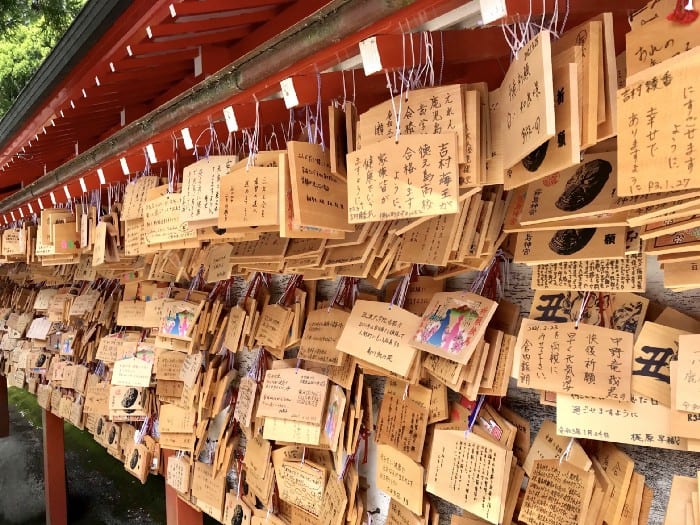
Ema hanging at a shrine.
Ema, Kirishima Shrine, Kagoshima Prefecture.

The word ema is a combination of two Japanese characters, 絵, picture, and 馬, horse. Therefore ema simply means “horse picture.”

Why “horse pictures”?

Traditionally, the gods were said to ride on sacred white horses to visit the world of man. According to the Nihon Shoki, one of Japan’s ancient histories, the 10th Emperor, Sujin, offered the first horse to a shrine, starting a tradition that continues on to this day. Take a look at the center of this map of the Ise Grand Shrine Naiku. Two sacred horses live at this important shrine taking turns greeting visitors within the premises.
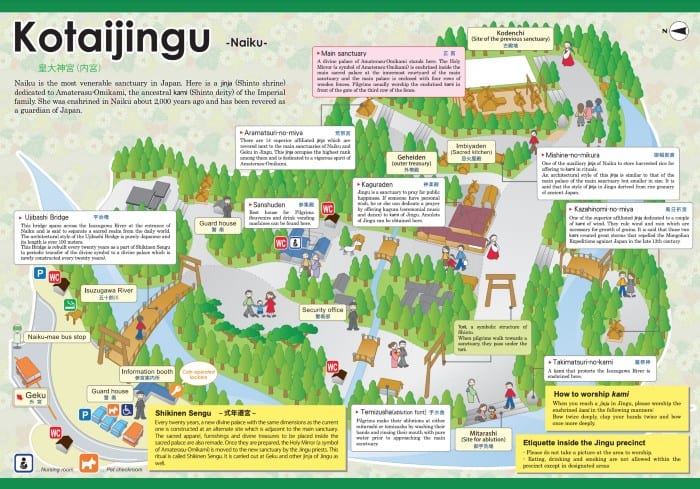
Map of Ise Grand Shrine Naiku.
Pamphlet provided by the Jingu Administration Office. Can you see the horse in the center?

From horses to pictures

Giving a horse to a shrine, though, was beyond the abilities of most people. So the practice of giving clay horses, or pictures of horses drawn on wood or paper, began.

The pictures were often rather large, and as the years passed, horses were no longer the only subject. Peasants would offer pictures of an ear or a leg, whatever needed healing. The wealthier classes would offer pictures of samurai in battle, trading ships, daimyo processions, or whatever the parishioner wished to either pray for or to give thanks for. Many times these pictures were fitted under the roofs of the shrines, which gave rise to the five-sided shape we see today. Eventually, the shape became somewhat standardized.
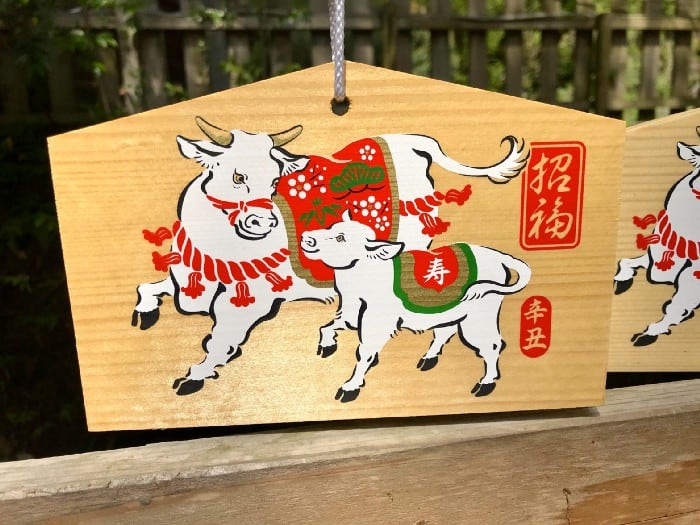
Ema with cow images.
Ema hanging at Wake Shrine, Kirishima, Kagoshima Prefecture.

Ritual burning

Each year around the New Year’s holiday shrines hold a ritual burning of the ema from the preceding year as a final offering of prayer and thanksgiving.

Ema today

Widespread literacy has changed the nature of ema. Written prayers have replaced the former imagery of pictures. New shapes have arisen, with some shrines selling ema shaped like hearts, hand mirrors, foxes, rabbits, or cute characters.
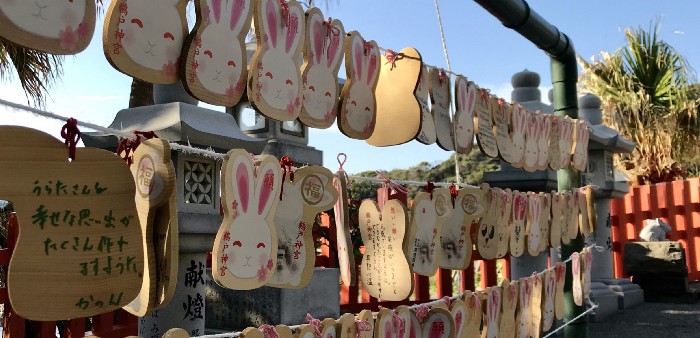
Ema shaped like rabbits.
Ema at Udo Shrine, Miyazaki Prefecture.

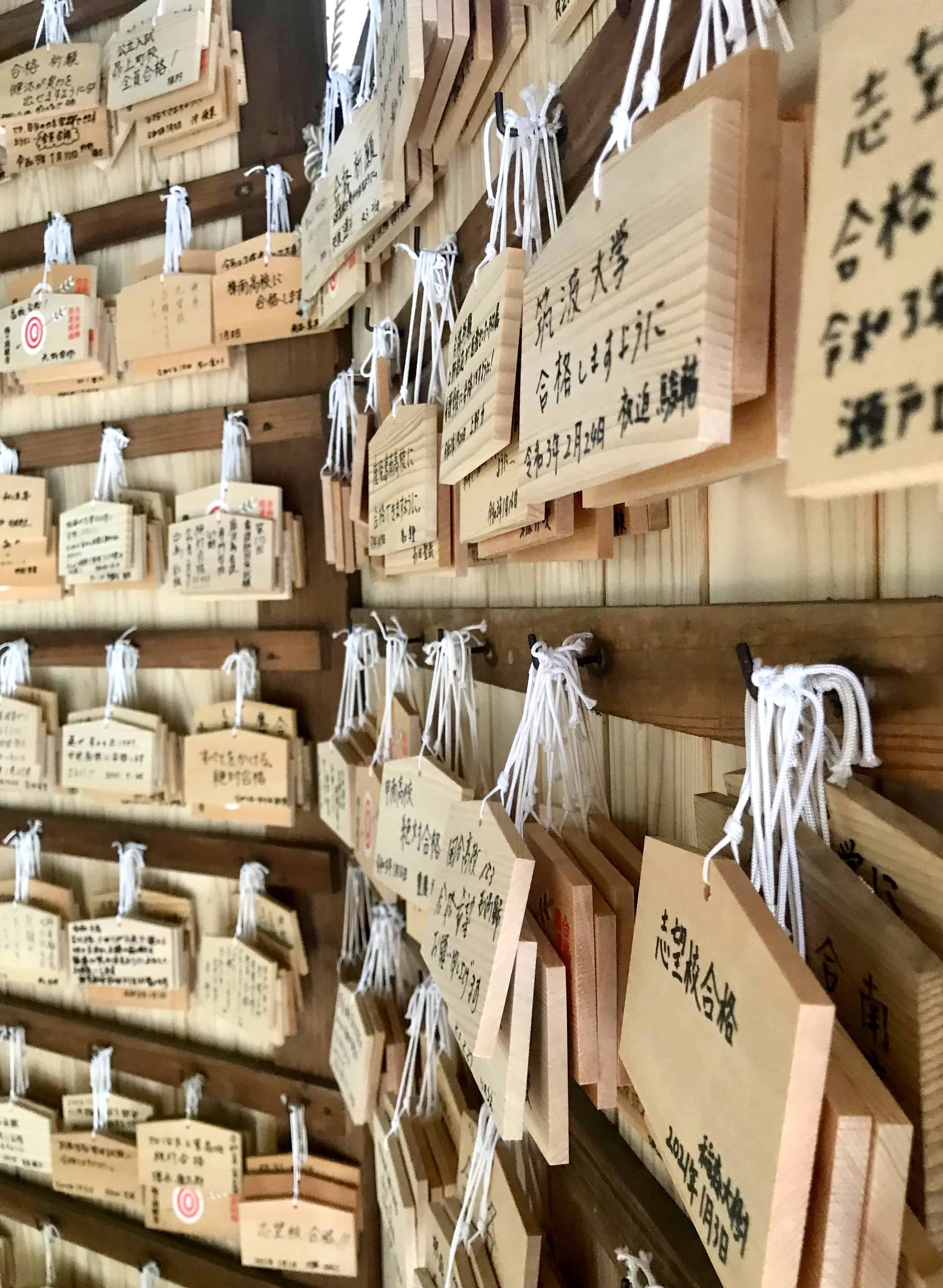
People still pray for healing, prosperity, and love, but one request that is often seen nowadays is for spiritual help to pass the difficult entrance exams to enter high schools or universities.
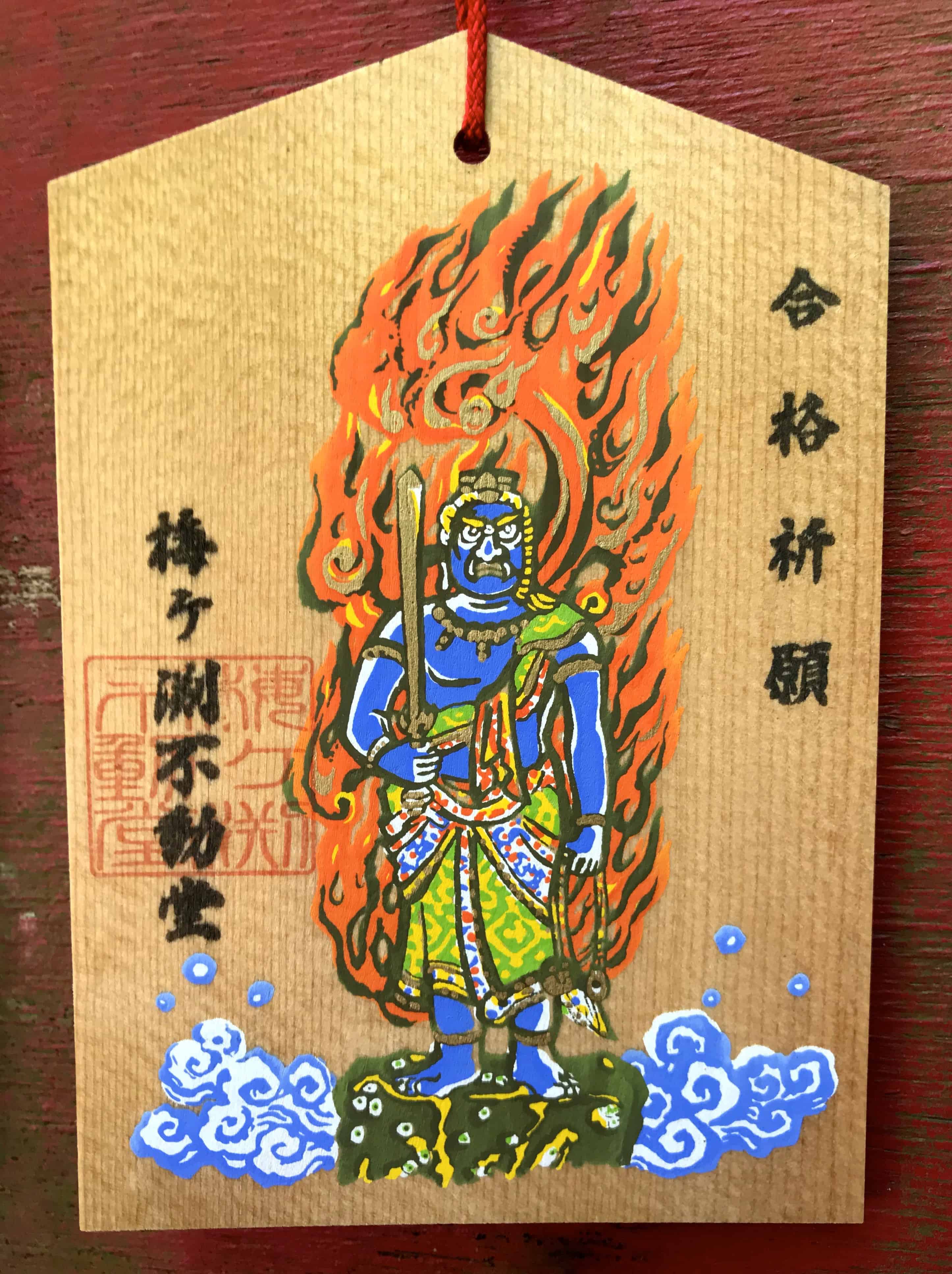
Ema with powerful Buddhist guardian.
Ema containing prayers to pass school entrance exams
Ema with prayers to pass examinations.
UME GA FUCHI SHRINE, KAGOSHIMA PREFECTURE.

While looking over the traditional ema at a countryside shrine with their usual prayers for health and happiness, I was struck by one distinctly modern request. It must have been deeply felt, as it was both written and illustrated.
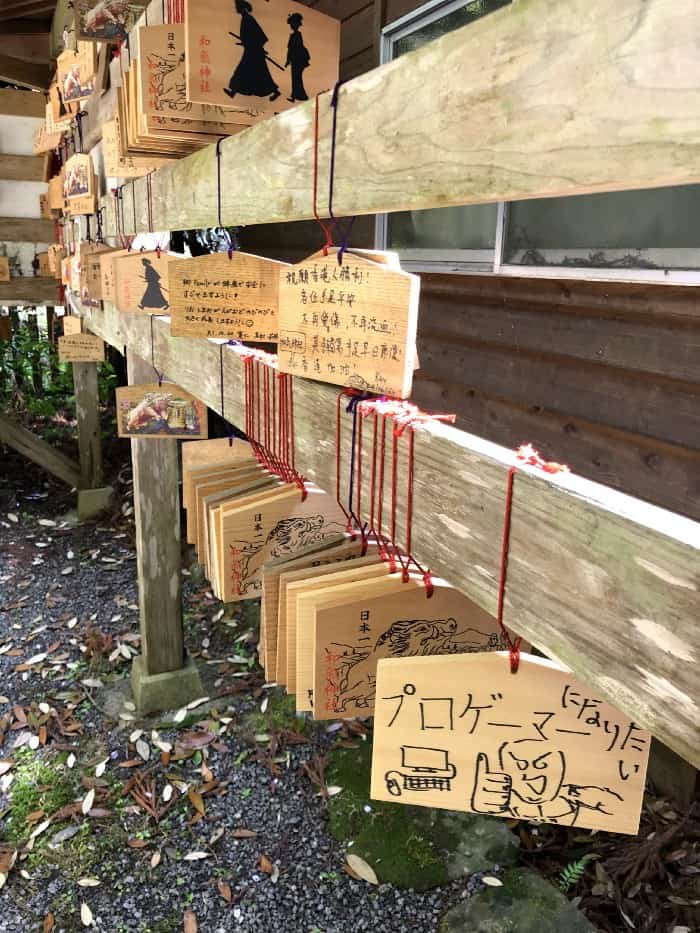
Ema with prayer to become a pro-gamer.
“I want to become a pro-gamer.”

A boy declared to the gods, “I want to become a pro-gamer!”

Ema have certainly come a long way from that first gift of a horse.

If you get a chance to visit a Shinto shrine, feel free to purchase an ema and write your own prayers. I’m sure the gods will understand your language.

Photos ©Diane Tincher


If you have questions about Japan or suggestions for articles, please add them in the comments. For more photos and information on Japan, follow me on instagram at: https://www.instagram.com/more_than_tokyo/

ema Japan Japan travel Japanese culture Japanese History Shinto wishes
Share
Write Comment
Leave a Reply Cancel reply

Your email address will not be published. Required fields are marked *

This site uses Akismet to reduce spam. Learn how your comment data is processed.

Previous Post

The Unlikeliest of Hitch-Hikers

Next Post

Otsukaresama Desu—A Japanese Word of Appreciation that English Could Use

If you enjoy my work and would like to help me continue creating, consider supporting me.

Thank you!
PayPal - The safer, easier way to pay online!
Newsletter

Subscribe

Enter your email for notifications of our latest posts

Tags
architecture Buddhism Christianity Edo Era elderly festivals folklore Food Ghosts gratitude Haunting Hiking history holidays honesty Japan Japanese Japanese cuisine Japanese culture Japanese Customs Japanese Food Japanese History Japanese Language Japanese words that English needs Japan Tips Japan travel Japan Travel Tips Jizō Kagoshima Kōyō Living in Japan longevity Manners Nature New Year Ninja Samurai Shinto shogun Shrine Tips Trade Travel volcano Washoku
Featured Posts
History Religion

The Shimabara Rebellion—The Last Stand of Japan’s Christians

July 8, 2026
History

The Okamoto Daihachi Affair—The Scandal That Turned the Tide Against Christianity in Japan

July 6, 2026
History

The 47 Ronin—Disgrace, Revenge, and Death

June 23, 2026
Destinations Folklore Ghosts

Omatsu Daigongen—The Amazing Cat Temple of Shikoku

June 1, 2026
History

Oura Kei—Unstoppable Pioneering Tea Merchant

January 19, 2026
Most Popular

Shinto — The Peaceful Spiritual Heart of Japan

Shinto gate Lake Biwa

Komorebi—A Beautiful Japanese Word that English Needs

Nakasendo Way

Dondoyaki—Burning New Year’s Decorations to Send off the God of the New Year

Dondoyaki fire

The Jizo Statues of Nashi-no-Ki—1,000s of Unique Offerings of Thanks

Jizo statues at Nashi no Jizo, Sado.

Sugawara no Michizane —Japan’s Three Most Infamous Vengeful Ghosts, part 3

Sugawara Michizane
You might also like
Nakasendo Way
Nature Language

Komorebi—A Beautiful Japanese Word that English Needs

1 Min read
November 11, 2021
temple pagoda
Culture Living in Japan

Death in Japan

8 Mins read
March 22, 2022
Elephant by Kano Furunobu
History

The Incredible Tale of the Elephant Who Had an Audience with the Japanese Emperor

7 Mins read
April 6, 2022
Exploring the wonders of rural Japan
Exploring the Wonders of Rural Japan
  • Home
  • About
  • Recommended Books
  • Interview
  • Privacy Policy
Exploring the Wonders of Rural Japan
  • Home
  • About
  • Discover
    • History
    • Culture
    • Nature
    • Food
    • Living in Japan
    • Destinations
    • Language
    • Tips
  • Interview
  • Recommended Books
We use cookies on our website to give you the most relevant experience by remembering your preferences and repeat visits. By clicking “Accept”, you consent to the use of ALL the cookies.
Do not sell my personal information.
Cookie SettingsAccept
Manage consent

Privacy Overview

This website uses cookies to improve your experience while you navigate through the website. Out of these, the cookies that are categorized as necessary are stored on your browser as they are essential for the working of basic functionalities of the website. We also use third-party cookies that help us analyze and understand how you use this website. These cookies will be stored in your browser only with your consent. You also have the option to opt-out of these cookies. But opting out of some of these cookies may affect your browsing experience.
Necessary
Always Enabled
Necessary cookies are absolutely essential for the website to function properly. These cookies ensure basic functionalities and security features of the website, anonymously.
CookieDurationDescription
cookielawinfo-checkbox-analytics11 monthsThis cookie is set by GDPR Cookie Consent plugin. The cookie is used to store the user consent for the cookies in the category "Analytics".
cookielawinfo-checkbox-functional11 monthsThe cookie is set by GDPR cookie consent to record the user consent for the cookies in the category "Functional".
cookielawinfo-checkbox-necessary11 monthsThis cookie is set by GDPR Cookie Consent plugin. The cookies is used to store the user consent for the cookies in the category "Necessary".
cookielawinfo-checkbox-others11 monthsThis cookie is set by GDPR Cookie Consent plugin. The cookie is used to store the user consent for the cookies in the category "Other.
cookielawinfo-checkbox-performance11 monthsThis cookie is set by GDPR Cookie Consent plugin. The cookie is used to store the user consent for the cookies in the category "Performance".
viewed_cookie_policy11 monthsThe cookie is set by the GDPR Cookie Consent plugin and is used to store whether or not user has consented to the use of cookies. It does not store any personal data.
Functional
Functional cookies help to perform certain functionalities like sharing the content of the website on social media platforms, collect feedbacks, and other third-party features.
Performance
Performance cookies are used to understand and analyze the key performance indexes of the website which helps in delivering a better user experience for the visitors.
Analytics
Analytical cookies are used to understand how visitors interact with the website. These cookies help provide information on metrics the number of visitors, bounce rate, traffic source, etc.
Advertisement
Advertisement cookies are used to provide visitors with relevant ads and marketing campaigns. These cookies track visitors across websites and collect information to provide customized ads.
Others
Other uncategorized cookies are those that are being analyzed and have not been classified into a category as yet.
SAVE & ACCEPT