
Low-calorie and high-fiber—konnyaku has been a health food in Japan for centuries
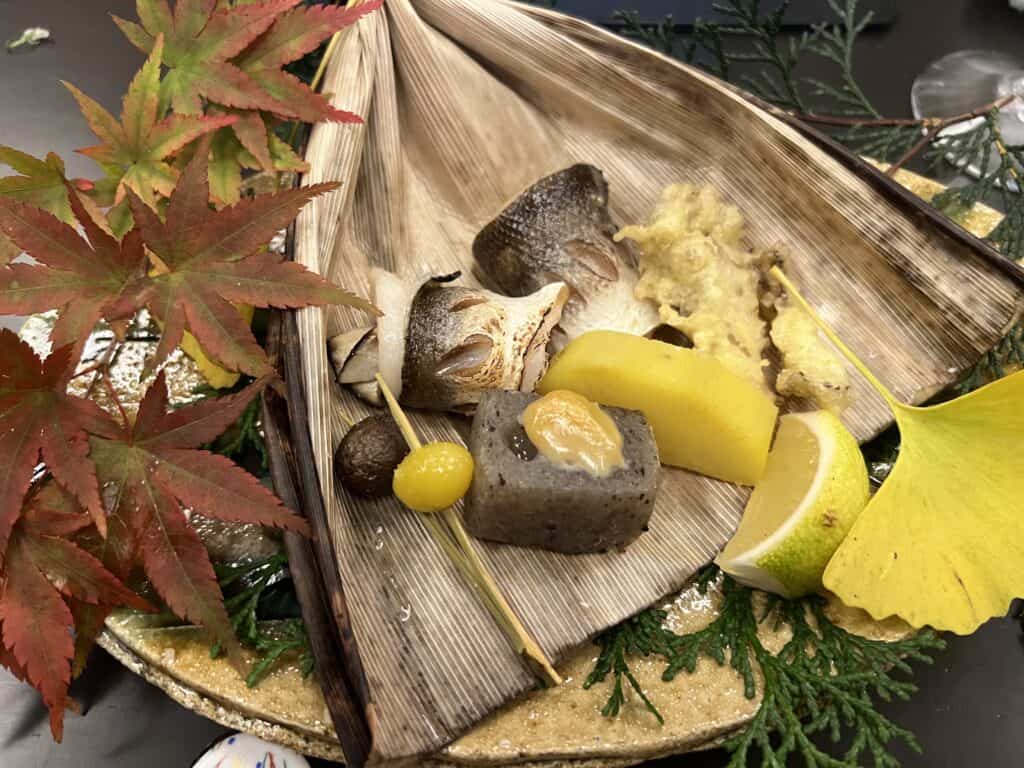
You’re seated before the first course of what is to be a masterpiece of kaiseki, Japanese multi-course cuisine. Along with your exquisite appetizers, you have a piece of something, well, rubbery. You poke it with your chopsticks, and it bounces back. What is this strange gray food? Someone tells you it is made from yams. But that’s not quite accurate.
Allow me to introduce you to konnyaku, perhaps the most misunderstood and mysterious of Japan’s popular foods. Konnyaku is made from the corm of the konjac plant (Amorphophallus konjac), sometimes called devil’s tongue. But what exactly does that mean?

What is a corm?
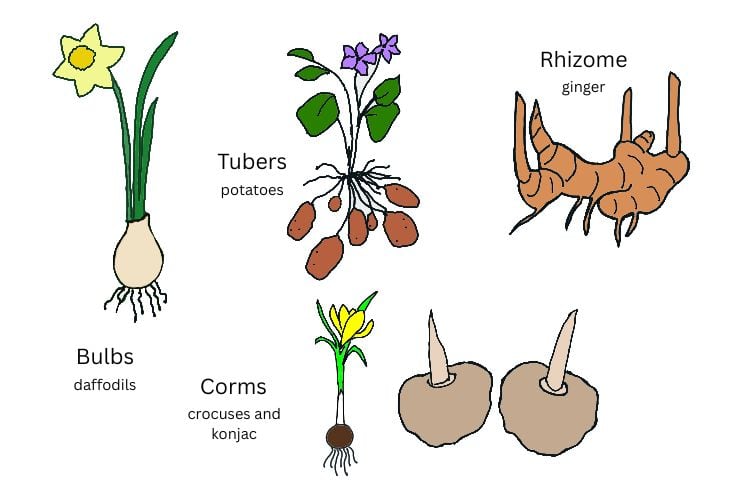
Corms are similar to bulbs and tubers, but with an important difference.
Bulbs grow in layers, like an onion. Roots grow from the bottom, and what will become the plant’s stems and leaves are inside the bulb. Tubers, like potatoes, form on the plant’s roots. Buds, the potatoes’ eyes, sprout from them. Pieces of potatoes with their eyes can be planted and will produce new potato plants.
These type of plants are called geophytes. They all store nutrients in their swollen underground stems. Another geophyte is rhizomes. Thick and root-like, they grow horizontally underground. Roots grow from the bottom and buds sprout from the top. Think ginger.
Finally, the corm. They kind of look like bulbs, but their interior is solid. Crocuses, taro, and, as you know, konjac, grow from corms.
In Japanese, the konjac plant is commonly called コンニャクイモ, konnyaku imo, literally “konnyaku potato.” Thus, the confusion with yams.
How Konnyaku Is Made
First of all, we need a konjac plant. After three years of growth, farmers harvest the corm. Traditionally, they clean, peel, and chop it, sometimes leaving bits of peel to add color to the finished konnyaku. The pieces are blended with water into a thick paste, which is then stirred in a pot over a low flame. When the texture becomes gluey, the cook adds a coagulant, like calcium hydroxide dissolved in water, and briskly stirs it in.
When it thickens, the gooey paste is poured into a tray, and the cook spreads a little more of the coagulant on top to give it a shiny surface. Just a little, as too much would make the finished product bitter. After 20 minutes, the konnyaku is firm enough to cut into blocks. These blocks are then simmered for 30-40 minutes to remove the bitterness and develop konnyaku’s soft, rubbery texture.
Konnyaku-making was revolutionized in the 18th century by a farmer named Nakajima Toemon. Instead of using the fresh corms, he sliced, dried, and ground them into flour. This flour had a long shelf life and could be mixed with water and coagulant to make konnyaku, greatly simplifying its production. For his contribution to society, he was made a Shinto deity and enshrined at the aptly named Konnyaku Shrine in Ibaraki Prefecture.
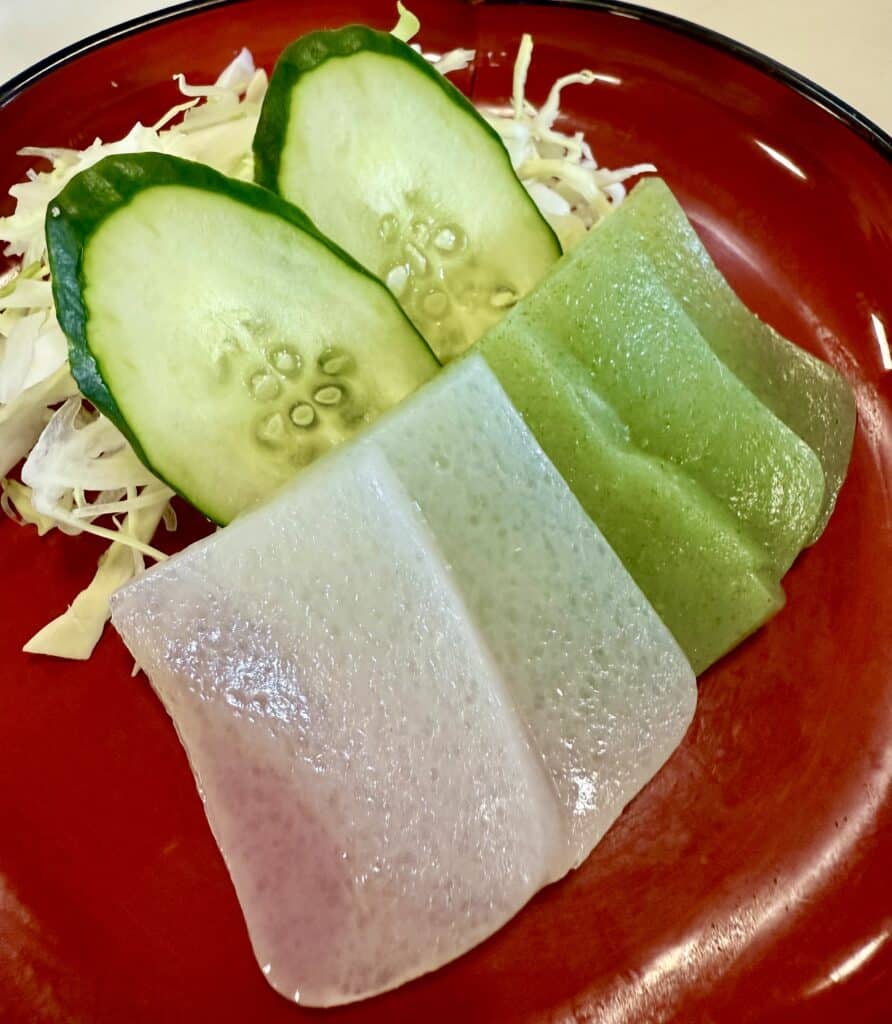
Today, konnyaku comes in many forms: blocks, chunks, thin round noodles called shirataki (white waterfall), and slices for konnyaku sashimi. Konnyaku made straight from the corm is grayish. Konnyaku made from konjac corm flour is white. Adding seaweed powder produces gray or speckled varieties, a discovery made in the early 20th century.
Konnyaku is essentially tasteless and retains its shape in hot liquids, so it’s a popular ingredient in oden, soups, and hot pots. Curiously, it softens when cooled. Its texture has long been compared to fugu sashimi (raw blowfish), which once made it a popular substitute for those living far from the coast. Aside from sashimi, cold konnyaku is also used to make a delicious sweet, konnyaku jelly.

Perhaps the most unusual use of konnyaku came towards the end of World War II. It was gathered from across the nation to be used as glue to hold together layers of washi paper in the production of balloon bombs. Fortunately, when the war ended, konnyaku returned to its peaceful role in the Japanese diet.
Or maybe that isn’t its most unusual use. Recently, a medical company in Saitama Prefecture started producing replica organs for medical students made from konnyaku. For a fraction of the price of other organs, students can practice delicate operations and suturing on lifelike organs made of konnyaku.
A Little History
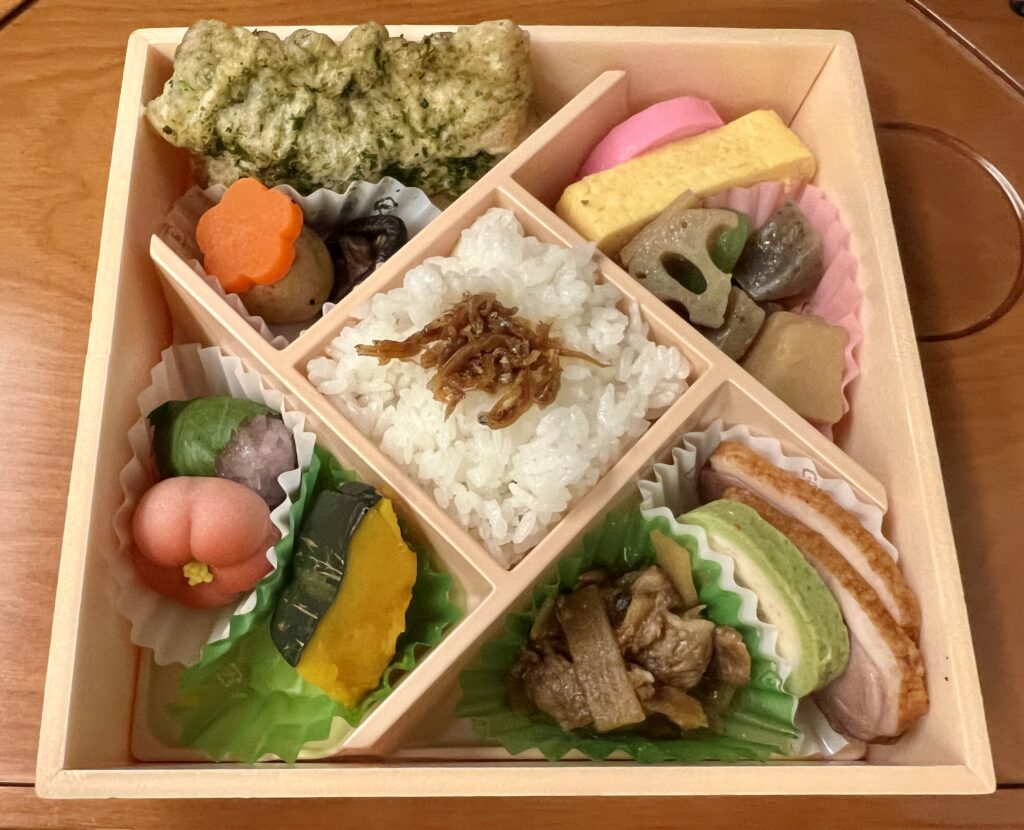
Edible konjac is thought to have been brought to Japan from China around the 6th century, likely by Buddhist monks who consumed it as a medicine and a fasting food. Konnyaku eventually became an important part of shōjin-ryōri, the vegetarian cuisine of Buddhist temples.
From the temples, by and by, konnyaku moved into the kitchens of the elite. By the 16th century, it was familiar enough that Oda Nobunaga, Japan’s first great unifier, could reinvent it as he wished. Legend tells us that Nobunaga, known for his love of spectacle, had konnyaku dyed a vivid red to impress guests at his banquets. Whether this is true or not, red konnyaku remains a specialty of Omihachiman City in Shiga Prefecture, once home to Nobunaga’s magnificent Azuchi castle.
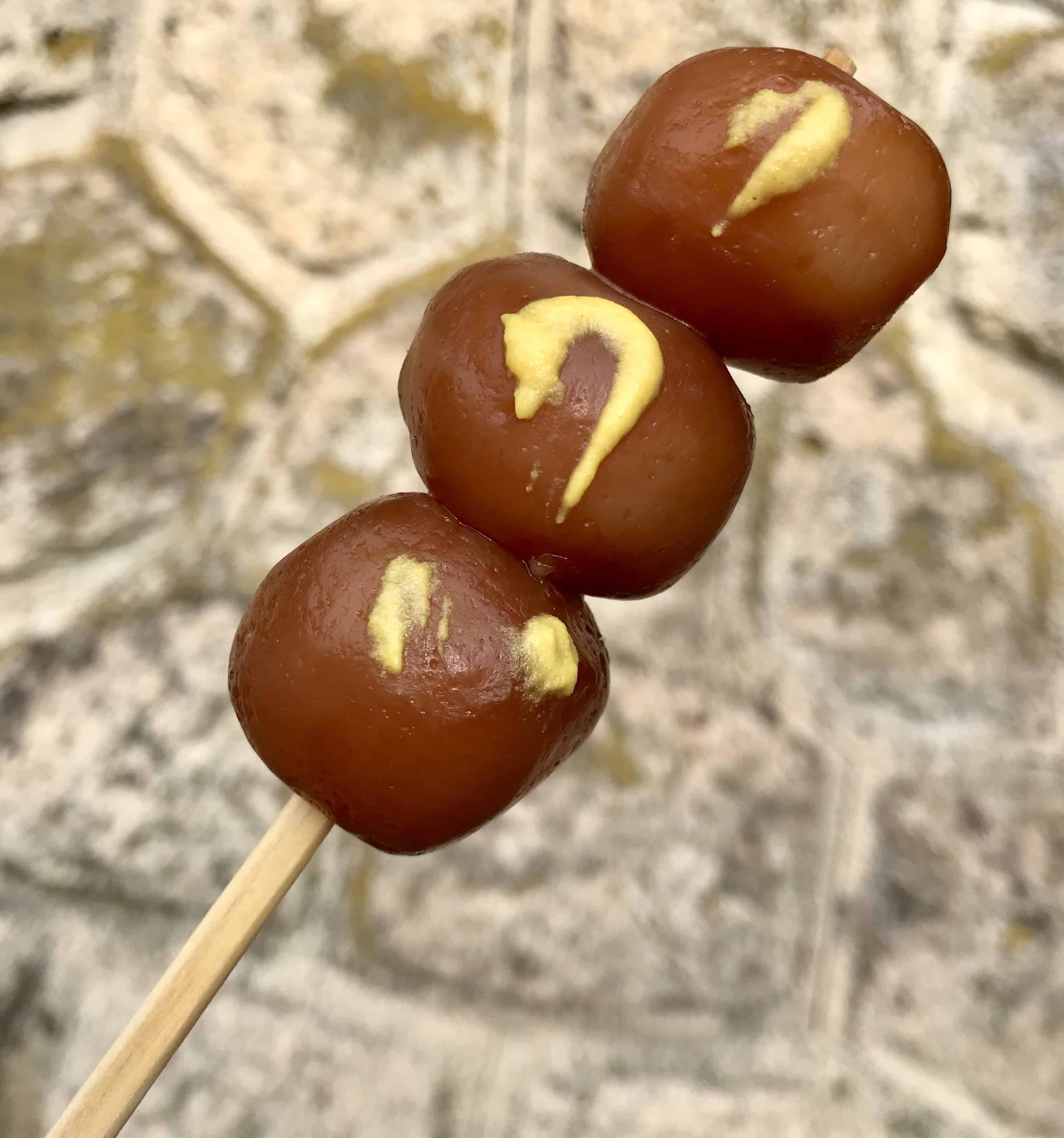
During the Edo period (1603–1867), konnyaku spread from the kitchens of the elites and monks to those of the common people. Producers standardized its production and built distribution networks, making konnyaku a staple of the masses. It appeared in street stalls and food shops, in simmered dishes like oden and on skewers as tama-konnyaku.
The Broom of the Stomach
Japanese food culture has unique aspects, such as its emphasis on eating a wide variety of foods each day and including foods rich in dietary fiber specifically for cleansing, of which konnyaku is prime.
Known for centuries as the “broom for the stomach,” konnyaku sweeps waste and toxins from the body and supports digestion. Its main component, glucomannan, a soluble fiber similar to what is found in oats and psyllium, binds to impurities, restores gut balance, and stimulates intestinal activity. Glucomannan absorbs water, expanding in the stomach to create a lasting feeling of fullness, making konnyaku a favorite of dieters.
Gut bacteria break down konnyaku’s dietary fiber, glucomannan, into oligosaccharides that act as prebiotics, supporting a healthy microbiome, stimulating mucus production, and strengthening the intestinal lining. Consumption of konnyaku has been shown to reduce blood lipids and improve immune function. Research is ongoing into the use of konnyaku as a treatment for obesity.
Nutrition
Beyond konnyaku’s digestive benefits, its fiber blocks cholesterol absorption in the small intestine and slows glucose uptake, helping regulate blood sugar levels. Regular consumption has also been shown to reduce LDL cholesterol.
Nutrition facts: One hundred grams of konnyaku contains 6 calories, 43 mg of calcium, 33 mg of potassium, 0.1 gram of protein, 0.1 gram of fat, and 2.6 grams of carbohydrates, most of which is pure fiber. It contains no sugar, cholesterol, or gluten. It’s 97% water.
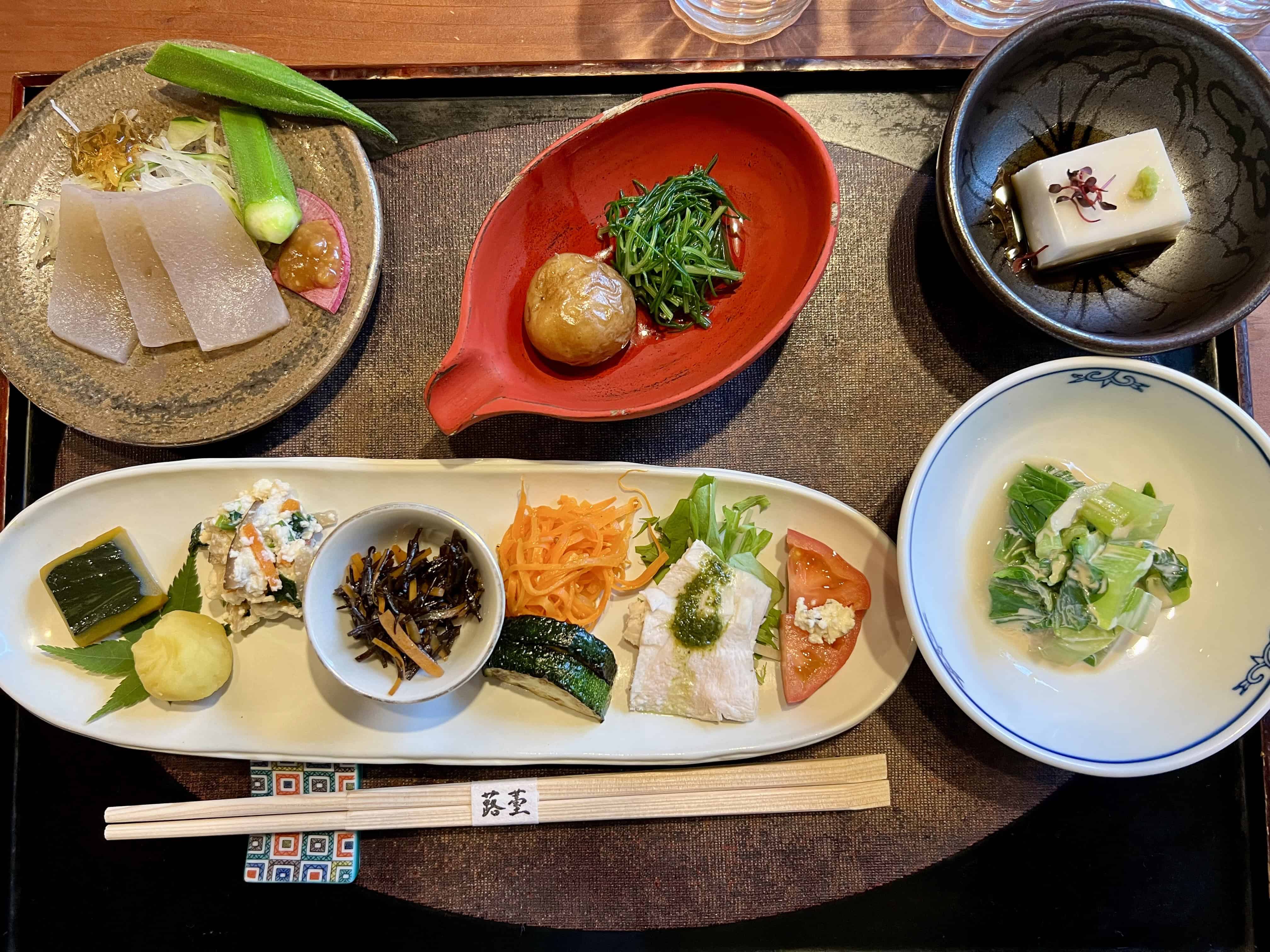
From simmering hot pots in winter to chilled sashimi-style slices in summer, konnyaku’s versatility makes it suitable for countless dishes—a worthy staple of the Japanese diet. Next time you encounter konnyaku, I hope you will look past its oddity and appreciate it for the dietary marvel it is.
Illustration ©Diane Tincher
If you have questions about Japan or suggestions for articles, please add them in the comments. For more photos and information on Japan, follow me on instagram at: https://www.instagram.com/more_than_tokyo/