

A tragic woman and her cat, now Shinto deities
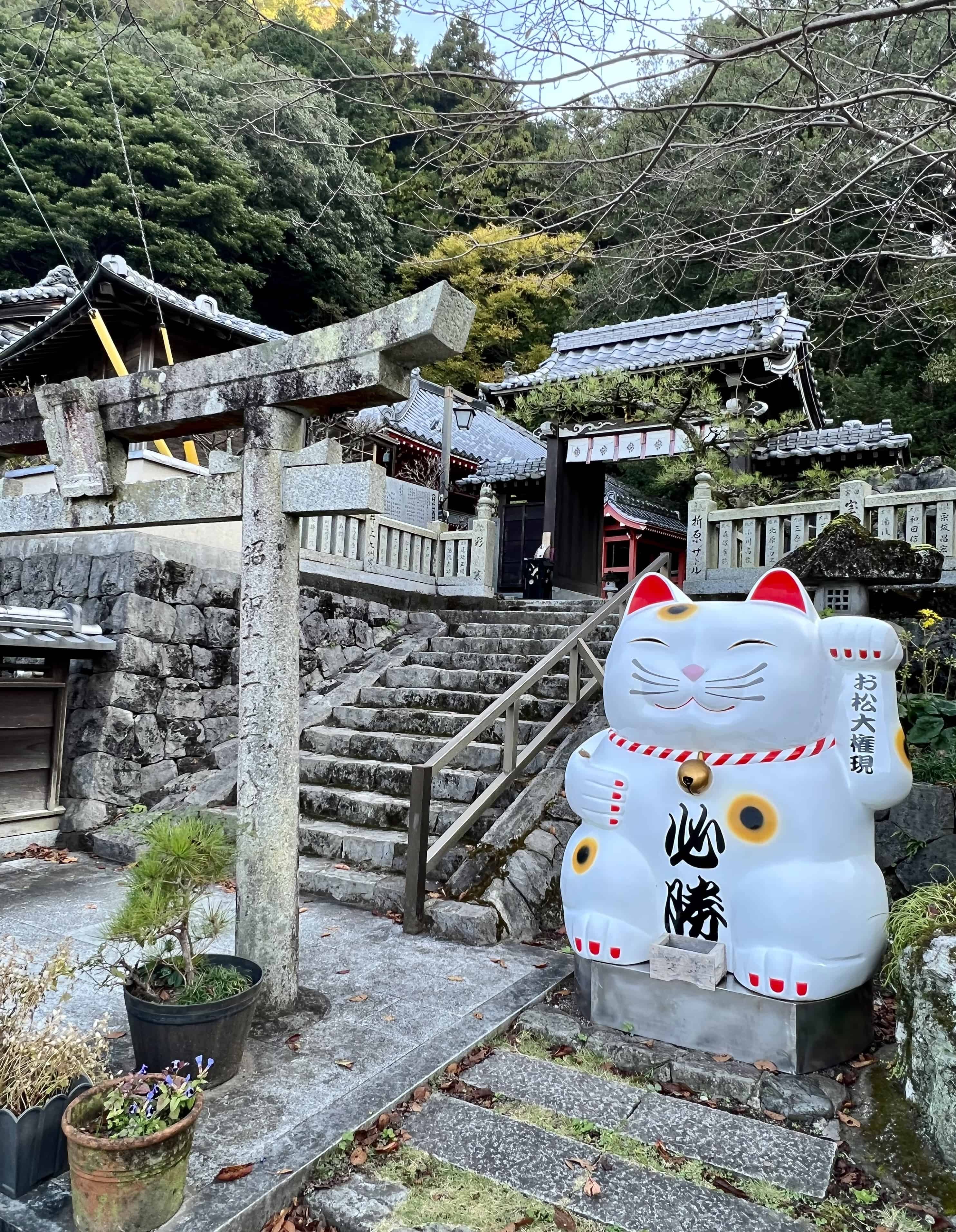
Down a narrow road beside the Naka River in rural Tokushima Prefecture, a two-meter-tall Maneki Neko cat statue beckons all passersby to visit the Omatsu Daigongen Shrine, お松大権現.
I was one of those beckoned.
I followed cat footprints up the steps through the torii entrance gate and was overwhelmed by the sheer number of cat statues.
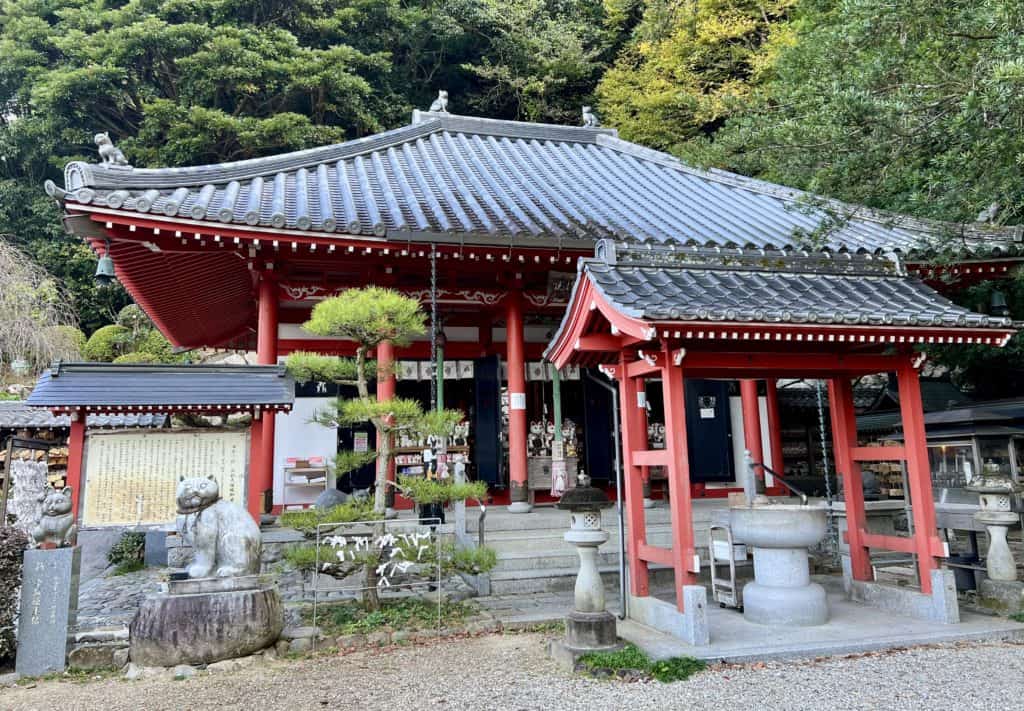
Cats were everywhere. Instead of traditional komainu lion-dogs guarding the shrine, there were cats. Instead of shachihoko fish-tigers guarding the roof against fire, there were cats.
Why all the cats?
To answer that question, we turn to a story that takes place during the iron rule of the Tokugawa shoguns during the Edo era (1603-1867).
The tragic tale of Omatsu
In the late 17th century, the village of Kamo in what is now Tokushima Prefecture was struggling. Years of bad harvests had taken their toll on the people, and their tax burden had become unbearable.
The village headman, a kind-hearted man named Sobee, wanted to help his people. He borrowed money from a wealthy neighbor, Nogami. As collateral, Nogami was granted use of several of Sobee’s rice paddies.
All seemed well. The money helped the struggling villagers, and Sobee was recouping what he needed to repay his debt.
As the agreed-upon date to repay the loan drew near, Sobee noticed Nogami along the road by his fields. He grabbed the cash and brought it out to Nogami, who assured him he would send him a receipt when he got home.
Unfortunately, within days, Sobee fell ill and passed away. His lovely wife, Omatsu, was left to tend the fields alone.
Omatsu visited Nogami and asked him for a certificate of repayment for the loan. Nogami insisted Sobee had not paid. Omatsu knew her husband had, and she repeatedly asked Nogami for the receipt.
Nogami, angered by her persistence, shouted that he had never received the money. He sent his men to collect on the collateral by taking Omatsu’s remaining rice fields.
Now desperate, Omatsu appealed to the local magistrate. He agreed to help her — that is, as long as she would be his lover.
Omatsu had no idea that the magistrate was receiving money on the sly from Nogami. When she turned down his advances, he dismissed her, refusing to honor her claim.
Desperation
Then Omatsu did something very few in the Edo era dared do. She risked her life to appeal to higher authority.
On a cold winter day in 1686, Tsunanori, the lord of Awa Domain, was passing through Omatsu’s town. His procession of samurai vassals was long and intimidating. In the center was Tsunanori’s palanquin.
Omatsu held in her hand a petition. Suddenly, the vassals saw what seemed to be a white shadow break through their ranks near the palanquin. Confusion broke out with yells and cries. Samurai unsheathed their swords.
Then a quiet voice stilled them, “Stop.”
It was the voice of Tsunanori as he peeked out of his palanquin. He saw the lovely Omatsu, dressed all in white, bowed to the ground in humility.
Tsunanori allowed Omatsu to approach. She handed him the letter she had written, her heartfelt, desperate appeal for truth and justice. The daimyo gazed upon her face, pitiful, yet full of such mysterious beauty that he couldn’t help but lose his breath.
When he regained his composure, Tsunanori read her appeal.
He announced, “I will consider this,” and Omatsu’s beautiful eyes filled with tears.
The procession continued on. Omatsu’s appeal had taken but an instant.
The Tokugawa shogunate maintained absolute control. Nearly all crimes were punishable by death. One such capital offense was appealing directly to any daimyo or the shogun.
No matter how worthy the cause, simply appealing to a daimyo was punishable by death.
Thus, Omatsu was taken to the jail behind Tokushima castle to await her execution.
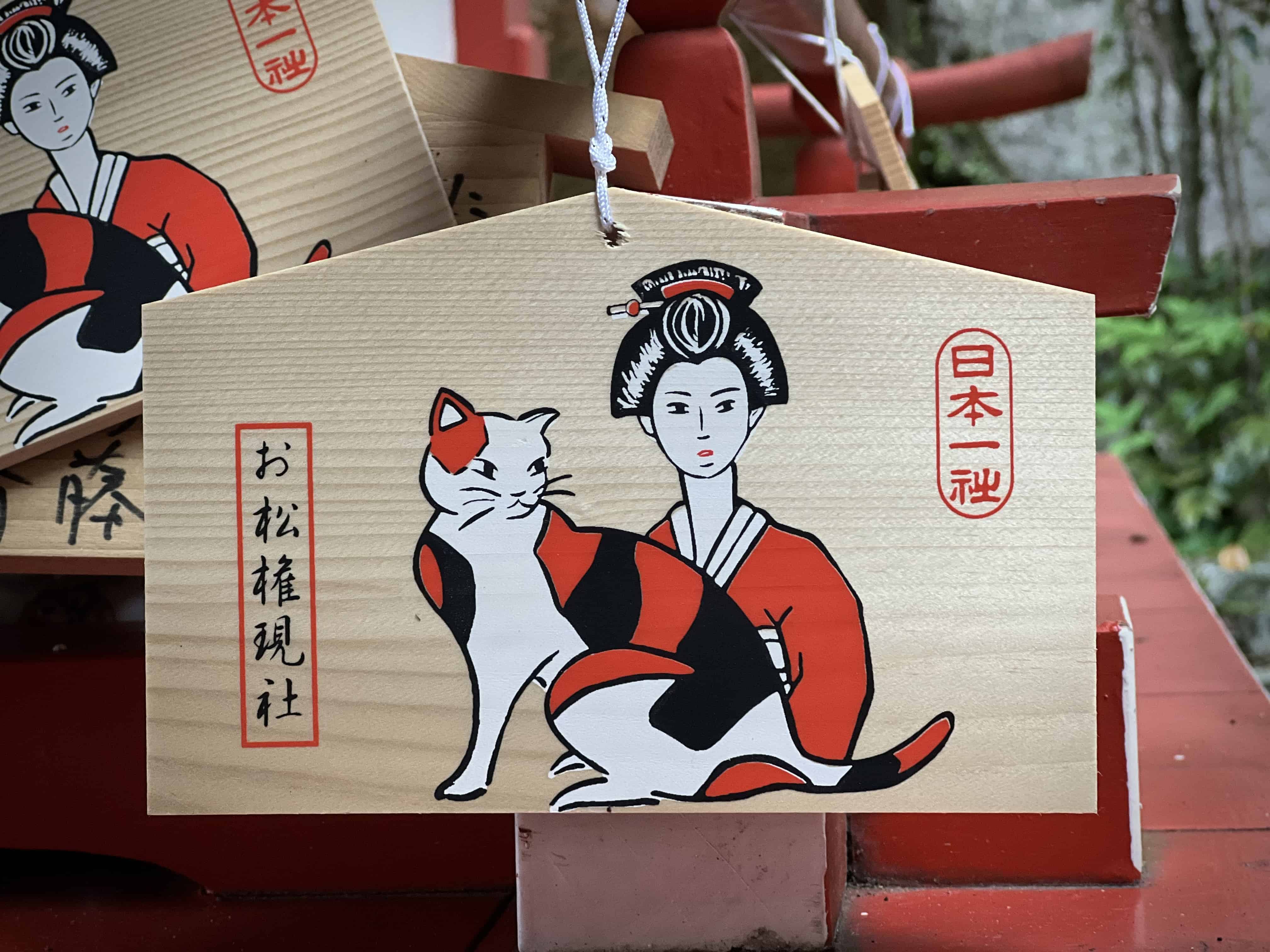
The execution was to be carried out three months hence. Forlorn and alone, the lovely Omatsu had only her beloved cat to comfort her. The sympathetic cat never left her side, patiently listening to her troubles and tears. Only this calico cat knew the true depth of the tragedy that befell her beloved Omatsu.
On the day appointed, Omatsu was taken to a dry riverbed. She was dressed in white, her long hair hanging free. A sudden breeze blew Omatsu’s robes and lifted her hair, causing it to reflect like an eerie halo in the evening light. The men preparing her execution cried, “She is a Bodhisattva!” How could they dare to kill such a one?
But if they did not do their job, they themselves would be killed.
As the executioner raised his sword, all present joined the weeping Omatsu in praying to Amida Nyorai for salvation, Namu Amida Butsu, “I take refuge in Amida Buddha.” From their hiding places in the woods, villagers joined in, bidding a sad farewell to the tragic Omatsu.
In mercy, the executioner’s sword also fell upon the neck of Omatsu’s calico cat, allowing her to remain together with her beloved owner in the afterlife.
Soon, the villagers began to quietly honor Omatsu as a deity for those seeking justice. They told the story of her courage to their children and grandchildren, keeping her memory alive yet secret from the authorities who would punish them for honoring one who was a criminal in their eyes.
The vengeful cat
Not long after Omatsu’s execution, in the pitch black of night, the corrupt magistrate who had refused Omatsu was awakened by what sounded like a cat. Looking all around, he saw nothing and heard only the faint sound of running water. Yet he was sure he had heard the scream of an angry cat.
Then, another cry reached his ears. This one seemed to be a woman’s voice. He turned to see what he thought was a maidservant lighting a lantern. When the light fell upon her face, he saw it was that of a terrible cat.
He ran to fetch his guards, but when they inspected his room, only a lantern quietly burned.
That fateful night marked the end of the magistrate. He soon lost his job, fell ill, and died.
Next, the ghostly cat sought out Nogami, and mysterious deaths followed. His family line was soon extinguished.
The locals saw these deaths as the result of a curse put on those men by Omatsu and her feline friend. To appease the kaibyō, 怪猫, “monster cat,” they built a shrine to honor Omatsu and her loyal companion.
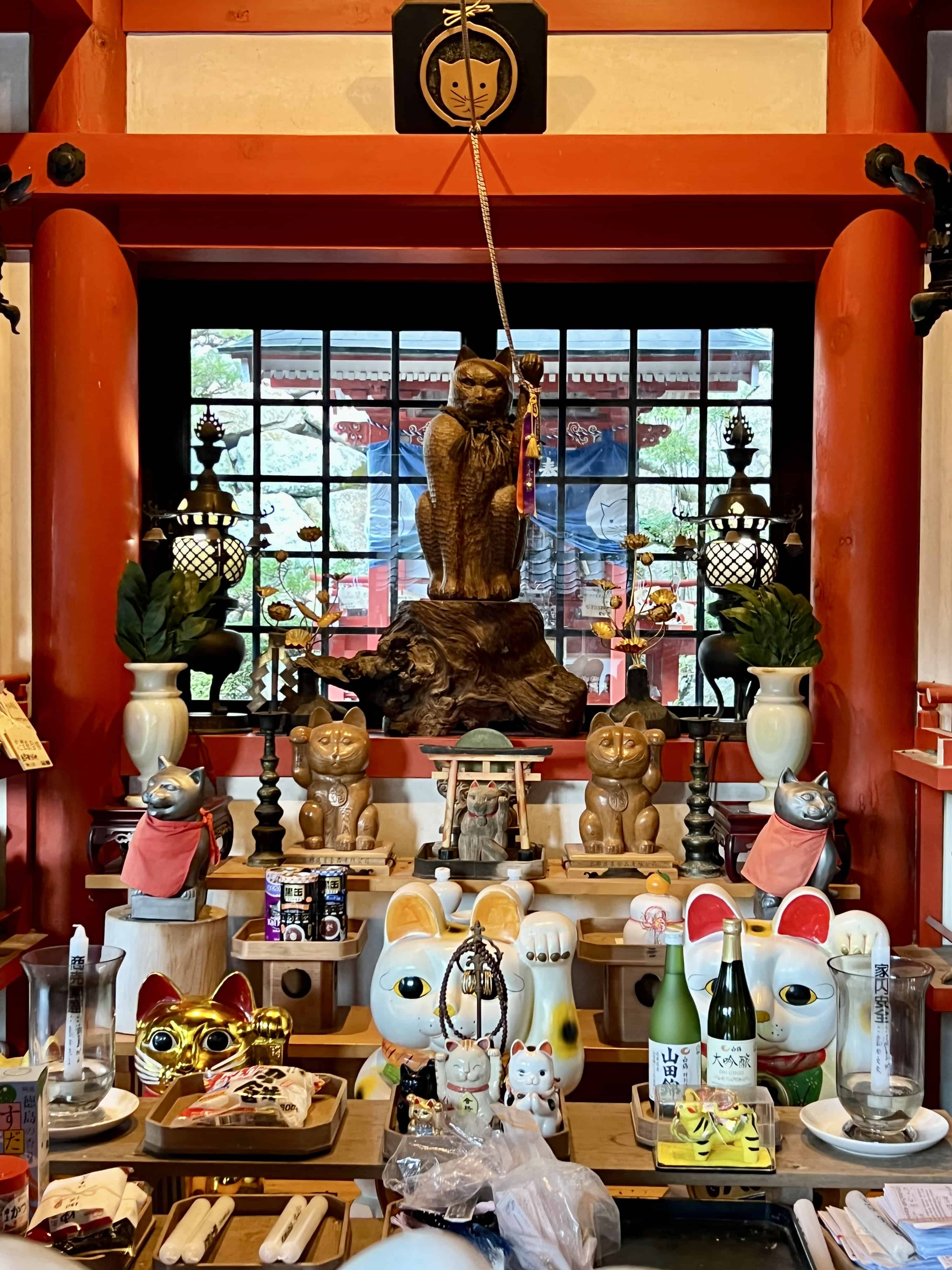
Omatsu was deified as the god of victorious triumph and her cat, her avenger. The Omatsu Daigongen shrine became a mecca for those praying for the tenacity to triumph, be it in business, competitions, or in passing entrance examinations.
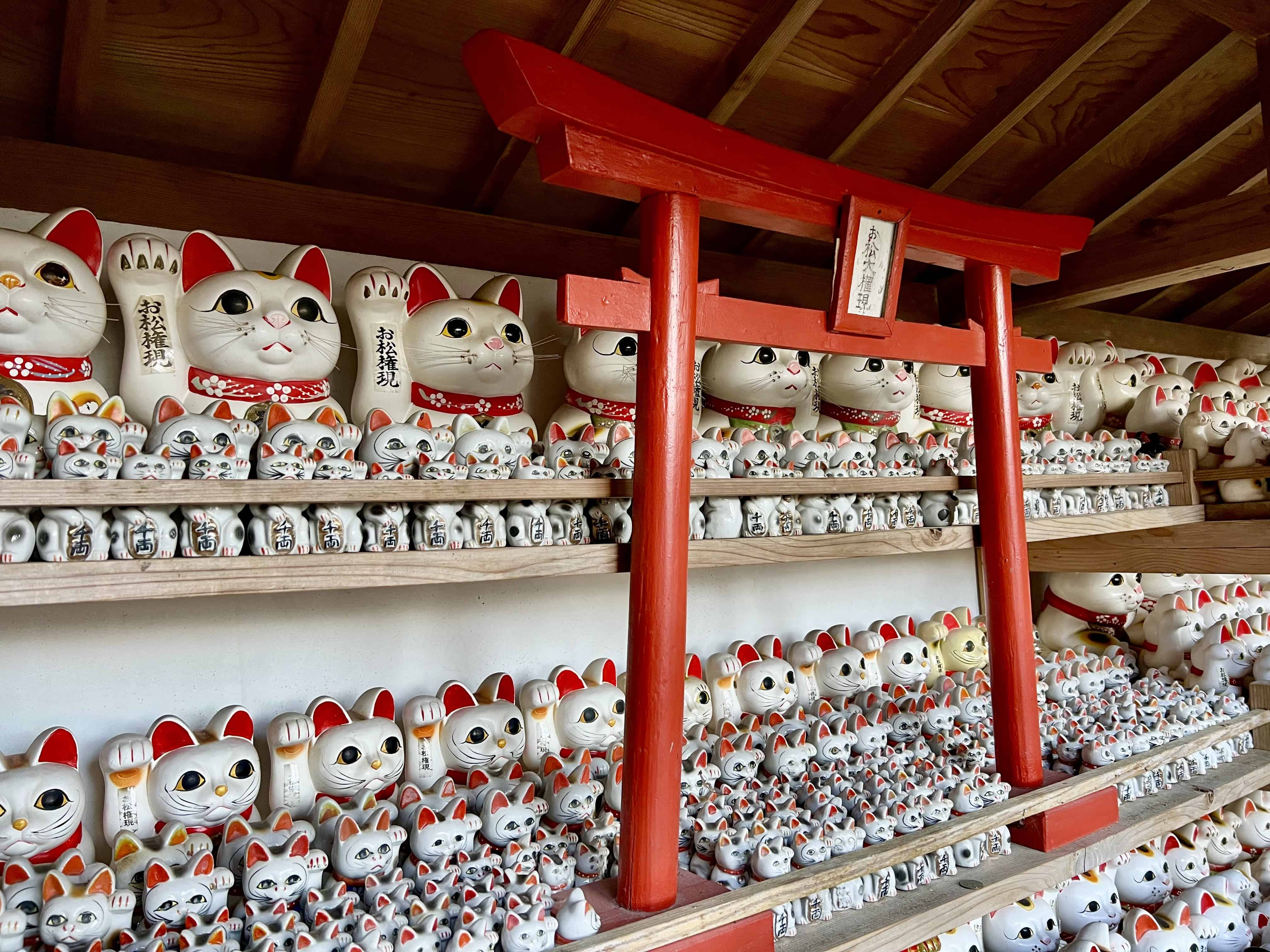
A custom developed where people who visited the shrine to pray for success would bring a cat statue back home with them. When their prayer was answered, they returned the cat and donated another.
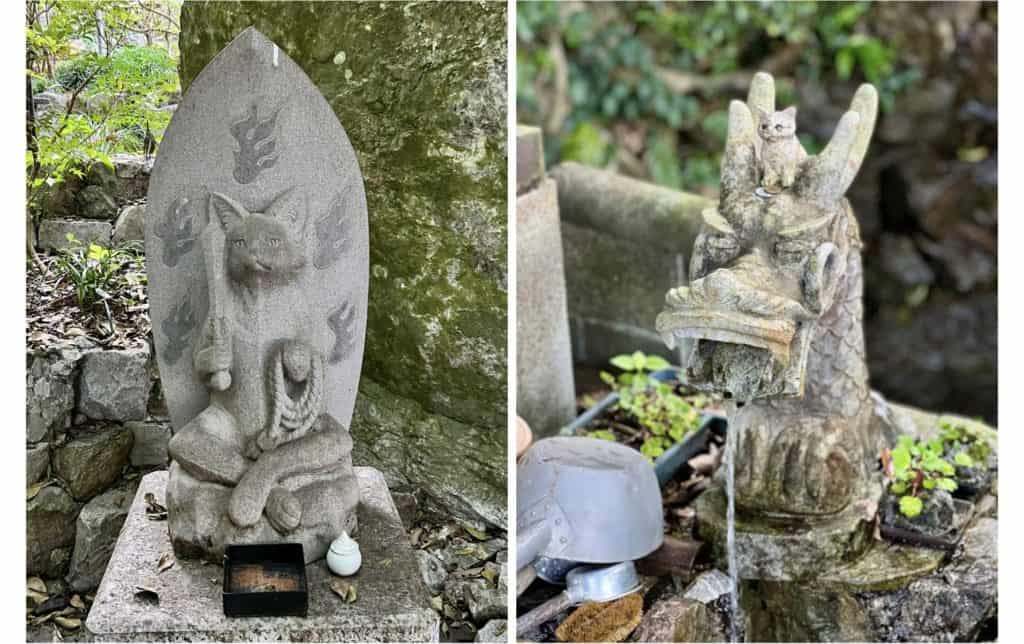
After decades of this, there are more than 10,000 cat statues on the grounds of the Omatsu Daigongen Shrine. There are fanciful statues of Buddhist deities merged into cat bodies, beckoning Maneki Neko statues, and several traditional Buddhist statues.
Sasuri Neko for healing
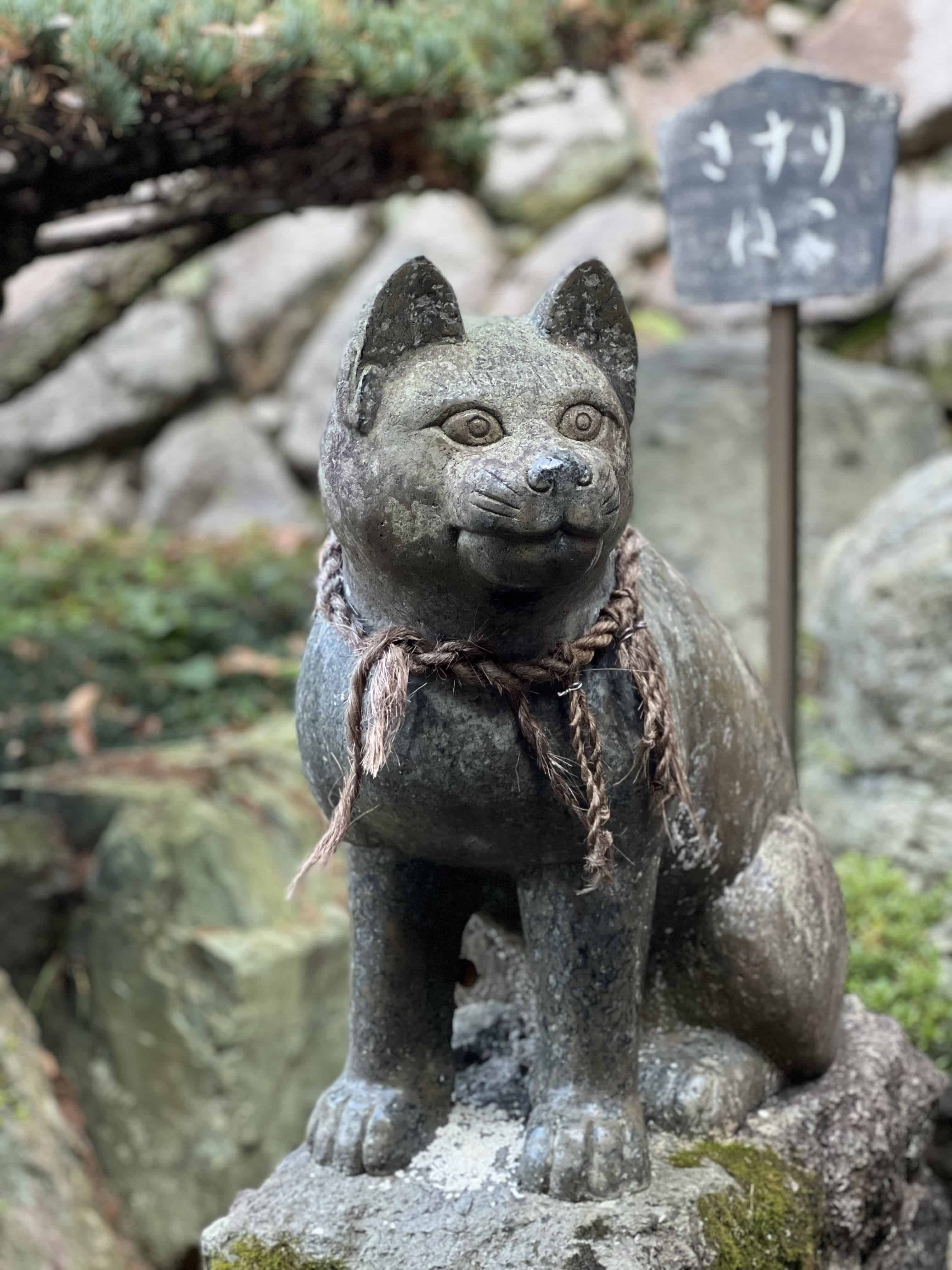
In front of the main shrine building is a special cat statue called the Sasuri Neko. Visitors with ailments rub the cat’s body to receive healing. For sore knees, they rub the cat’s tiny knees. For headaches, the cat’s head.
Beside the shrine, a trail leads through another torii gate, between ancient, sacred inumaki yew plum pine trees, past a small pool and waterfall, and further up stone steps. All around this path and the entire shrine grounds are mind-boggling numbers of cat statues. A separate building dedicated solely to Maneki Neko statues is filled with thousands of beckoning cats.
After about 50 minutes of wandering through this wonderland, I was ready to continue my hike along the Henro, the 88 Temple Pilgrimage of Shikoku.
No matter how you feel about cats, I’m sure you will agree that this is an extraordinary place. If you ever visit Tokushima, please allow yourself to be beckoned into the shrine of Omasu and her beloved Neko Kami-San, 猫神さん, Cat God.
References:
Japanese Lucky Charms, Omatsu Daigongen Shrine
If you have questions about Japan or suggestions for articles, please add them in the comments. For more photos and information on Japan, follow me on instagram at: https://www.instagram.com/more_than_tokyo/


