

• Home
  • About
  • Discover
    • History
    • Culture
    • Nature
    • Food
    • Living in Japan
    • Destinations
    • Language
    • Tips
  • Interview
  • Recommended Books
Exploring the Wonders of Rural Japan
Living in Japan

Living in Japan—The Unexpected Path that Brought Me Here

Small decisions can have lifelong consequences
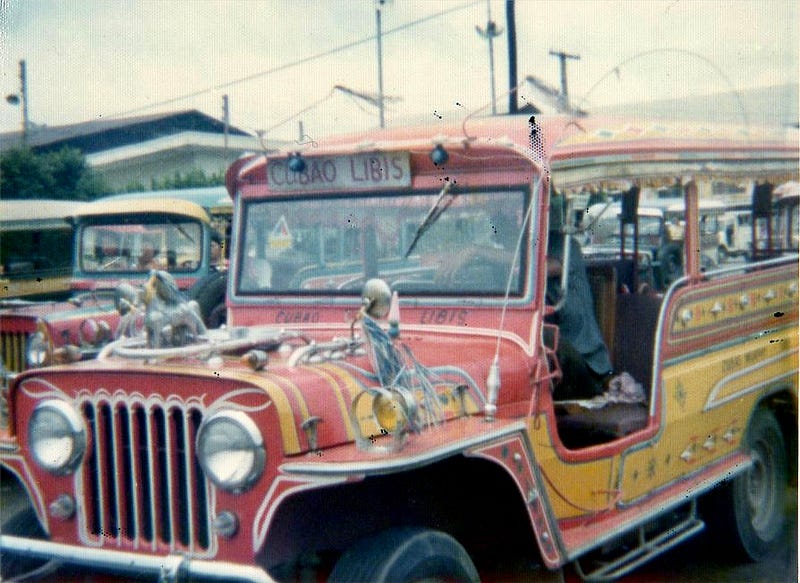
Long colorfully painted jeep decorated with tassels used as a passenger vehicle in the Philippines.
Jeepney, local passenger vehicle. 1976, Metro-Manila. (©Diane Tincher)

Manila, that teeming mass of happy, colorful, friendly people, was my first destination upon moving away from the US way back in 1976. In my youthful idealism and naivety, I had set off to “help people.”

I loved my years in Manila. The bustling traffic seemed to have no rhyme nor reason — or any consideration for traffic rules or safety. The colorful, open-backed jeepneys. The overcrowded buses, some wooden-framed built on the chassis of surplus WWII-era trucks. And the loud motorcycles with sidecars that seemed to be held together by nothing more than twine and a prayer.

This was where I would live out my days, I imagined, working in small mission schools. I could influence children for the better. I could make a small difference in the world.

I met a man I loved. I gave birth to two children.

It was a happy life, for the most part — even in a country under the iron rule of the notorious Ferdinand Marcos.

But then everything changed.

Revolution

The controversy surrounding the results of the February 1986 presidential election grew, and turmoil spread throughout the country. Although Ferdinand Marcos claimed victory, the election was plagued by accusations of vote rigging, and the results were contested. His opponent, Corazon Aquino, was wildly popular among the common people. She was the widow of one of Marcos’s staunchest critics, Benigno S. Aquino, Jr., who had been assassinated on the tarmac of Manila International Airport in 1983.

Marcos and his family soon fled to Hawaii, having been advised to leave the country by one of President Reagan’s close associates, the then General Chairman of the Republican Party, Senator Paul Laxalt. They left from US Clark Air Base, north of Manila, taking with them crates and crates of cash, gold, jewels, and other valuables — so much that the Guinness Book of World Records awarded the Marcoses the nefarious award of the “Greatest robbery of a Government.”
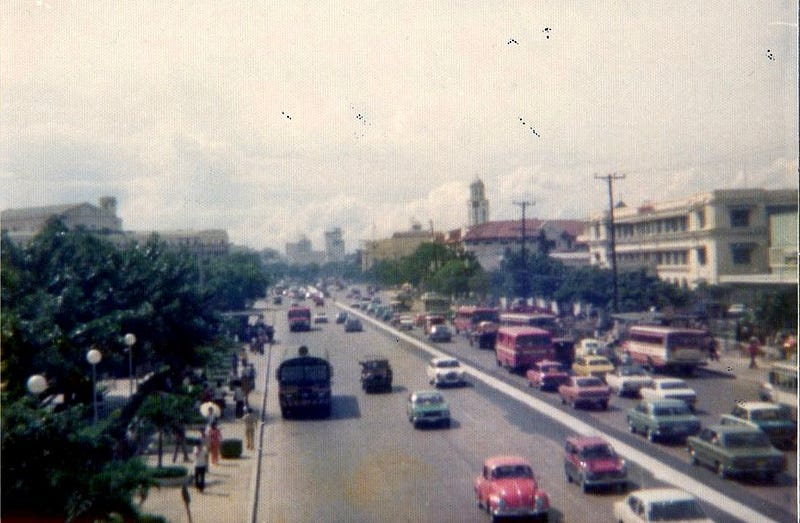
Wide Manila street with traffic.
EDSA, 1976. (©Diane Tincher)

During this time, Manila’s main thoroughfare, EDSA, the commonly used name for Epifanio de Los Santos Avenue, was the stage for the public to air their grievances against the Marcoses’ oppressive regime. This highway, filled with over a million protestors, was just blocks from our house.

That in itself was not troubling. The protests were largely peaceful. Yet, a bomb had gone off in the shopping area we frequented. Then, one morning just after dawn, outside our front gate, we discovered the body of an unfortunate man who had had his throat cut.

Helping a friend

Meanwhile, my dearest friend who was suffering from hyperemesis gravidarum, a severe form of morning sickness, needed to move to Tokyo. She asked for my help.

Without giving it much thought, I agreed. Who wouldn’t want to help their best friend in such circumstances?

So my husband, our two young children, and I traveled with her and her brood of small children, arriving in Tokyo in 1987.

Immediate illiteracy
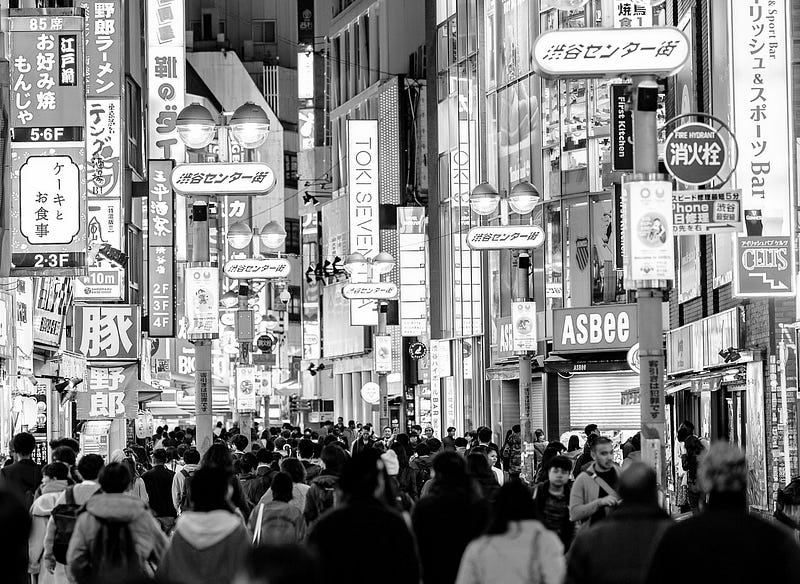
Japan — I could read no Japanese signs on this bustling Tokyo street.
Tokyo in the 21st century. (Photo by Abdulla Binmassam, Pixabay. No attribution required. Edited by Diane Tincher.)

To say I was ill-prepared for such a move would be an understatement. I knew three Japanese words — dōmo, dōzo, and ohaiyō, “thanks,” “go ahead,” and “good morning.”

I landed in a country that seemed to be the polar opposite of the cheerful, colorful, and friendly Philippines.

There were no smiling greetings on the streets or people wearing bright, flamboyant clothing.

There were no colorful Jeepneys — in fact, I saw no colored vehicles at all. Black or white cars cruised through clean streets with narrow lanes. There were no honking horns nor bus ticket punchers calling destinations. The city was eerily bereft of sound.

Trains slid in and out of stations filled with busy, austere, black-suited men. Sardining into one of the cars, I noticed no seats offered to women, whether pregnant, babe in arms, or even to the elderly.

On the sidewalks of the city, women wearing bland conservative clothing carried shopping bags, shuffling a few steps behind their imperious husbands until rushing ahead to open doors for them.

What rude men, I couldn’t help but think, comparing them to the Western gentlemen I had become accustomed to in the first 30 years of life.

Adding to my sense of alienation, I was instantly illiterate.

Due to English being used in all schools with local dialects spoken at home, the majority of the Philippine population were bilingual. Not so in Japan, where the highly nuanced, contextual, and culturally enmeshed Japanese language is so difficult, it takes nine years of education just to be able to read the newspaper. Teaching English in schools was minimal, at best.

No one spoke to us in English. I could read no signs. I could understand nothing at all.

Time passes
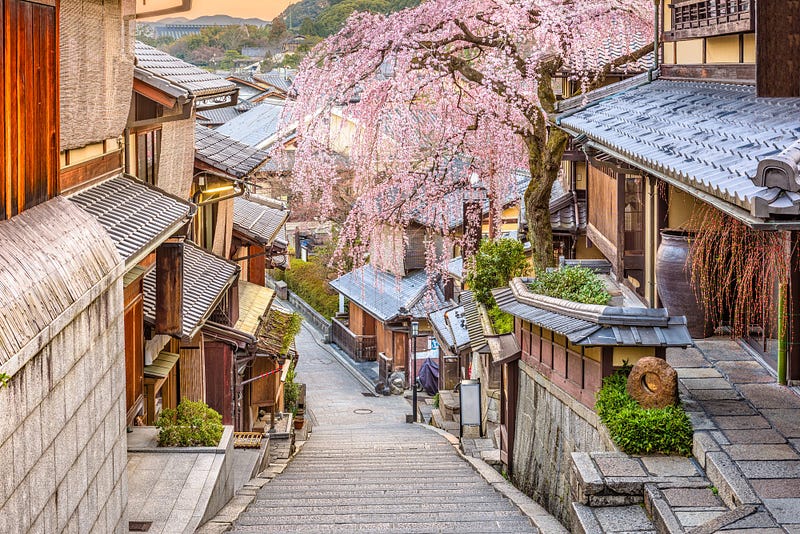
Classic Japan scene — Cherry tree in bloom overhanging a narrow walkway sided by old wooden buildings.
Sannenzaka, Kyoto. (Depositphotos)

One year added to another. I focused on raising my many children and educating them in English to complement their education in Japanese public schools.

My family moved away from the big city of Tokyo to Kagoshima, a city in southern Kyushu, surrounded by idyllic natural beauty.

As the years passed, I slowly learned more about this unusual land with its long history, its many traditions, and its unique customs. As with a person we are just getting to know, understanding them is the first step to love. The more I learned about Japan, the more my love and appreciation for this extraordinary land grew.

I came to appreciate the philosophies of Shinto and Buddhism, and the adamant beliefs of my younger years were left behind. I woke up to the reality that volunteer work would not pay the bills, and undertook work as a private English teacher and editor.

When most of my children left home, I started work as a tour guide, and that was a turning point in my life.

Seeing Japan once again from the viewpoint of an outsider — vicariously through my foreign guests — deepened my interest in Japan’s fascinating past, folklore, and culture. I wanted to learn as much as I could about this country that had become my home, and I undertook years of study which continue to this day.

Living in Japan today
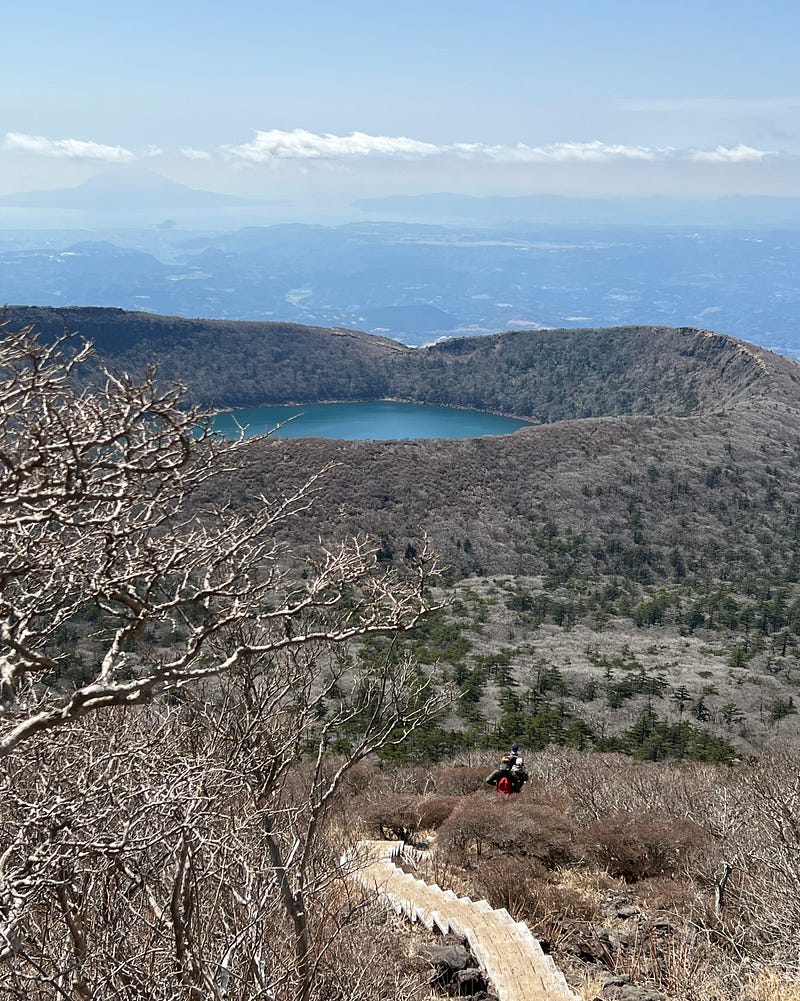
Living in Japan gives me many opportunities to hike in the beautiful mountains.
Looking south from Kirishima towards Kagoshima City and the Sakurajima volcano. (©Diane Tincher)

These days, I do my best to share my love of Japan, its history, its hidden treasures, and its many stories with curious people through my writings, tours, and presentations.

I hike along ancient highways and mountain trails, and even in my beautiful rural neighborhood, and I travel to explore new wonders in other prefectures.

Thirty-five years after first setting foot in this country, I have become an old woman. Reflecting on that seemingly insignificant decision in 1987 to help a friend, I now know it was momentous, hugely affecting my life and that of my eight children.

I will never know what would have happened had I continued my life in Manila, but I am happy for the life I have in this beautiful, safe, and clean country of Japan.


If you have questions about Japan or suggestions for articles, please add them in the comments. For more photos and information on Japan, follow me on instagram at: https://www.instagram.com/more_than_tokyo/

Japan Japanese Japanese culture Life in Japan Living in Japan Manila Marcos Nature
Share
2 Comments
  1. Erinn

    January 8, 2023 9:27 pm

    That was truly fascinating to read, and so natuskashii too.

    Reply
    1. Diane Tincher

      January 9, 2023 6:07 pm

      I’m glad it brought back similar good memories for you, Erinn!

      Reply
Leave a Reply Cancel reply

Your email address will not be published. Required fields are marked *

This site uses Akismet to reduce spam. Learn how your comment data is processed.

Previous Post

Daruma Dolls for Setting and Achieving Goals—A Japanese Twist on New Year’s Resolutions

Next Post

Japanese New Year — Gods, Symbolic Foods, and TV Extravaganzas

If you enjoy my work and would like to help me continue creating, consider supporting me.

Thank you!
PayPal - The safer, easier way to pay online!
Newsletter

Subscribe

Enter your email for notifications of our latest posts

Tags
architecture Buddhism Christianity Edo Era elderly festivals folklore Food Ghosts gratitude Haunting Hiking history holidays honesty Japan Japanese Japanese cuisine Japanese culture Japanese Customs Japanese Food Japanese History Japanese Language Japanese words that English needs Japan Tips Japan travel Japan Travel Tips Jizō Kagoshima Kōyō Living in Japan longevity Manners Nature New Year Ninja Samurai Shinto shogun Shrine Tips Trade Travel volcano Washoku
Featured Posts
History Religion

The Shimabara Rebellion—The Last Stand of Japan’s Christians

July 8, 2026
History

The Okamoto Daihachi Affair—The Scandal That Turned the Tide Against Christianity in Japan

July 6, 2026
History

The 47 Ronin—Disgrace, Revenge, and Death

June 23, 2026
Destinations Folklore Ghosts

Omatsu Daigongen—The Amazing Cat Temple of Shikoku

June 1, 2026
History

Oura Kei—Unstoppable Pioneering Tea Merchant

January 19, 2026
Most Popular

Shinto — The Peaceful Spiritual Heart of Japan

Shinto gate Lake Biwa

Komorebi—A Beautiful Japanese Word that English Needs

Nakasendo Way

Dondoyaki—Burning New Year’s Decorations to Send off the God of the New Year

Dondoyaki fire

The Jizo Statues of Nashi-no-Ki—1,000s of Unique Offerings of Thanks

Jizo statues at Nashi no Jizo, Sado.

Sugawara no Michizane —Japan’s Three Most Infamous Vengeful Ghosts, part 3

Sugawara Michizane
You might also like
Nakasendo Way
Nature Language

Komorebi—A Beautiful Japanese Word that English Needs

1 Min read
November 11, 2021
temple pagoda
Culture Living in Japan

Death in Japan

8 Mins read
March 22, 2022
Japanese traditional play
Language Culture History Living in Japan

Why is Learning Japanese So Hard?

6 Mins read
January 29, 2022
Exploring the wonders of rural Japan
Exploring the Wonders of Rural Japan
  • Home
  • About
  • Recommended Books
  • Interview
  • Privacy Policy
Exploring the Wonders of Rural Japan
  • Home
  • About
  • Discover
    • History
    • Culture
    • Nature
    • Food
    • Living in Japan
    • Destinations
    • Language
    • Tips
  • Interview
  • Recommended Books
We use cookies on our website to give you the most relevant experience by remembering your preferences and repeat visits. By clicking “Accept”, you consent to the use of ALL the cookies.
Do not sell my personal information.
Cookie SettingsAccept
Manage consent

Privacy Overview

This website uses cookies to improve your experience while you navigate through the website. Out of these, the cookies that are categorized as necessary are stored on your browser as they are essential for the working of basic functionalities of the website. We also use third-party cookies that help us analyze and understand how you use this website. These cookies will be stored in your browser only with your consent. You also have the option to opt-out of these cookies. But opting out of some of these cookies may affect your browsing experience.
Necessary
Always Enabled
Necessary cookies are absolutely essential for the website to function properly. These cookies ensure basic functionalities and security features of the website, anonymously.
CookieDurationDescription
cookielawinfo-checkbox-analytics11 monthsThis cookie is set by GDPR Cookie Consent plugin. The cookie is used to store the user consent for the cookies in the category "Analytics".
cookielawinfo-checkbox-functional11 monthsThe cookie is set by GDPR cookie consent to record the user consent for the cookies in the category "Functional".
cookielawinfo-checkbox-necessary11 monthsThis cookie is set by GDPR Cookie Consent plugin. The cookies is used to store the user consent for the cookies in the category "Necessary".
cookielawinfo-checkbox-others11 monthsThis cookie is set by GDPR Cookie Consent plugin. The cookie is used to store the user consent for the cookies in the category "Other.
cookielawinfo-checkbox-performance11 monthsThis cookie is set by GDPR Cookie Consent plugin. The cookie is used to store the user consent for the cookies in the category "Performance".
viewed_cookie_policy11 monthsThe cookie is set by the GDPR Cookie Consent plugin and is used to store whether or not user has consented to the use of cookies. It does not store any personal data.
Functional
Functional cookies help to perform certain functionalities like sharing the content of the website on social media platforms, collect feedbacks, and other third-party features.
Performance
Performance cookies are used to understand and analyze the key performance indexes of the website which helps in delivering a better user experience for the visitors.
Analytics
Analytical cookies are used to understand how visitors interact with the website. These cookies help provide information on metrics the number of visitors, bounce rate, traffic source, etc.
Advertisement
Advertisement cookies are used to provide visitors with relevant ads and marketing campaigns. These cookies track visitors across websites and collect information to provide customized ads.
Others
Other uncategorized cookies are those that are being analyzed and have not been classified into a category as yet.
SAVE & ACCEPT