

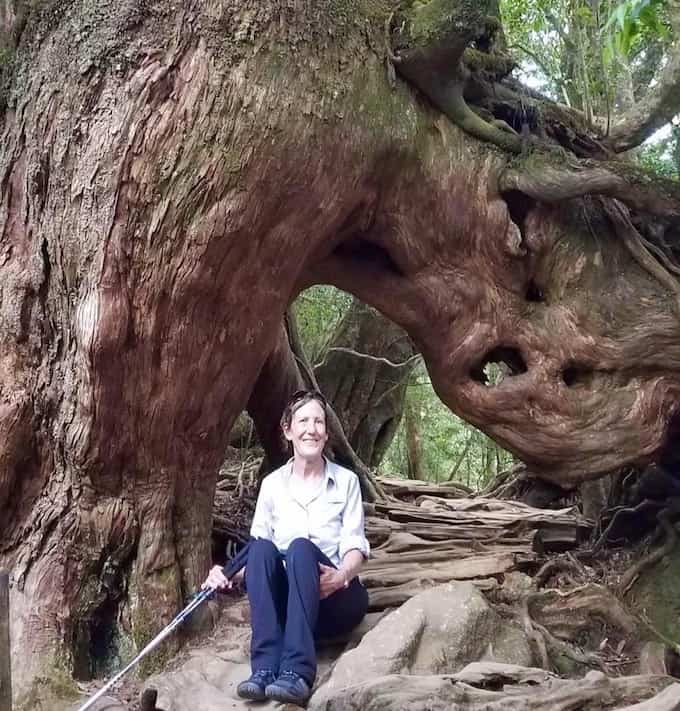
Interview with the Author, Diane Neill Tincher
Excerpt from Coffee Times, via Substack.
by Drashti, Feb 27, 2022
Diane Neill Tincher is a writer and longtime resident of Japan—a place which she refers to as “home.” She does a fantastic job writing about the deep-rooted nuances of Japanese culture, combining her love for storytelling with her deep knowledge of Japan. Read along to find out more about cultures, writing, and Diane’s pandemic adventure of writing, and a lot more.
Diane, you bring out different aspects and values of Japanese culture and present them lucidly through your writing. What was your biggest motivation to start writing?
I always enjoyed writing, although I rarely had the time as my main focus for many years was raising my children. Now that they are grown, I have had time to indulge in writing, travel, and more study.
I worked as a teacher for many years, and I love telling stories to entertain my students. Several years ago, I cut down on my teaching and started working as a freelance tour leader, taking foreign guests along some of the old Edo-era roads and pilgrimage trails. That work inspired me to dive into a deep study—in Japanese—of Japanese history, culture, geography, general knowledge, and, believe it or not, laws regarding tourism.
When the pandemic hit and Japan closed its borders, tours ceased, and I had no outlet for all the knowledge that I had been taking in. So I started writing.
It occurred to me that most people’s image of Japan is a far cry from what my life in Japan is like. I think most people tend to think of Tokyo or Kyoto when they think of Japan. Since Japan is so much more than just the big cities, my kids and I came up with the name More Than Tokyo, and my website was born.
My hope is to introduce people to the Japan that I know and love. Over 70% of Japan is forested mountains dotted with Shinto shrines, statues of guardian deities, and countless waterfalls. I want to share the wonders, the little-known yet amazing stories, and the beauty of my adopted country with my readers.
Intercultural competence is an important 21st-century global skill, and I deeply appreciate the spirit it holds. Why do you think it is important for people to learn about other cultures, and how do you think writing plays a role?
For people to have empathy, they first must see where the other person is coming from and get to know them a bit. Understanding cultural differences goes a long way in making that happen.
For example, what’s shocking or embarrassing in one culture is perfectly normal in another. As well, humor varies vastly between cultures. I have seen this over the years watching my children laugh at Japanese comedy shows while I scratch my head and wonder what in the world is so funny. Yet they can turn right around and be laughing away at American and British humor. I guess they are multicultural, multi-humorists.
I think it would be great if my stories could help people gain new and different perspectives and deepen their understanding of Japan and its wonderful culture and people.
Japanese people are self-effacing, ambiguous, and indirect. Having knowledge of Japan’s history and how its culture developed is essential to understanding the whys of Japanese people’s behavior and their language. “Reading the air,” as the Japanese say, and noting what was left unsaid, is a crucial communication skill in Japan.
What is your greatest source of learning Japanese culture?
My greatest source of learning Japanese culture has been books. Second would be talking with the various elderly people I have come to know over the years—my 101-year-old friend who passed away in 2020, my 80-year-old Japanese teacher, seniors at the care home where I teach, elderly neighbors.
What is a value of Japanese culture that has contributed to your personality as a writer?
Hesitancy to self-promote. It grates against my ingrained Japanese tendency towards humility.
What are your favorite topics to write about?
I enjoy searching out virtually unknown stories — the kinds of stories that you would never find in a history book but are delightful. Let me give you some examples.
My story about “The Old Woman of Odawara” is a sweet story that my son came across in an obscure Japanese book written by a professor of philology 40 years ago. The author was active in the Japanese education ministry just after WWII, and in his book, he recounted the story of meeting that noble old woman.
“Satsuma Sweet Potatoes and the Man Who Inadvertently Became a God” is a story that very few local people in my area, Satsuma, even know. It’s a great story of how important one man’s small act can be.
The story of How a Cross-Dressing Prince Ended a Great Tribe is one I came across by following a small Japanese sign with an arrow that pointed up a mountain path. After climbing up the hill, I discovered the vine-covered mouth of a great cave. That led to my research on the history of the area and the little-known people who once lived there.
I spent weeks researching Japan’s most famous Ninja, parsing through vague and ambiguous Japanese accounts of his story, searching out the most reliable information from many different versions. There was nothing of worth about him written in English that I could find, so all my sources were Japanese. Actually, that has been the case with pretty much all my stories.
The last example I’ll give you is a story I discovered in my research to answer a friend’s question about why so many Japanese shrines have rows of red torii gates and fox statues. I knew about the god Inari, and basically about Inari Shrines, but I found out a lot more that surprised me.
I’ve written other stories about the sweet Jizō statues found along the old roads and in shrines in Japan, how wild boars came to become divine guardians, Japan’s 3 Great Vengeful Ghosts, and the unique education system for Samurai in Satsuma (Kagoshima Prefecture) that produced some of the most influential men of the mid-1800s, and many more.
I write about what I know and what I love, and that is Japan, its history, culture, customs, and stories—especially its stories—as well as my own experiences living in Japan since 1987.
What advice would you like to give to writers who write about cultural experiences in general and cultures in particular?
I am not a wellspring of wisdom, but I would suggest that you write what you know and feel passionate about. When you write about topics you know well and love, your passion comes through and fills your readers.
I would like to thank Diane for agreeing to do the interview with Coffee Times. She is indeed a storehouse of knowledge about Japan and does her best to share it with her readers.
Howard Rider
I have been living in Japan considerably longer than Diane but I am constantly learning new things from Diane’s many articles about the country that I also have chosen to call home. Thanks Diane! What a great website! Keep up the good work!
Diane Tincher
Thank you for your kind words!
Gerry Tahash
Ms. Tincher,
“The Reckoning” by David Halberstam tells of Japan and automotive engineering by Japanese men in a most informative way (and also the Ford Motor Company and the US auto business in a transformative period).
I love what I learned there about Japanese grit and mechanical engineering and capitalism.
“What is Total Quality Control? The Japanese Way” by Kaoru Ishikawa, my hero, tells of the spirit Japanese quality that grew after WWII and the transformation in Japanese thinking by melding with Western industrial mathematical applications. Its not a wonky book, either, its personal and emotional and perfect in its management approach.
Diane Tincher
Thank you for the great book recommendations! I will check them out.